
The Midwest ethanol industry has spent years talking about carbon capture. Projects announced, pipelines proposed, feasibility studies commissioned. Meanwhile, Green Plains stopped talking and started compressing. Their three Nebraska plants aren't planning to capture CO2 someday, they're doing it right now. The equipment is running, the gas is moving through pipelines to Wyoming storage, and the federal tax credits are already hitting their bank account.
While Navigator CO2's Heartland Greenway pipeline collapsed under regulatory pressure and community opposition, while Summit Carbon Solutions remains tangled in permitting battles, Green Plains and Tallgrass executed. They converted an existing natural gas pipeline, secured Class VI permits, installed compression equipment, and went operational. This is what proof of concept looks like when it actually works.

>> In Other News: [x](x)
The Infrastructure That Made It Possible
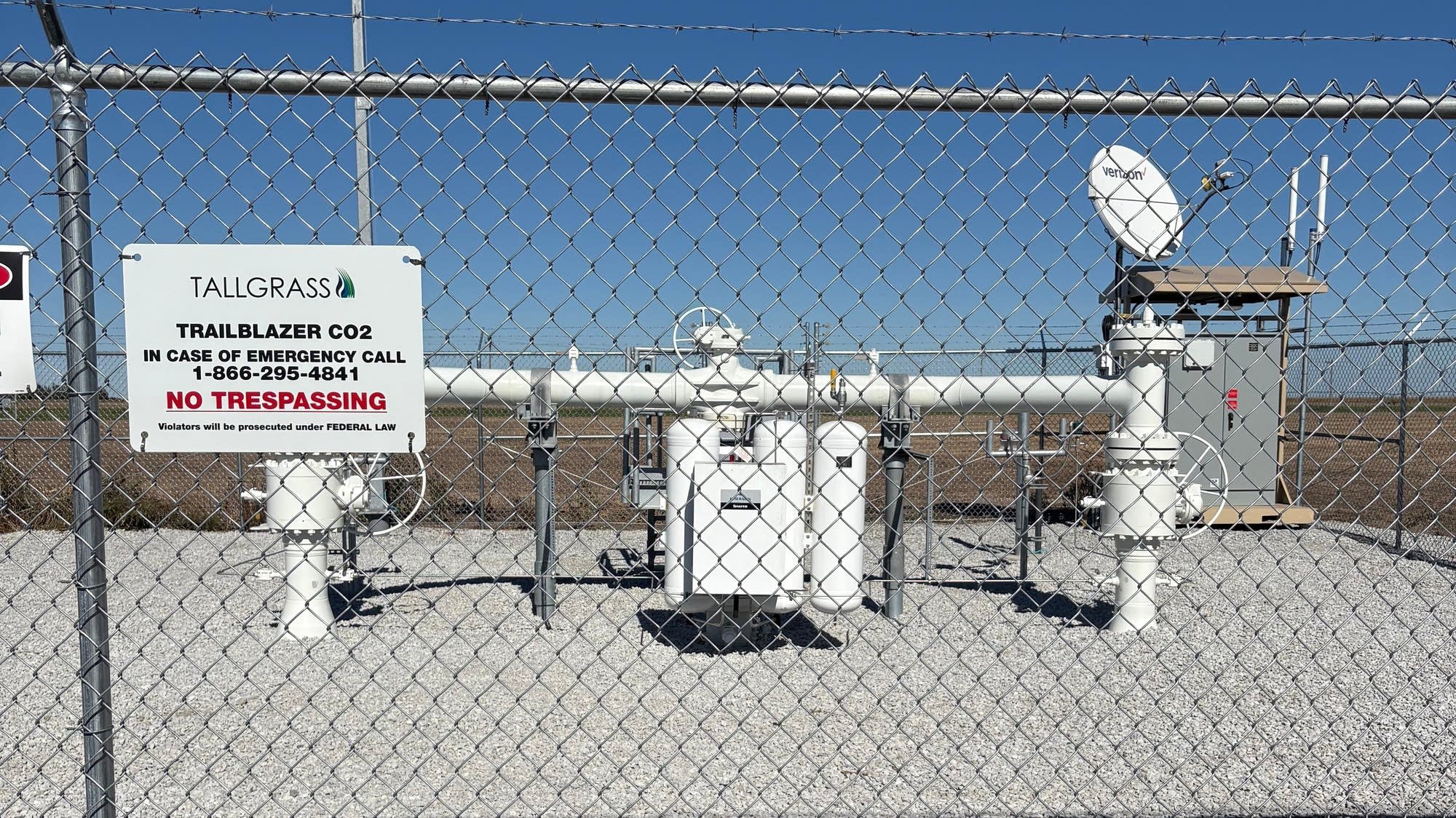
Nebraska's success wasn't luck, it was strategy. While other states watched pipeline projects die in public hearings, Nebraska stakeholders quietly aligned interests. The Tallgrass Trailblazer pipeline repurposed a 400-mile natural gas line instead of fighting for new rights of way. This eliminated the biggest obstacle that killed projects elsewhere: the need to convince hundreds of landowners to allow new pipeline construction across their property.
Green Plains' Central City, Wood River, and York facilities are capturing 800,000 tons of biogenic CO2 annually. The compression systems can scale to 1.2 million tons if demand warrants. That scalability matters because other ethanol producers are watching to see if the economics hold. Green Plains just provided the answer.

"We are very pleased with the progress that Tallgrass has made on the Trailblazer CCS project. Tallgrass has secured all the rights of way for the laterals to connect our Nebraska plants, and all Class VI sequestration well permits have been issued, allowing us to stay firmly on schedule."
Todd Becker, President and CEO, Green Plains
The project moved forward because Green Plains made decisions while competitors held more meetings. Tallgrass secured rights of way without fanfare, Class VI permits cleared without major delays, and construction stayed on schedule. Compare this to Navigator's Heartland Greenway, which burned through hundreds of millions before collapsing. Or Summit Carbon Solutions, which continues fighting regulatory battles years after announcement. The difference between announcement and operation isn't technical complexity, it's execution discipline.
>> RELATED: Nebraska's Cornfields Now Feed World's Largest Bioethanol CCS
The Economics Are Starting to Work
Green Plains received its first 45Z clean fuel production tax credit payment of approximately $14 million in late 2025, representing a portion of their annual production. Additional payments tied to remaining 2025 credits are expected in early 2026. Before activating carbon capture systems, the company had already recorded roughly $26.5 million in 45Z value through September.
The real financial advantage comes from reducing carbon intensity scores. Green Plains' Central City facility dropped from a base CI score of 51 to just 19 with carbon capture operational. That's more than a 60% reduction, which translates directly into higher credit values under the 45Z program and better positioning in low-carbon fuel markets like California's LCFS.

Key metrics for Green Plains' Nebraska operations highlight a significant drop in carbon intensity to a score of 19 at the Central City facility, alongside operational scale across three plants and $14 million in 45Z tax credits received in 2025.
The tax credit structure creates a compounding advantage as emissions continue dropping. Each incremental improvement in carbon intensity increases the per-gallon credit value, creating financial incentive to optimize operations. Green Plains is positioned to benefit not just from federal programs but also from state low-carbon fuel standards and potential private carbon credit markets.
Opening Doors to Sustainable Aviation Fuel
Low-carbon ethanol isn't just about road fuel anymore. The alcohol-to-jet pathway for sustainable aviation fuel production depends on feedstocks with dramatically reduced carbon intensity. Green Plains' reduced CI scores position their ethanol as a premium feedstock for SAF producers, who are willing to pay more for inputs that help them meet stringent emissions requirements.
Airlines and SAF developers are actively seeking low-carbon ethanol supplies. Green Plains announced a joint venture called Blue Blade Energy with United Airlines and Tallgrass to develop SAF technology using ethanol as feedstock. The company plans to supply enough SAF to power more than 50,000 flights annually on United routes between Chicago and Denver. That's not a distant goal, it's the next phase of utilizing the carbon capture infrastructure already operational.
"With construction of the laterals for the Trailblazer CCS project underway and now with compression equipment beginning to be installed, we are positioned to be an early mover in sequestering biogenic CO2, unlocking significant value for our shareholders."
Chris Osowski, President and CEO, Green Plains
The SAF market opportunity extends beyond United Airlines. Major airlines are committing billions to sustainable fuel purchases, and the regulatory environment continues tightening. The International Air Transport Association estimates that SAF will need to account for 65% of aviation sector emissions reductions by 2050. Green Plains built the infrastructure to supply that market.
Why Nebraska Succeeded Where Others Stalled
Several factors separated execution from endless planning. The Tallgrass Trailblazer pipeline used existing infrastructure rather than proposing 1,300 miles of new pipeline through farmland like Navigator tried. That single decision eliminated years of regulatory fights and community resistance.
Nebraska's regulatory environment supported progress without creating roadblocks. While other states watched pipeline proposals turn into political battles, Nebraska stakeholders worked through issues before they became crises. Governor Jim Pillen attended the Wood River plant celebration, signaling state-level support that matters when federal policy shifts.
| Project Component | Status | Timeline |
|---|---|---|
| Rights of Way Secured | 100% Complete | 2024 |
| Class VI Permits | All Issued | 2024 |
| Compression Equipment | Operational | Late 2025 |
| CO2 Capture Active | All Three Plants | December 2025 |
| First Tax Credit Payment | $14M Received | December 2025 |
The project also benefited from collaboration between Green Plains and other ethanol producers. Eleven plants are now connected to the Trailblazer pipeline, creating shared infrastructure that reduces per-ton capture costs. Hub-based models for carbon capture work because they distribute infrastructure costs across multiple emitters.
A Template for the Industry
Green Plains proved that ethanol producers can stop commissioning studies and start compressing gas. The retrofit worked, the pipeline connected, the storage operated, and the tax credits deposited. Everything the industry claimed was possible turned out to be true, but only after someone actually built it.
Other producers are watching because the financial model just moved from PowerPoint to bank statements. The combination of federal tax incentives, state low-carbon fuel programs, and emerging SAF demand creates multiple revenue streams for plants that can demonstrate low carbon intensity. Green Plains showed the pathway from planning to cash flow.
Nebraska's success offers a blueprint for other regions developing carbon capture infrastructure. Use existing infrastructure where possible, secure regulatory support early, and execute construction without waiting for perfect conditions. The question isn't whether ethanol CCS works technically anymore. Green Plains answered that by turning on the equipment. The question now is which producers will execute next and which will keep planning.
Seeing the Strategy in Action
The physical reality of these projects is often lost in policy debates, but in nebraska, the infrastructure is already hitting the ground. The following report highlights the recent ribbon-cutting of the shared tallgrass infrastructure that serves as the backbone for these regional decarbonization efforts.
Watch: Nebraska Carbon Capture Pipeline Operational Amid Iowa Debates
Key Insight: the segment showcases the actual facility and pipeline conversion that allows producers like Green Plains and ADM to bypass the regulatory gridlock seen in neighboring states.
What This Means Going Forward
The ethanol industry faces pressure from declining gasoline demand and increasing competition from electric vehicles. Carbon capture provides a pathway forward, but only if producers actually build it instead of endlessly studying it. Green Plains demonstrated that this transition is achievable with current technology and economics, not theoretical ones.
The infrastructure built in Nebraska extends beyond just these three plants. The Tallgrass Trailblazer pipeline has capacity for additional CO2 sources, and Green Plains' compression systems can scale higher. This creates opportunities for other ethanol producers, industrial facilities, and even direct air capture projects to utilize shared infrastructure, but only if they move from planning to construction.
Federal policy continues supporting carbon capture through the 45Z tax credit and other programs. While political uncertainties exist, the bipartisan nature of support from agricultural states suggests these incentives will remain. Green Plains positioned itself to capture value from multiple policy mechanisms by executing early rather than waiting for perfect clarity.
The real validation comes from operational status, not press releases. Equipment is running, CO2 is sequestered, tax credits are paid, and the business model works. That's what the industry needed to see. Green Plains stopped debating whether ethanol CCS could work and proved it does work. They turned the slide deck fantasy into compressed gas flowing through pipes. Now the rest of the Corn Belt has a choice: execute or explain why they're still planning.
Subscribe to the newsletter
Daily decarbonization data and news delivered to your inbox
Follow the money flow of climate, technology, and energy investments to uncover new opportunities and jobs.
Latest issues
-
Colorado Joins the 7-State CCS Permit Fast Lane
Inside This Issue ⚖️ Colorado Takes Over Class VI Permits: What Changes for CCS? 🏭 Hebei Shoulang Facility Using LanzaTech Technology Achieves World’s First ISCC EU RCF Certification for Ethanol P...
-
The US Hasn't Made Heavy Water Since 1982
Inside This Issue ⚛️ Aternium Completes FEED Studies for US Hydrogen, Heavy Water Project 🐄 Google, McKinsey Strike Brazil Carbon Removal Deal With Silvopasture Project 🔧 Cummins Selects Stargate ...
-
Why Colorado’s Koloma Has Japan’s Largest Utility Hooked
Inside This Issue ⚡ JERA Invests in Koloma to Explore Natural Hydrogen as a Future Low-Carbon Energy 🔬 New CATF Tool Provides Framework for Self-Assessment and Strengthening of Biomass Carbon Remo...
Company Announcements
-
Citi Closes $72 Million Carbon Removal-Linked Note to Support Applied Carbon Biochar Project
HIGHLIGHTS Citi structured an innovative $72 million carbon removal-linked note to provide upfront capital for Applied Carbon's biochar project, marking a first-of-its-kind "outcome bond" for ver...
-
New platform opens access to the same rigorous project evaluations trusted by the world's leading carbon removal procurement programs Today, Relae (formerly Carbon Direct) launched The Diligence C...
-
Inside BLM's 650,000-Acre Bet on Wyoming Carbon Storage
The Bureau of Land Management has offered right-of-way grants covering about 649,438 acres of federal pore space in southwest Wyoming. The September 21, 2026 offers went to Moxa Carbon Storage LLC ...
-
NEW YORK, BUSINESS WIRE, SWITCH Maritime (Switch), a leading developer of zero-emission vessels, secured a Design Basis Agreement (DBA) with the United States Coast Guard (USCG) for the SWITCH-150,...