
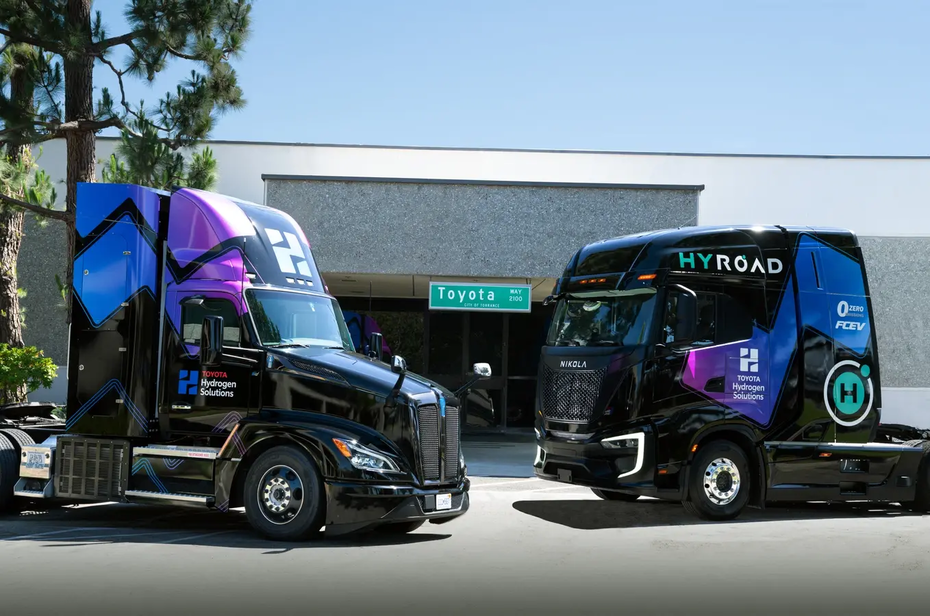
Toyota Motor North America and Hyroad Energy have signed a definitive agreement to deploy 40 hydrogen fuel cell Class 8 commercial trucks in Southern California, one of the largest commercial hydrogen truck deployments in the United States. Announced May 4, 2026 at ACT Expo in Las Vegas, the deal pairs Toyota's three-decade fuel cell track record with Hyroad's assets acquired from Nikola's bankruptcy estate. Full commercial truck operations are targeted for early 2027.
Key Facts
- 40 hydrogen fuel cell Class 8 trucks deploying in Southern California, one of the largest commercial H2 truck deployments in the US
- Toyota will supply hydrogen through its own refueling infrastructure in Ontario, California, expected operational by early 2027
- In August 2025, Hyroad acquired 117 hydrogen fuel cell trucks and IP assets from Nikola's bankruptcy auction for $3.85 million, against an estimated asset value exceeding $114 million
- A fuel cell Class 8 truck carries up to 70 kg of hydrogen onboard and refuels in 15 to 20 minutes
- Driving range: approximately 500 miles per fill, matching diesel semi-truck operational norms
- Toyota has been developing hydrogen fuel cell technologies since 1992, more than 30 years of R&D
- Deal announced at ACT Expo, North America's largest fleet technology event, May 4 to 7, 2026, Las Vegas
>> In Other News: Amogy and Amun Energy Execute Supply Agreement for Commercial-Scale Ammonia-to-Power Project in South Korea
How Did Nikola's Failure Become Hydrogen's Gain?
Nikola Corporation filed for Chapter 11 bankruptcy in February 2025 after its cash reserves fell to $47 million. By August 2025, a U.S. Bankruptcy Court for the District of Delaware approved the sale of the company's remaining assets. Hyroad, an Austin, Texas-based hydrogen trucking services company founded in 2023, won that auction for $3.85 million.

"Toyota has done exactly what great allies do. They've brought genuine hydrogen expertise to the table and made thoughtful, strategic decisions. They're not waiting for someone else to build this ecosystem. They're investing in it directly, and that's what makes this meaningful. When fueling, vehicles, software and operational commitment all come together, hydrogen trucking works."
Dmitry Serov, Founder and CEO, Hyroad Energy
The package included 117 hydrogen fuel cell Class 8 trucks, spare parts, proprietary truck management software, and related intellectual property. The assets had an estimated value exceeding $114 million, making Hyroad's purchase a roughly 97 percent discount. The 40 trucks in the Toyota deal come directly from that acquisition.
Rather than letting those trucks sit, Hyroad moved quickly. In November 2025, the company expanded its service offerings to include maintenance support for existing Nikola truck owners, fleet management software, and parts supply. The Toyota agreement, announced six months later, is the clearest sign yet that those assets are being put to operational use at scale.
>> RELATED: Freight Giants Drive Hydrogen's Market Reality
What Makes Hyroad's Model Different From a Truck Manufacturer?
Hyroad is not a truck manufacturer. It's an OEM-agnostic operator, which means it sources vehicles from multiple suppliers and wraps them into a complete commercial service package. That package includes the truck itself, maintenance, fleet management software, and fuel supply coordination, all under one contract.
This model addresses the main barrier to hydrogen trucking adoption: operational complexity. Fleet operators historically had to manage vehicle procurement, fueling logistics, maintenance networks, and telematics separately. Hyroad collapses all of that into a single commercial arrangement.
In the Toyota deal, Hyroad provides the trucks, maintenance, data, and software services. Toyota supplies hydrogen through its own refueling infrastructure in Ontario, California. The two companies are building what they describe as a complete hydrogen trucking ecosystem under one framework.
| Element | Hyroad Provides | Toyota Provides |
|---|---|---|
| Trucks | 40 hydrogen fuel cell Class 8 trucks (sourced from Nikola acquisition) | Fuel cell technology and powertrain expertise |
| Fuel Supply | Fuel coordination and supply logistics | Hydrogen via Ontario, CA refueling infrastructure (operational early 2027) |
| Operations | Maintenance, fleet software, data services | Logistics operations support |
| Deployment Region | Southern California | Southern California |
Why Does Toyota's Involvement Carry So Much Weight?
Toyota began developing hydrogen fuel cell technology in 1992, giving it more than 30 years of R&D in this space. In 2015, the Toyota Mirai became the world's first mass-produced hydrogen fuel cell sedan. Since then, the company has expanded fuel cell applications to heavy-duty trucks, stationary power generation, port equipment, and passenger buses.

"Accelerating the hydrogen economy requires collaboration, and Toyota is proud to work with Hyroad to move the heavy-duty sector forward. By bringing the critical elements together, we're demonstrating how fuel cells create tangible value across supply chains while advancing a foundational pillar of the hydrogen economy. With hydrogen, we share a vision for cleaner, more powerful and more energy independent mobility."
Jason Zahorik, General Manager, Toyota Hydrogen Solutions
In April 2017, Toyota launched Project Portal, a proof-of-concept program using Class 8 trucks powered by fuel cell technology derived from the Mirai. Those prototype drayage trucks began operating at the Ports of Los Angeles and Long Beach, logging more than 14,000 miles of real-world operations. In 2024, Toyota opened its Tri-Gen facility at the Port of Long Beach, producing renewable hydrogen, electricity, and water from biogas.
A fuel cell Class 8 truck carries up to 70 kilograms of hydrogen onboard, the equivalent of 12 Toyota Mirai sedans. It refuels in 15 to 20 minutes and delivers approximately 500 miles of range per fill. The only tailpipe emission is water vapor.
What Does This Deployment Mean for Hydrogen Transport in North America?
At 40 trucks, this is one of the largest single commercial hydrogen truck deployments in the United States. It's not a pilot. It's not a demonstration. It's a commercial logistics operation backed by Toyota's fuel supply commitment and Hyroad's bundled service model.
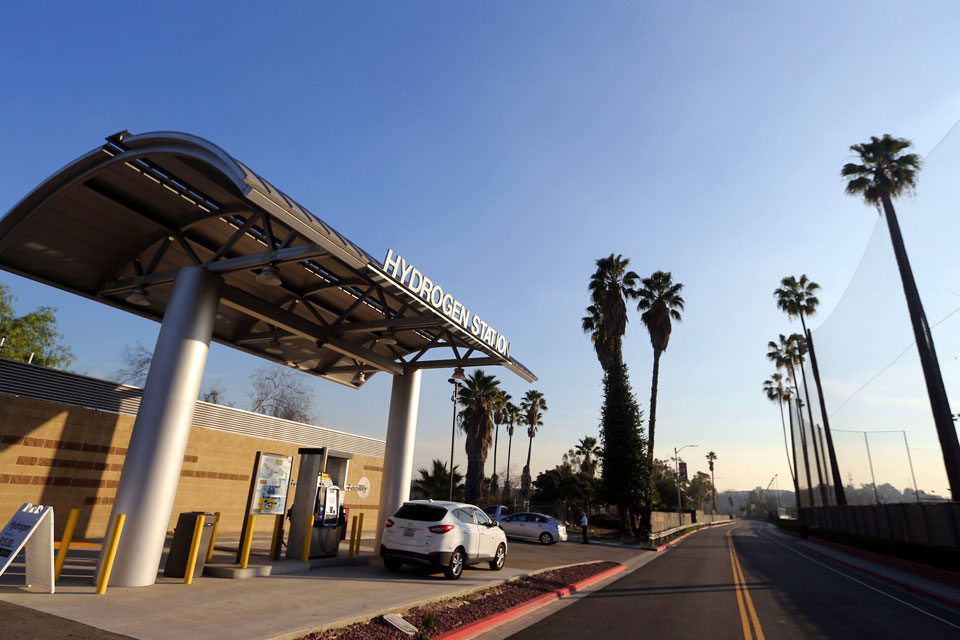
Southern California is the natural proving ground. The region hosts some of the busiest freight corridors in the country, anchored by the ports of Los Angeles and Long Beach. The Los Angeles area alone has 62 hydrogen stations spread from Ventura to San Bernardino to Mission Viejo, according to data tracked by Decarbonfuse. California's commitment to carbon neutrality by 2045 and its Low Carbon Fuel Standard create structural demand for zero-emission alternatives in freight.
Toyota is also active on other hydrogen fronts in the region. At ACT Expo 2026, the company announced a fuel supply agreement with Air Liquide for its North American Parts Center California campus, where hydrogen fueling will begin later in 2026. Toyota is also developing its Gen 3 fuel cell stacks for North American Class 8 trucks, targeting introduction from 2026 onward.
BEYOND ZERO | Hope Takes Us Beyond | Hydrogen in Action | Toyota – Explore how hydrogen fuel cell technology, including large fuel cell electric trucks in North America, is powering real-world logistics and a cleaner future.
The Ecosystem Problem Hydrogen Trucking Had to Solve
For years, hydrogen trucking stalled not because the technology was unproven, but because no single entity was assembling all the necessary pieces. A fleet operator needed trucks, a reliable fueling station, maintenance expertise, and fleet software. That coordination gap slowed adoption.
The Toyota-Hyroad arrangement addresses each layer. Hyroad holds the trucks, the software, and the maintenance network. Toyota holds the fuel supply and the fuel cell expertise. Together, they give a fleet operator a workable, integrated product without requiring the operator to build that ecosystem from scratch.
Industry analysis tracked by Decarbonfuse suggests hydrogen trucks could achieve cost parity with diesel by 2030. Current total cost of ownership runs approximately 30 percent higher than diesel, but declining renewable energy prices and improving fuel cell efficiency are narrowing that gap. The Toyota-Hyroad bundled model may further accelerate that convergence for fleet operators in regulated markets like California.
Frequently Asked Questions
What is Hyroad Energy and how does it differ from a truck manufacturer?
Hyroad Energy is an OEM-agnostic hydrogen trucking services company based in Austin, Texas, founded in 2023. Rather than building trucks, it sources vehicles from multiple suppliers and bundles them with maintenance, fleet management software, and fuel coordination into one commercial package. This lets fleet operators adopt hydrogen without managing each element separately.
How did Hyroad acquire trucks from Nikola's bankruptcy?
In August 2025, a U.S. Bankruptcy Court for the District of Delaware approved Hyroad's winning bid of $3.85 million for Nikola's remaining hydrogen truck assets. The package included 117 Class 8 fuel cell trucks, spare parts inventory, software platforms, and intellectual property. The assets were estimated to be worth more than $114 million.
How does a hydrogen fuel cell Class 8 truck compare to a diesel semi?
A hydrogen Class 8 truck carries up to 70 kilograms of hydrogen onboard and refuels in 15 to 20 minutes, similar to a diesel fill-up in time and experience. It delivers approximately 500 miles of range per fill. The only tailpipe emission is water vapor, compared to the carbon dioxide and particulates produced by a diesel engine.
From Bankruptcy Auction to Commercial Fleet: What Comes Next
This deal is a signal, not just a transaction. Assets from a bankrupt hydrogen pioneer are now powering a commercial agreement with one of the world's most credible automakers. That's a meaningful shift in how hydrogen trucking is perceived by the freight industry.
Toyota's commitment extends beyond this agreement. The company is developing Gen 3 fuel cell stacks for North American Class 8 trucks, has secured ANSI/CSA FC 1 and FC 6 certification for its stationary fuel cell generators, and is expanding its hydrogen fueling network in California. Each piece strengthens the ecosystem that makes deployments like this one possible.
Hyroad, meanwhile, has gone from bankruptcy auction winner to named partner of Toyota Motor North America in under nine months. Its OEM-agnostic model gives it flexibility that traditional truck manufacturers don't have. As more OEMs develop hydrogen drivetrains for heavy-duty applications, Hyroad can source from the best available technology rather than being locked to a single platform.
Forty trucks in Southern California won't decarbonize freight on its own. But it builds the infrastructure, the operational data, and the commercial confidence that the next 400 trucks will require. Real vehicles on real roads, generating the kind of proof that moves an industry-wide hydrogen transition forward.
For ongoing coverage of hydrogen transport, fuel cell technology, and zero-emission freight, subscribe to Decarbonfuse.com.
Subscribe to the newsletter
Daily decarbonization data and news delivered to your inbox
Follow the money flow of climate, technology, and energy investments to uncover new opportunities and jobs.
Latest issues
-
CF Industries Breaks Ground on $3.7B Blue Point
Inside This Issue 🏗️ Construction Begins on Blue Point Project 🧪 Commencement of FEED for the Live Oak Project for e-NG Production in Nebraska 🍁 Mercer International Secures C$20 Million Canadian ...
-
Freepoint Commits $450M to Emvolon's Modular Fuel Play
Inside This Issue ⛽ Emvolon and Freepoint Commodities Execute Multi-Year Definitive Agreements to Scale High-Value Liquid Fuels 🧪 Ammobia and Lummus Technology to Commercialize Ammonia for Low-Car...
-
Project Tundra Gets $205M in State Loans and a New Risk-Sharing Partner
Inside This Issue ⚡ Minnkota and Reliant Split Risk on Project Tundra CCS 🛢️ White House Pushes for More Refinery Waivers to Ease Pump Prices 🤝 Aker Solutions to Accelerate Carbon Capture and Remo...
Company Announcements
-
Summit Forfeits Two CO2 Storage Permits in North Dakota, Continues Legal Fight Over Third
Summit Carbon Solutions is abandoning two-thirds of its planned project to store carbon dioxide underground in North Dakota. The company, which had been granted permits to store CO2 in three desig...
-
Construction Begins on Blue Point Project
Ground has been broken on construction of the Blue Point project in Louisiana, USA. Project partners CF Industries, JERA, and Mitsui & Co. have broken ground on construction of ...
-
Mercer International Secures C$20 Million Canadian Backing for Alberta Pulp Mill Overhaul
The Canadian government has thrown a financial lifeline to Mercer International's Peace River pulp operation in northern Alberta, committing C$20 million toward a sweeping modernization of the faci...
-
Plantd Launches Biochar Line, Turning Waste Into Revenue & Better Soil
Advanced manufacturer expands beyond structural building panels, converting production byproduct into a silica-rich soil amendment for agriculture OXFORD, N.C., Aug. 28, 2026 (GLOBE NEWSWIRE) -- P...