
Delta Air Lines and Minnesota SAF Hub partners opened a new SAF blending facility at Flint Hills Resources' Pine Bend Refinery on July 27, 2026. The plant can blend up to 30 million gallons of neat SAF each year. That turns a September 2024 announcement into working infrastructure at Delta's second-largest hub.
Key Facts
- The Pine Bend facility can blend up to 30 million gallons of neat SAF annually (Delta News Hub, July 27, 2026)
- Delta uses approximately 250 million gallons of jet fuel per year at MSP (Delta News Hub, July 27, 2026)
- Delta purchased 23.4 million gallons of SAF across its network in 2025, up from 13 million gallons in 2024 (Delta 2025 ESG report)
- Shell will deliver at least 15 million gallons of SAF to Delta in 2026 under their new five-year deal (Aviation Week, July 2026)
- The Minnesota SAF Hub coalition launched in August 2023 with Delta, Greater MSP Partnership, Bank of America, Ecolab, and Xcel Energy
- Delta and Flint Hills first announced plans for this facility in September 2024
>> In Other News: HRS and Baker Hughes Target Large-Scale Hydrogen Hubs
What Just Opened at Flint Hills' Pine Bend Refinery?
Flint Hills Resources and Delta completed a new SAF blending unit at the Pine Bend Refinery in Rosemount, Minnesota. The unit mixes neat SAF with conventional jet fuel before it moves to the airport.
Shell Aviation supplies the neat SAF for the operation. Flint Hills blends it using the refinery's existing rail unloading systems, large-volume storage tanks, and onsite laboratory.
The blended fuel then travels through Flint Hills' existing pipeline straight to Minneapolis-St. Paul International Airport. No new pipeline construction was needed between the refinery and the terminal.
30 million gallons of neat SAF is the facility's annual blending capacity, according to Delta News Hub's July 27, 2026 announcement. Delta uses roughly 250 million gallons of jet fuel per year at MSP alone, so the new unit covers a meaningful share of that demand.
The 2024 Promise Versus What Opened in 2026
Delta and Flint Hills first described this project as an early-stage plan in September 2024. Two years later, the 30-million-gallon target held steady while the completion date slipped from late 2025 to July 2026.
| Category | September 2024 Announcement | July 2026 Completion |
|---|---|---|
| Project Status | Early-stage development | Facility complete and operating |
| Target Capacity | Up to 30 million gallons per year, neat SAF | Up to 30 million gallons per year, neat SAF |
| SAF Supplier | Shell, committed | Shell Aviation, confirmed and delivering |
| Target Timeline | Completion expected fourth quarter 2025 | Opened July 27, 2026 |
| Delivery Method | Planned via Flint Hills' existing pipeline | Delivered via Flint Hills' existing pipeline to MSP |
The original 2024 release called Pine Bend the likely first blending site of its kind between the coasts. Delta and Flint Hills did not repeat that specific claim in the July 2026 completion announcement. It stands as an early ambition rather than a confirmed record.
How Did a Five-Company Coalition Get This Built?
Peter Frosch, President and CEO of Greater MSP Partnership, called the opening a turning point for the state's SAF economy.
"That means we have succeeded in creating a SAF economy in Minnesota, where people can fly out of MSP with SAF on the airplane."
Peter Frosch, President and CEO, Greater MSP Partnership
Minnesota built this project through a coalition rather than a single company move. The Minnesota SAF Hub launched in August 2023 with Delta Air Lines, Greater MSP Partnership, Bank of America, Ecolab, and Xcel Energy as anchor partners.
That structure spreads cost and demand risk across finance, industry, and utility partners. Bank of America and Ecolab back the offtake side through a Demand Consortium formed with Deloitte and Delta to buy early SAF volumes.
The consortium's original plan called for purchasing the first several million gallons annually starting in the second half of 2025. Neither Delta nor Flint Hills has publicly confirmed whether those purchases are now underway.

Who Else Is Building Out This Supply Chain?
Shell Aviation sources the neat SAF for Pine Bend from multiple producers, including Montana Renewables and Diamond Green Diesel. Delta's broader supply deal with Shell now stretches well beyond Minnesota.
Delta signed a five-year agreement with Shell in July 2026 covering Los Angeles, Portland, JFK, Boston Logan, and MSP through 2030. Shell will deliver at least 15 million gallons of SAF to Delta in 2026, according to figures Aviation Week obtained from a Delta spokesperson.
That contract builds on Delta's own SAF purchasing history. Delta bought 23.4 million gallons of SAF across its network in 2025, up from 13 million gallons in 2024. That figure comes from the airline's own 2025 ESG report.
Roughly 90 percent of Delta's total carbon emissions come from jet fuel, per the airline's own disclosures. That is why the company has set a target of reaching 10 percent SAF usage across its network by 2030. That goal fits inside the industry's broader push toward scaling US SAF production nationally.
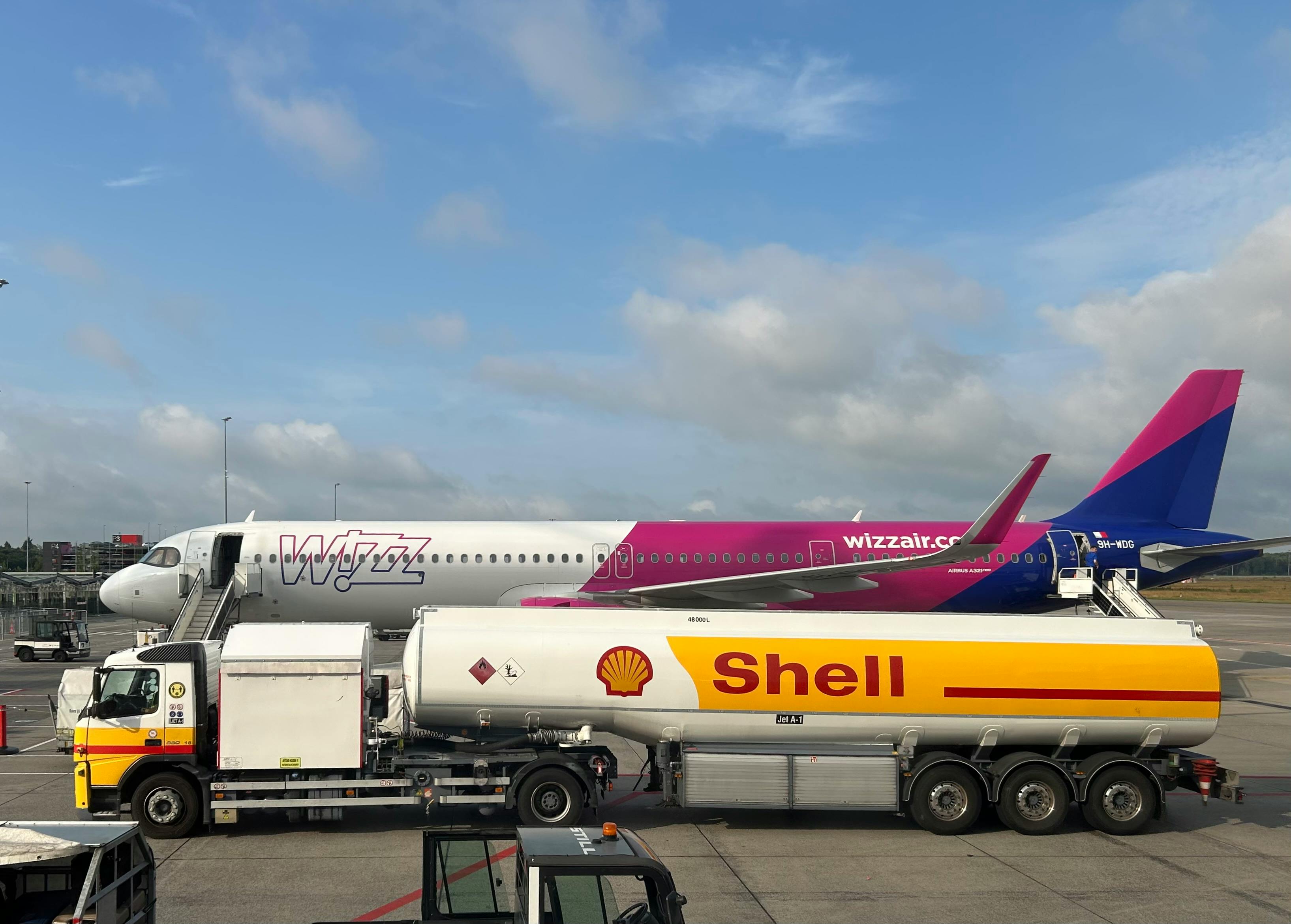
Local news coverage of the new SAF blending facility at Flint Hills Resources’ Pine Bend Refinery, showing how the Minnesota SAF Hub partners are scaling sustainable aviation fuel delivery to MSP.
What Comes Next for Minnesota's SAF Buildout?
DG Fuels has proposed a $5 billion facility in Moorhead, Minnesota, designed to produce 193 million gallons of SAF annually. Greater MSP Partnership said that single proposed Moorhead facility would represent nearly half of all jet fuel used at MSP Airport. That figure covers every carrier at the airport, not Delta alone.
That Moorhead project sits alongside DG Fuels' Louisiana megaproject and a separate Nebraska facility, extending the company's SAF footprint across three states. Reaching that combined scale still depends on financing, permitting, and feedstock aggregation.
Minnesota's ambitions extend into related infrastructure too. The state sits inside the Heartland Hydrogen Hub footprint. It's one of five regional hydrogen hubs the Department of Energy confirmed it would keep funding earlier in 2026.
A carbon capture pipeline network planned across the same region could eventually support lower-carbon feedstock processing. Meanwhile, woody biomass pathways to SAF are drawing fresh government investment just across the border in Ontario. Montana Renewables recently signed its own large-scale SAF supply agreement, a sign of the same production buildout feeding facilities like Pine Bend.
Peter Carter, President of Delta Air Lines, framed the opening as a step rather than a finish line.
"This facility is the culmination of a shared vision for Minnesota to become a leader in sustainable aviation fuel."
Peter Carter, President, Delta Air Lines
The Next Marker on Minnesota's SAF Timeline
Pine Bend shows that a multi-year, multi-company SAF commitment can move from paper to pipeline. The next test is whether Minnesota's other announced projects, including DG Fuels' Moorhead plant, follow the same path from plan to completion.
Frequently Asked Questions
What is neat SAF, and how is it different from blended jet fuel?
Neat SAF is pure sustainable aviation fuel before it gets mixed with anything else. Current certification standards allow up to 50 percent neat SAF to be blended with conventional Jet A before use in today's aircraft.
How much of Delta's jet fuel at MSP will this facility cover?
At full output, the facility's capacity would cover about 12 percent of Delta's 250 million annual gallons of jet fuel at MSP. Delta expects to receive well below that capacity level for at least the first several years.
Who supplies the SAF that gets blended at Pine Bend?
Shell Aviation supplies the neat SAF, sourcing it from multiple producers including Montana Renewables and Diamond Green Diesel, according to a Delta spokesperson.
For ongoing coverage of carbon removal, BECCS, and corporate CDR procurement, subscribe to Decarbonfuse.com.
Subscribe to the newsletter
Daily decarbonization data and news delivered to your inbox
Follow the money flow of climate, technology, and energy investments to uncover new opportunities and jobs.
Latest issues
-
Verra Landed CCP Approval. What Changes for DAC?
Inside This Issue ✅ Verra's CCS Credits Just Got the Integrity Seal Buyers Want 💰 South Korea Unveils $747 Billion Energy Transition Plan Through 2035 💧 Hydrogen and Carbon Capture and Storage in ...
-
Quebec Wood Waste Just Became Jet Fuel
Inside This Issue 🌲 ARC Bio Tests a Refinery Shortcut to Forest-Based SAF 💧 Scientists Just Found a New Way to Make Hydrogen from Water 🤝 How Channel Partnerships Are Helping More Organizations Ta...
-
How Vaulted Deep Turned Offtakes Into $35M Debt
Inside This Issue 🏦 How Carbon Removal Offtakes Are Starting to Unlock Commercial Debt 🌉 California Opens the Door to a Three-Way Carbon Market 🧪 New Material Developed at Oregon State Provides Bo...
Company Announcements
-
CALGARY, AB, Oct. 8, 2026 /CNW/ - Gas Liquids Engineering Ltd. (GLE) is pleased to announce the successful completion of its detailed engineering scope for Enhance Energy Inc.'s Origins Carbon Capt...
-
Ballard Secures 4.8MW Order From Siemens Mobility to Power Hydrogen Trains in Romania
24 FCrail™ fuel cell modules will power 12 Mireo Plus H trains, Romania’s first hydrogen fleet and the platform’s largest deployment to date. VANCOUVER, CANADA and MUNICH, GERMANY – Ballard Power ...
-
Company Update Approval Advances Strategic Growth of XCF's Diversified Alternative Energy Platform and Marks a Major Milestone as the Parties Work Toward Closing as Soon as Practicable HOUSTON, T...
-
On September 20, Yiwu County in Hami, Xinjiang, a centralized project bid opening and launch ceremony drew the attention of the entire hydrogen energy community, Dondel officially launched its Gree...