
University to Build New Hydrogen Propulsion Lab
Published by Todd Bush on February 10, 2025
A new research facility aiming to unlock the promise of zero carbon fuels has secured planning permission at the University of Nottingham.
The lab, on the Jubilee Campus in Wollaton, will enable research and safe high-power testing of propulsion systems for transport industries, officials said.
Plans feature cryogenic test capabilities, environmental chambers suitable for altitude testing, and equipment to enable testing of gaseous hydrogen, ammonia, and other green fuels.
In March 2024, the university unveiled £70 million of private, public, and grant funding to boost facilities for developing technology to decarbonise future transport.
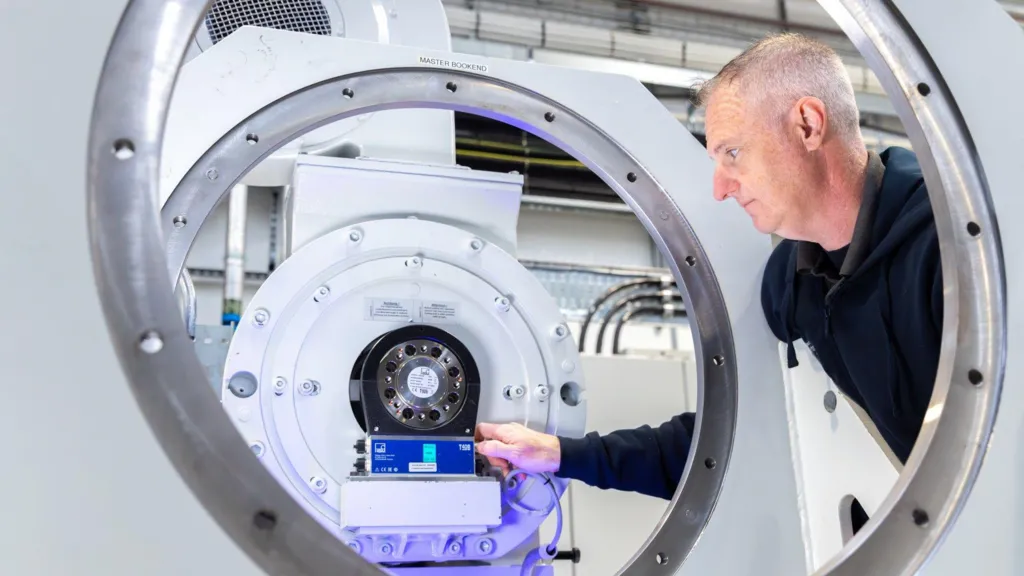
The lab will be able to test different engines and fuels in a variety of extreme conditions
A Leap Forward in Zero Carbon Innovation
The lab will be connected to the megawatt-class testing facilities and researchers of the adjacent Power Electronics and Machines Centre (PEMC), the university said.
Officials added the research was aimed at supporting high-growth industries, including aerospace, automotive, marine, and power generation.
Areas of work are expected to include the testing of novel powertrains, including cryogenic electrical machines and power electronics, systems fuelled by liquid hydrogen and other green fuels.
It will operate alongside the university’s new Zero Carbon Innovation Centre, which has been backed by East Midlands Freeport and Loughborough University.
Regional Leadership in Hydrogen Innovation
Chris Gerada, Professor of Electrical Machines and Lead for Strategic Research and Innovation Initiatives, said: "A new hydrogen lab for the East Midlands is a leap forward in establishing the region's leadership in zero carbon innovation on the world stage.
"It is this region that has the right place, the right people, and the right technologies that industries need to achieve their decarbonisation ambitions."
The hydrogen propulsion lab is expected to be operational by mid-2026.
Subscribe to the newsletter
Daily decarbonization data and news delivered to your inbox
Follow the money flow of climate, technology, and energy investments to uncover new opportunities and jobs.
Latest issues
-
Who Bought Gevo’s $50M in 45Z Credits?
Inside This Issue ⛽ Gevo Sells $70M in 45Z Credits to a New Kind of Buyer 🌱 South Pole, Gaïago, and Gold Standard Issue European Soil Carbon Credits, Unlocking Verified Regenerative Agriculture Re...
-
Verra Landed CCP Approval. What Changes for DAC?
Inside This Issue ✅ Verra's CCS Credits Just Got the Integrity Seal Buyers Want 💰 South Korea Unveils $747 Billion Energy Transition Plan Through 2035 💧 Hydrogen and Carbon Capture and Storage in ...
-
Quebec Wood Waste Just Became Jet Fuel
Inside This Issue 🌲 ARC Bio Tests a Refinery Shortcut to Forest-Based SAF 💧 Scientists Just Found a New Way to Make Hydrogen from Water 🤝 How Channel Partnerships Are Helping More Organizations Ta...
Company Announcements
-
Mineral Europa: A Game Changer for Shipping
Antwerp, Oct. 09, 2026 (GLOBE NEWSWIRE) -- Antwerp, 9 October 2026 – CMB.TECH NV (“CMB.TECH” or the “Company”) (NYSE: CMBT, Euronext Brussels: CMBT and Euronext Oslo Børs: CMBTO) today announces th...
-
Download PDF (170.95 KB) Eni CCUS Holding, owned jointly by Eni and Global Infrastructure Partners ("GIP"), part of BlackRock, announces that Liverpool Bay CCS has completed the installation of th...
-
First-of-its-kind project in France and Belgium marks a major breakthrough for carbon credit buyers seeking high-integrity, high-impact regenerative agriculture removals in Europe; providing buyer...
-
Gevo and ClimeFi Complete Carbon Removal Transaction, Advancing Gevo's Growing Carbon Business
Transaction supports Gevo's path toward a carbon business exceeding $30 million in annual revenue from existing operations ENGLEWOOD, Colo., Oct. 08, 2026 (GLOBE NEWSWIRE) -- Gevo, Inc. (NASDAQ: G...