
The Pacific Northwest just launched its biggest bet on clean aviation fuel. On January 8, 2026, leaders from Boeing, Amazon, Alaska Airlines, and Washington state officials unveiled the Cascadia Sustainable Aviation Accelerator, a public-private coalition designed to transform the region into a global powerhouse for sustainable aviation fuel production.
The initiative launched with $20 million in combined funding, split evenly between a state appropriation and a private philanthropic donation. It marks the most comprehensive SAF-focused effort in the region's history, bringing together aerospace giants, tech companies, research institutions, and policymakers under one roof.

>> In Other News: Chehalis Port Delays Hydrogen Production And Refueling Hub, With Start Now Planned For Spring 2026
Why the Pacific Northwest?
The region holds unique advantages that set it apart from competing SAF hubs in the Gulf Coast and Midwest. Boeing's manufacturing headquarters sits in Everett, providing direct access to the world's largest aircraft maker. Alaska Airlines operates its main hub at Seattle-Tacoma International Airport, which dispenses roughly 600 million gallons of jet fuel annually.
Washington also offers abundant renewable energy, agricultural feedstocks, and state-level policy support. The state passed SAF tax incentives in 2023, offering credits of $1 to $2 per gallon that can stack with federal incentives.

"We have all the pieces in place to ensure this once-in-a-generation economic opportunity is realized, and this accelerator will make that happen."
Gov. Bob Ferguson, Washington State Governor
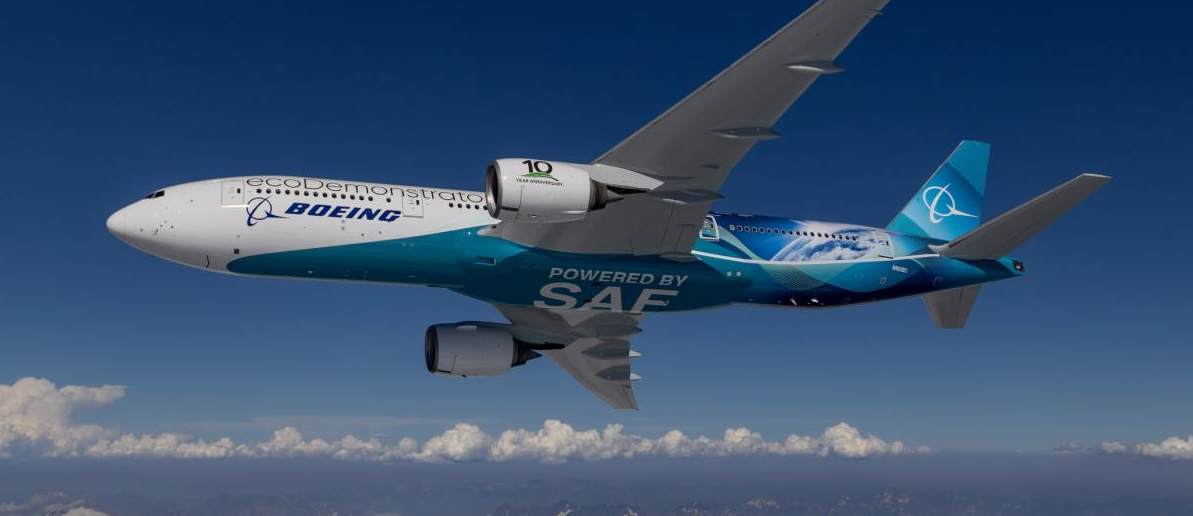
What the Accelerator Will Do
The CSAA takes a multi-pronged approach to tackling the barriers that have held back SAF adoption for years. Its core priorities include:
- Providing R&D resources and equipment for startups and fuel manufacturers developing new production pathways
- Advocating for SAF-friendly policies at state and federal levels to close the price gap with conventional jet fuel
- Facilitating funding and purchase agreements between producers and airlines to de-risk investment decisions
- Building supply chains for diverse feedstocks like agricultural waste, algae, cooking oils, and animal fats
>> RELATED: Jet Fuel from CO₂? How United and Twelve Are Pioneering the Future of Clean Aviation

Snapshot of the $20 million funding split alongside critical 2030/2050 U.S. production targets and SeaTac’s current fuel demands.
Industry Heavyweights Rally Behind the Effort
The coalition's membership reads like a who's who of Pacific Northwest business. Boeing announced that starting this year, all flights for operations and deliveries from Renton, Everett, and Paine Field will fly on up to 30% SAF. Amazon, already a major SAF purchaser with 3.7 million gallons planned for 2024, brings substantial demand to the table.
Washington State University will contribute research expertise in biofuel development, while the Port of Seattle has set a target of 10% SAF use at SeaTac by 2028. The accelerator's temporary headquarters will operate from a commercial space at Paine Field, with plans to complete a permanent facility by 2029.
"Sustainable aviation fuel is essential to decarbonizing air transportation, and Cascadia is the one region with the research, industry, policy and workforce needed to scale it."
Sen. Marko Liias, Washington State Senator
Production Projects Already in Motion
The accelerator builds on existing momentum. SkyNRG, a Dutch company, is developing Project Wigeon at the Wallula Gap Industrial Park near Walla Walla. The facility cleared state environmental reviews and will produce 50 million gallons of SAF annually when it opens in 2030.
Twelve, backed by Amazon's Climate Pledge Fund, is constructing a smaller SAF plant in Moses Lake that converts captured CO₂ into jet fuel.

Regional Competition Heats Up
Cascadia faces stiff competition. The Gulf Coast leverages existing refinery infrastructure, with Pathway Energy announcing a $2 billion carbon-negative SAF project in Port Arthur. The Midwest taps its agricultural base and hydrogen hub development for alcohol-to-jet pathways. California offers the strongest policy incentives through its Low Carbon Fuel Standard.
A Long Road Ahead
Despite the enthusiasm, SAF still accounts for less than 1% of global aviation fuel consumption. The fuel costs two to five times more than conventional jet fuel, and scaling production will require hundreds of new biorefineries.
Still, the coalition remains bullish. Boeing's first biofuel test flight launched from Washington in 2008. With $44 billion in private investment already committed to SAF projects nationwide, the Cascadia accelerator is positioning itself to capture a significant slice of what could become aviation's defining transformation. For a region built on aerospace, this may be its most important flight yet.
Subscribe to the newsletter
Daily decarbonization data and news delivered to your inbox
Follow the money flow of climate, technology, and energy investments to uncover new opportunities and jobs.
Latest issues
-
The US Hasn't Made Heavy Water Since 1982
Inside This Issue ⚛️ Aternium Completes FEED Studies for US Hydrogen, Heavy Water Project 🐄 Google, McKinsey Strike Brazil Carbon Removal Deal With Silvopasture Project 🔧 Cummins Selects Stargate ...
-
Why Colorado’s Koloma Has Japan’s Largest Utility Hooked
Inside This Issue ⚡ JERA Invests in Koloma to Explore Natural Hydrogen as a Future Low-Carbon Energy 🔬 New CATF Tool Provides Framework for Self-Assessment and Strengthening of Biomass Carbon Remo...
-
LNK Energies Targets $6.50 Hydrogen With No Federal Subsidies
Inside This Issue 🚛 MIT Startup Says It Can Turn Diesel Trucks Into Cheaper Hydrogen Haulers, See It at Disrupt 🏭 Baytown City Council Briefs: ExxonMobil Blue Hydrogen Agreement Approved 🌎 Colorad...
Company Announcements
-
Toyota Achieves Heavy-Duty Hydrogen Truck Milestones
GARDENA, Calif. and PLANO, Texas , Oct. 20, 2026 /PRNewswire/ -- Toyota Motor North America's Hydrogen Headquarters (H2HQ) division is making steady progress in fueling improvements for heavy-duty ...
-
The parties intend to design hydrogen power into the Hendry County development's master plan before horizontal construction begins and to scale it with each phase of the build-out DELRAY BEACH, Fl...
-
OSLO, Norway, Oct. 20, 2026 /PRNewswire/ -- Aker BP and Höegh Evi have been awarded EUR 223 million from the European Union Innovation Fund for the Atlas Project, a large-scale CCS network connecti...
-
XCF Global Announces Agreement to Acquire Paramount, California Renewable Fuel Production Facility
Mergers and Acquisitions Acquisition further expands XCF's alternative energy platform with the proposed addition of ~50 million annual gallons of sustainable aviation fuel, renewable diesel and r...