
AIRCO (formerly Air Company) has opened a manufacturing facility in New Britain, Pennsylvania, to produce its MAD Fuel System. This is a shipping container-sized unit that converts captured CO2 directly into jet fuel at the point of use, no fuel truck required. Backed by approximately $70 million in combined U.S. Department of Defense funding, AIRCO is rewriting what fuel logistics can look like for both defense and commercial aviation.
Key Facts
- AIRCO opened its primary U.S. manufacturing hub in New Britain, Pennsylvania, in May 2026
- The MAD Fuel System converts CO2, hydrogen, and electricity into drop-in jet fuel (Jet A-1) and diesel-equivalent fuel (DS-1)
- AIRCO has received approximately $70 million in combined U.S. Department of Defense funding across multiple offices (AIRCO, 2026)
- The most recent award is a $15 million AFWERX STRATFI grant from the U.S. Air Force
- AIRCO holds a $67 million contract from the Defense Innovation Unit (DIU) through Project SynCE
- The MAD Fuel System is classified as one of six critical technologies by the U.S. Department of War
- JetBlue and Virgin Atlantic have committed to purchasing AIRMADE SAF, with combined partner commitments exceeding one billion gallons as of 2022 (Air Company, 2022)
- AIRCO raised $69 million in a Series B round led by Avfuel in September 2024 (BusinessWire, 2024)
- Global SAF production reached approximately 1 million metric tonnes in 2024, covering just 0.3% of total jet fuel consumption (IATA, 2024)
- AFWERX has awarded more than 10,400 contracts worth more than $7.24 billion since 2019 to scale defense-relevant technologies (AFWERX, 2025)
>> In Other News: Climeworks Solutions Signs 10-Year Carbon Removal Agreement With TD Bank
What Is the MAD Fuel System, and Why Does It Matter?
The MAD Fuel System, short for Mobile, Adaptable, and Dynamic, is a containerized power-to-liquid platform. It produces synthetic jet fuel anywhere it is deployed. It takes in captured CO2, hydrogen, and electricity from any available source, including solar, wind, or nuclear, and outputs fully formulated, drop-in fuel meeting current ASTM certification standards.
It does not need a refinery. It does not need a tanker convoy. The fuel is made where it is needed, when it is needed.
AIRCO uses its proprietary AIRMADE catalytic process to convert CO2 and hydrogen directly into finished fuel. This approach requires fewer steps than traditional Fischer-Tropsch conversion methods, which first create syngas and then process it into liquid fuel. Fewer steps means greater energy efficiency and a simpler production footprint.
The system is feedstock-agnostic on the energy side. CO2 supply comes from integrated direct air capture systems or other available point sources, making each deployment adaptable to local conditions.
AIRCO's AIRMADE fuel has been certified to produce both Jet A-1 synthetic aviation fuel and DS-1 diesel-equivalent fuel. Both are drop-in ready, meaning they require no modifications to existing aircraft engines or ground vehicle fleets.

AIRCO’s MAD Fuel System brings synthetic fuel production into a modular, deployable format. The containerized platform uses captured CO2, hydrogen, and electricity to produce drop-in Jet A-1 and DS-1 fuels where they’re needed, reducing reliance on refineries and long fuel supply chains.
How Is AIRCO's Pennsylvania Facility Scaling Production?
The New Britain facility consolidates AIRCO's R&D, engineering, operations, and manufacturing under one campus for the first time. It is the company's primary manufacturing base for the MAD Fuel System, designed to serve both government and commercial partners from a single domestic hub.
By building in Pennsylvania, AIRCO is strengthening North American clean tech manufacturing at a moment when domestic power-to-liquid fuel production is gaining serious policy and industry attention. U.S. SAF production capacity reached approximately 30,000 barrels per day in 2025, up from just 2,000 barrels per day at the start of 2024 (Decarbonfuse, 2025).

"For over a century, fuel has been produced in centralized refineries and shipped around the world. We're changing that. This facility enables us to manufacture autonomous systems that produce fuel anywhere, on demand. It's a fundamental shift from fuel as a commodity to fuel as infrastructure."
Gregory Constantine, Co-Founder and CEO, AIRCO
The Pennsylvania facility positions AIRCO to move quickly on government contracts while simultaneously building out the commercial side. Scott Reece, AIRCO's VP of Operations, said the facility "extends our footprint so that we can better support our partners in both the government and private sector."
Specific production targets and unit deployment timelines have not been publicly disclosed. The facility opening and sustained government funding indicate the company is moving from demonstration phase into scaled manufacturing.
>> RELATED: ESAF Takes Flight: Power-to-Liquid Tech Sparks 48% Growth
Why Is the U.S. Air Force Betting on CO2-Derived Fuel?
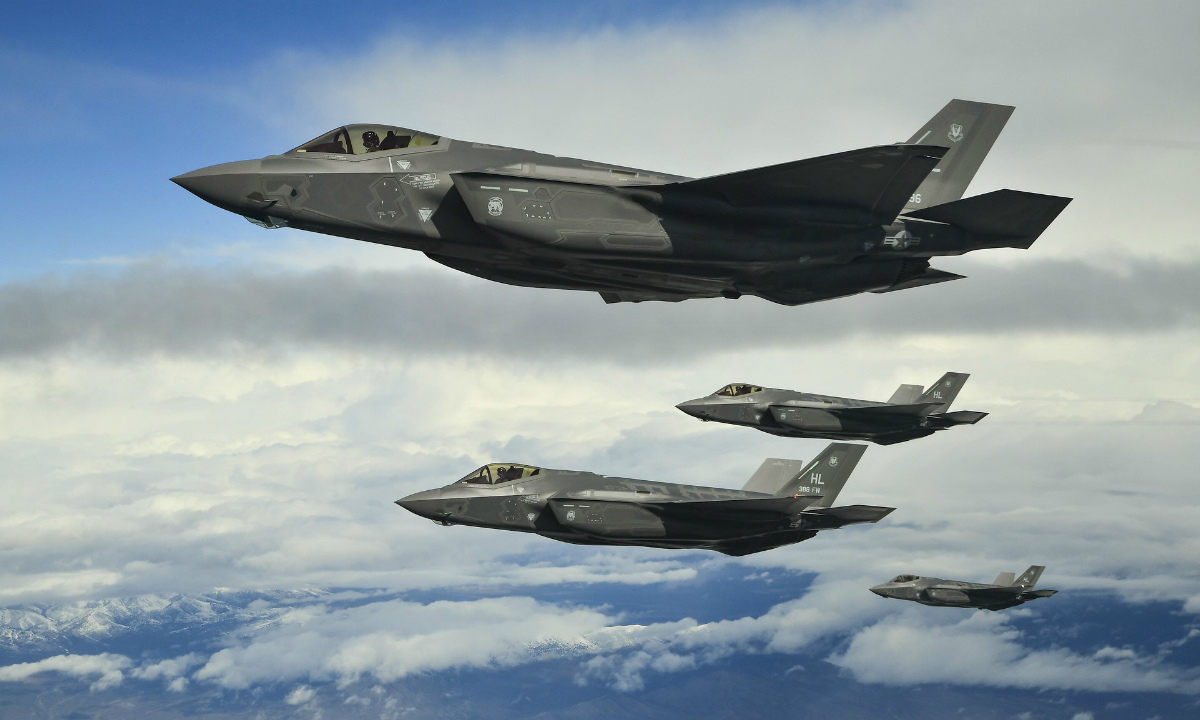
The defense sector has a fuel logistics problem that clean energy companies rarely discuss. Fuel resupply missions are among the most operationally complex and hazardous activities in military operations. The MAD Fuel System was designed specifically to solve that.
AFWERX, the innovation arm of the U.S. Department of the Air Force, awarded AIRCO a Strategic Funding Increase (STRATFI) grant. The most recent tranche of that award totaled $15 million. Combined with earlier DoD contracts, AIRCO has received approximately $70 million in total government funding across multiple Department of War offices, including AFPET, AFRL, and DLA, as well as a $67 million contract from the Defense Innovation Unit (DIU) through Project SynCE (AIRCO, 2026). Since 2019, AFWERX has awarded more than 10,400 contracts worth more than $7.24 billion to strengthen the U.S. defense industrial base (AFWERX, 2025).
AIRCO's MAD Fuel System is classified as one of only six critical technologies by the U.S. Department of War. That designation reflects how seriously the defense sector is treating on-site fuel generation as a strategic capability. The technology's defense credibility goes beyond funding. In April 2025, AIRCO completed successful demonstrations of its AIRMADE fuel across three military domains. The company powered a Polaris MRZR tactical vehicle at West Point, propelled a 7-meter Zodiac RHIB in naval demonstrations at Joint Expeditionary Base Little Creek, and, in partnership with the Air Force's Project FIERCE, achieved the first-ever unmanned flight powered by 100% unblended, CO2-derived synthetic jet fuel (AIRCO, April 2025).
That unmanned flight is a verified milestone. No other company has demonstrated a fully CO2-sourced fuel powering an aircraft without any blending with conventional fuel.
"Fuel derived from CO2 is not only feasible. It's on track to become essential for providing reliable and accessible operational energy anywhere in the world to support U.S. national security objectives."
Gregory Constantine, Co-Founder and CEO, AIRCO
How Does AIRCO Compare to Twelve and LanzaJet?
The power-to-liquid and eSAF space is getting crowded. Twelve produces its E-Jet SAF using an electrochemical process that converts CO2, water, and renewable electricity into fuel, with up to 90% lower lifecycle emissions than conventional jet fuel (Twelve, 2024). LanzaJet opened its Freedom Pines Fuels commercial plant in Soperton, Georgia, producing alcohol-to-jet SAF from ethanol at an annual capacity of 10 million gallons (LanzaJet, 2024).
AIRCO occupies a different lane entirely. Twelve and LanzaJet are building centralized production facilities to supply commercial airlines at scale. AIRCO's system is modular and mobile by design, built for locations where centralized infrastructure does not exist.
| Company | Fuel Pathway | Production Model | Key Partners |
|---|---|---|---|
| AIRCO | CO2 + H2 (AIRMADE catalytic process) | Modular, mobile, point-of-use | U.S. Air Force, DIU, JetBlue, Virgin Atlantic |
| Twelve | CO2 + H2O + renewable electricity (electrochemical) | Centralized production facility | IAG, Microsoft |
| LanzaJet | Ethanol-to-jet (alcohol-to-jet) | Commercial plant (Soperton, Georgia) | British Airways, Shell, All Nippon Airways |
AIRCO's distinct positioning centers on deployment in environments where centralized plants cannot reach. Remote airfields, forward operating bases, maritime vessels: these are the scenarios AIRCO was built for. The modular system runs on solar, wind, or nuclear power, and sources CO2 from direct air capture or local point sources.
In its ultimate form, networks of MAD Fuel Systems are designed to operate as AI-coordinated "fuel swarms." These are autonomous nodes that produce and manage fuel output with minimal on-site personnel.

What Does AIRCO's Commercial Aviation Play Look Like?
Defense is AIRCO's primary customer base right now. But the company's commercial airline partnerships show the technology has reach beyond military logistics.
JetBlue and Virgin Atlantic are among the first airlines to commit to purchasing AIRMADE SAF. Combined with other partners, those commitments totaled over one billion gallons of AIRMADE SAF as of 2022 (Air Company, 2022). JetBlue Ventures also participated as an existing investor in AIRCO's Series B funding round.
Avfuel, a global aviation fuel supplier with more than 3,500 locations worldwide, led AIRCO's $69 million Series B round in September 2024 and is serving as the company's preferred distribution partner (BusinessWire, 2024). That funding round also included Alaska Airlines, Lowercarbon Capital, and IQT, among others.
The commercial angle matters for the broader SAF supply picture. Global SAF production reached approximately 1 million metric tonnes in 2024, representing just 0.3% of total jet fuel consumption worldwide (IATA, December 2024). Airlines globally will need 500 million metric tonnes of SAF per year by 2050 to achieve net-zero CO2 emissions (IATA, September 2025). Point-of-use production like AIRCO's adds a supply pathway that does not depend on large, centralized infrastructure.
>> RELATED: US SAF Production Hits Critical 30,000 BPD Milestone
AIRCO’s MAD Fuel System in action: This containerized, point-of-use unit converts captured CO₂, hydrogen, and electricity into drop-in synthetic Jet A-1 aviation fuel and DS-1 diesel directly where it’s needed — eliminating traditional supply chains. Manufactured at their new facility in New Britain, Pennsylvania.
The Road Ahead: Fuel as Infrastructure
What AIRCO is building in Pennsylvania is the manufacturing backbone of a fundamentally different energy model. Instead of producing fuel in one place and shipping it everywhere, the MAD Fuel System brings production to where the fuel is needed.
For carbon capture and utilization advocates, AIRCO's approach is one of the most concrete examples of CO2 use at scale. The CO2 does not get stored underground. It gets turned into something that powers flight.
AIRCO's momentum into 2026 is built on defense validation, commercial airline demand, approximately $70 million in government funding, and now a dedicated domestic manufacturing base. IATA data shows SAF currently covers just 0.3% of global aviation fuel consumption (IATA, 2024). The gap between today's output and the 500 million metric tonnes per year needed by 2050 (IATA, 2025) means every new production pathway counts, and point-of-use systems like AIRCO's offer a model that traditional centralized plants cannot replicate.
Frequently Asked Questions
What is AIRCO's MAD Fuel System and how does it work?
The MAD Fuel System is a containerized, mobile platform that converts CO2, hydrogen, and electricity into drop-in synthetic jet fuel and diesel-equivalent fuel. It uses AIRCO's proprietary AIRMADE catalytic process and can draw on any energy source, including solar, wind, or nuclear power, making it deployable in remote or constrained environments without existing fuel infrastructure.
How much has the U.S. government invested in AIRCO's technology?
AIRCO has received approximately $70 million in combined U.S. Department of Defense funding across multiple offices including AFPET, AFRL, and DLA. This total includes a $67 million contract from the Defense Innovation Unit (DIU) through Project SynCE and a recent $15 million AFWERX STRATFI award from the U.S. Air Force (AIRCO, 2026).
How is AIRCO different from other eSAF producers like Twelve or LanzaJet?
AIRCO's core differentiator is modularity and mobility. Twelve and LanzaJet build large, centralized production facilities for commercial airline supply chains. AIRCO's MAD Fuel System produces fuel directly at the point of use, whether that is a remote military base, a maritime vessel, or a forward airfield, without relying on existing fuel infrastructure.
For ongoing coverage of sustainable aviation fuel, power-to-liquid technology, and carbon utilization, subscribe to Decarbonfuse.com.
Subscribe to the newsletter
Daily decarbonization data and news delivered to your inbox
Follow the money flow of climate, technology, and energy investments to uncover new opportunities and jobs.
Latest issues
-
Verra Landed CCP Approval. What Changes for DAC?
Inside This Issue ✅ Verra's CCS Credits Just Got the Integrity Seal Buyers Want 💰 South Korea Unveils $747 Billion Energy Transition Plan Through 2035 💧 Hydrogen and Carbon Capture and Storage in ...
-
Quebec Wood Waste Just Became Jet Fuel
Inside This Issue 🌲 ARC Bio Tests a Refinery Shortcut to Forest-Based SAF 💧 Scientists Just Found a New Way to Make Hydrogen from Water 🤝 How Channel Partnerships Are Helping More Organizations Ta...
-
How Vaulted Deep Turned Offtakes Into $35M Debt
Inside This Issue 🏦 How Carbon Removal Offtakes Are Starting to Unlock Commercial Debt 🌉 California Opens the Door to a Three-Way Carbon Market 🧪 New Material Developed at Oregon State Provides Bo...
Company Announcements
-
Ballard Secures 4.8MW Order From Siemens Mobility to Power Hydrogen Trains in Romania
24 FCrail™ fuel cell modules will power 12 Mireo Plus H trains, Romania’s first hydrogen fleet and the platform’s largest deployment to date. VANCOUVER, CANADA and MUNICH, GERMANY – Ballard Power ...
-
Company Update Approval Advances Strategic Growth of XCF's Diversified Alternative Energy Platform and Marks a Major Milestone as the Parties Work Toward Closing as Soon as Practicable HOUSTON, T...
-
On September 20, Yiwu County in Hami, Xinjiang, a centralized project bid opening and launch ceremony drew the attention of the entire hydrogen energy community, Dondel officially launched its Gree...
-
MEXICO CITY--BUSINESS WIRE--In the framework of today's World Habitat Day, here is an invitation to reflect on building more sustainable communities, where Mexico is moving firmly toward the energy...