
Amazon has invested in GranBio, a biotechnology company that converts forestry residue, crop stalks, and construction debris into sustainable aviation fuel. The deal centers on GranBio's Thomaston, Georgia research site. There, waste wood is broken down and rebuilt into fuel molecules identical to conventional jet fuel, diesel, and gasoline.
Every year, branches, treetops, and scrap lumber pile up across the United States with nowhere useful to go. Much of it ends up in landfills. A large share of it sits in forests as dry fuel, waiting for the next wildfire season.
GranBio, a Brazil-based biotechnology company founded in 2011, has spent years building a process to intercept that waste before it becomes a liability. Its technology strips the carbon out of woody biomass. That carbon gets reassembled into drop-in fuels that work in existing engines, tanks, and pipelines.
2.4 million metric tonnes of sustainable aviation fuel is expected worldwide in 2026, according to the International Air Transport Association, or IATA. That's just 0.8 percent of total jet fuel demand. The gap between what aviation needs and what the industry produces is exactly what GranBio and Amazon are trying to close.
Key Facts
- Amazon's investment was announced June 25, 2026, as part of its Climate Pledge to reach net-zero carbon emissions by 2040
- The deal centers on GranBio's research and development facility in Thomaston, Georgia
- Feedstock includes forestry residues, crop stalks, and construction debris such as discarded pallets and plywood
- Output includes sustainable aviation fuel, renewable diesel, and renewable gasoline, all compatible with existing engines
- GranBio plans to repurpose shuttered U.S. pulp and paper mills into biorefineries over the next decade
- The investment amount was not disclosed by either company
>> In Other News: Commission Approves €290 Million Dutch State Aid to Support Sustainable Aviation Fuels
What Problem Is GranBio's Technology Actually Solving?
GranBio's technology gives value to wood waste that currently causes two separate problems. It targets material that either rots in landfills or fuels wildfires. Instead, that material becomes aviation fuel.
Forestry residue like branches and treetops rarely gets collected. Loggers leave it behind because there's no market for it. Left on the forest floor, it dries out and becomes kindling.
Construction debris follows a similar path. Discarded pallets and plywood scraps usually go straight to landfill. GranBio's process pulls both waste streams into a single supply chain.
The company's site in Thomaston, Georgia, is where Amazon's investment is concentrated. It's the location where GranBio has spent years testing and refining the conversion process before scaling it commercially.
That focus on an existing, working facility separates this deal from many sustainable aviation fuel announcements that describe fuel plants still on the drawing board.
>> RELATED: Ontario Bets $5.5M on Wood-Based SAF and Renewable Diesel
How Does GranBio Turn Wood Waste Into Jet Fuel?
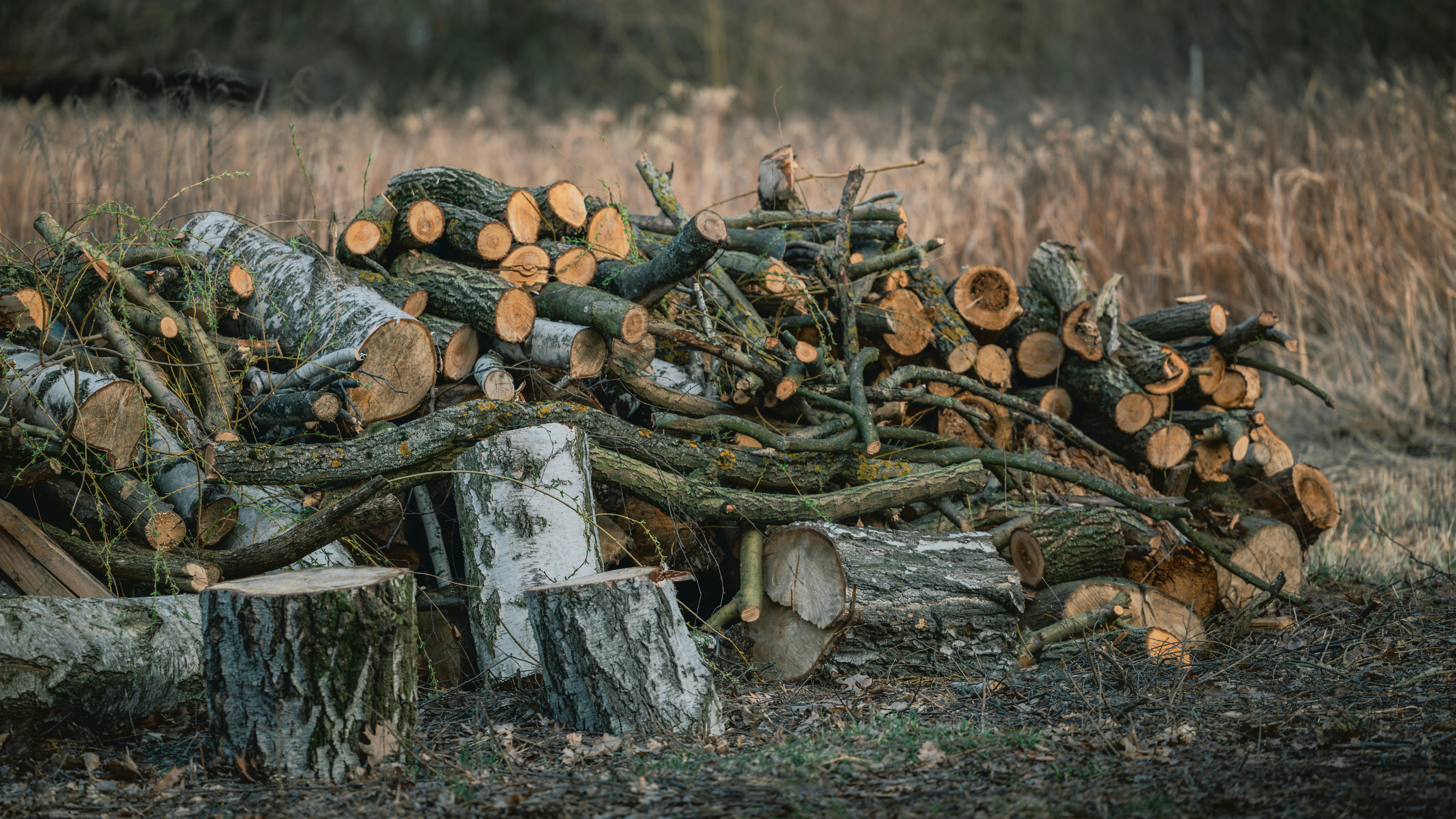
GranBio's process breaks down woody biomass to release the carbon stored inside plant fiber. That carbon is then rebuilt into fuel molecules chemically identical to fossil-based jet fuel, diesel, and gasoline.
The conversion happens in stages. Raw feedstock, whether it's a tree limb or a broken pallet, gets processed to separate usable carbon from the rest of the material.
One detail sets this process apart from many biofuel pathways. A byproduct of the conversion generates heat for the facility itself, cutting the amount of outside energy the plant needs to run.
The finished products are drop-in fuels. Sustainable aviation fuel, renewable diesel, and renewable gasoline all come out compatible with existing engines, pipelines, and fueling infrastructure. Airlines and trucking fleets don't need new equipment to use them.
That compatibility matters for adoption speed. Drop-in fuel technology lets fuel producers plug into supply chains that already exist, rather than waiting on new engine or airport infrastructure.
Sustainable aviation fuel made from waste feedstock typically cuts lifecycle emissions by more than 80 percent compared to conventional jet fuel, according to World Energy. That reduction is a major reason waste-based pathways draw interest from large corporate buyers like Amazon.
Why Did Amazon Choose to Back GranBio?
Amazon's investment supports GranBio's push to commercialize a fuel source that doesn't compete with food crops. The deal falls under Amazon's Climate Pledge, its commitment to reach net-zero carbon emissions by 2040.

"Aviation needs lower-carbon fuel, and the supply doesn't exist at scale yet."
Andreas Marschner, Amazon's Vice President of Worldwide Operations Sustainability
The investment amount has not been disclosed by either company. Amazon and GranBio have both kept the financial terms private, so no dollar figure should be treated as confirmed.
What's public is the strategic logic. Amazon relies on aviation and long-haul trucking across its global logistics network, and both sectors are considered hard to decarbonize without new fuel sources.
Airlines worldwide are projected to spend $4.3 billion on sustainable aviation fuel in 2026, according to IATA. Even with that spending, well under one percent of global jet fuel supply is sustainable today. That spending has to go somewhere. Waste-based feedstock is one of the few pathways that can scale without straining food or agricultural supply chains.
Reviving America's Shut-Down Paper Mills
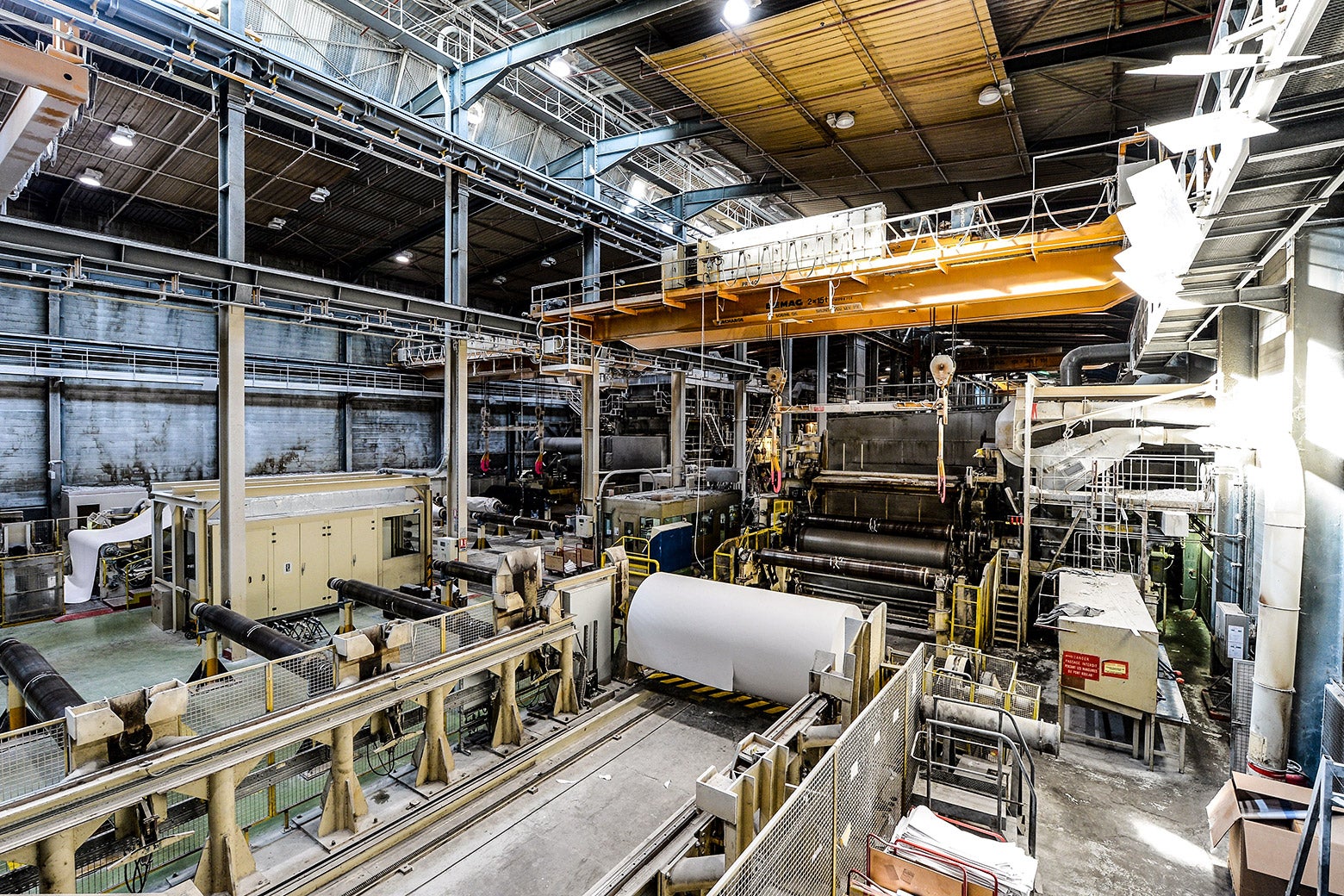
GranBio's scale-up plan centers on old pulp and paper mills, not new construction. Over the next decade, the company intends to convert shuttered mill sites across the U.S. into advanced biorefineries.
Pulp and paper mills once anchored small manufacturing towns across the Southeast and Midwest. Many closed over the past two decades as paper demand fell and production shifted overseas.
Those closures left behind idle infrastructure. Mill sites already have rail access, water rights, and power connections, all things a new fuel plant would otherwise need to build from scratch.
GranBio's chief technology officer, Kim Nelson, framed the approach as a way to prove the model works before expanding it further.

"Working with Amazon on this project brings us closer to proving that sustainable aviation fuel made from forest and construction waste can be a real, scalable solution for decarbonizing aviation."
Kim Nelson, GranBio's Chief Technology Officer
Repurposing dormant mills also means jobs. Communities that lost manufacturing work when a mill closed could see skilled positions return once a biorefinery moves in.
This mill-to-biorefinery approach sets GranBio's plan apart from most SAF capacity expansions. Most of those projects build new facilities instead of reactivating old industrial sites.
How Does GranBio Compare to Other Waste-Based SAF Projects?
GranBio is one of several companies using non-food waste to produce sustainable aviation fuel, but each relies on a different feedstock strategy. The table below places GranBio alongside two projects already active in North America.
| Company | Feedstock | Location | Status |
|---|---|---|---|
| GranBio | Forestry residue, crop stalks, construction debris | Thomaston, Georgia | R&D scaling, mill conversion planned |
| Greenwater Technology | Mill byproducts, underused wood fibre | Thunder Bay, Ontario | Demonstration plant in development |
| Montana Renewables (Calumet) | Used cooking oil, animal fats, renewable feedstocks | Great Falls, Montana | Operating, expanding capacity |
Montana Renewables already runs one of the largest SAF operations in North America using Topsoe's HydroFlex technology. It has also signed large multiyear SAF supply deals to move that fuel to market. Its feedstock depends on fats and oils, not wood waste. GranBio's wood-based pathway avoids competing for that same supply.
North American SAF production has grown fast in a short window. Capacity reached 30,000 barrels per day in 2025, up from just 2,000 barrels per day at the start of 2024, according to Decarbonfuse. Waste-wood pathways like GranBio's are part of what's driving that curve upward.
Official U.S. Forest Service video showing the Hat Creek Bioenergy facility in California converting sustainably sourced forest woodchips (woody biomass from forest management and wildfire mitigation) into renewable electricity for the local grid.
What's Next for GranBio's Fuel Pipeline?
GranBio's next major milestone sits outside the Amazon deal, at a separate site in Jesup, Georgia. The company is developing a cellulosic SAF project there with Rayonier Advanced Materials, a cellulose products manufacturer, targeting startup in the fourth quarter of 2027.
Georgia isn't the only state building large-scale SAF capacity right now. A planned Louisiana SAF facility is targeting 13,000 barrels per day using a different conversion pathway, underscoring how many routes the industry is testing at once.
That project uses GranBio's proprietary AVAP technology to convert biomass into second-generation ethanol. The ethanol is then upgraded into aviation fuel. It's partly financed by a $100 million grant GranBio won from the U.S. Department of Energy.
Two active projects on two Georgia sites give GranBio a broader base to prove out its waste-to-fuel technology before the mill conversion plan expands nationwide. That expansion builds on a production base that already grew fifteenfold in two years, climbing from 2,000 to 30,000 barrels per day nationwide.
GranBio's roadmap also intersects with growing demand pressure elsewhere in the industry. Global SAF demand for 2030 is projected at 12.8 million tonnes, according to SkyNRG's 2026 SAF Market Outlook. That's down from an earlier forecast of 15.5 million tonnes, a revision SkyNRG attributes mainly to weaker near-term SAF economics in the U.S.
Companies supplying fuel from non-food, non-oil feedstocks are positioned to fill that gap. They avoid the supply constraints now hitting cooking-oil and animal-fat based producers.
Frequently Asked Questions
How much did Amazon invest in GranBio?
Amazon and GranBio have not disclosed the dollar amount of the investment. Both companies have confirmed the deal but kept the financial terms private.
What feedstock does GranBio use to make sustainable aviation fuel?
GranBio uses forestry residues like branches and treetops, crop stalks, and construction debris such as discarded pallets and plywood. All of these materials are abundant in the United States and typically go unused.
Is GranBio's fuel compatible with existing airplanes and engines?
Yes. GranBio's sustainable aviation fuel, renewable diesel, and renewable gasoline are drop-in fuels, meaning they work in existing engines and fueling infrastructure without modification.
Old mill towns losing their main employer is a familiar story across the American Southeast. GranBio's plan flips that story around. The same rail lines and water access that once fed paper production could soon feed jet fuel production instead.
For ongoing coverage of carbon removal, BECCS, and corporate CDR procurement, subscribe to Decarbonfuse.com.
Subscribe to the newsletter
Daily decarbonization data and news delivered to your inbox
Follow the money flow of climate, technology, and energy investments to uncover new opportunities and jobs.
Latest issues
-
Colorado Joins the 7-State CCS Permit Fast Lane
Inside This Issue ⚖️ Colorado Takes Over Class VI Permits: What Changes for CCS? 🏭 Hebei Shoulang Facility Using LanzaTech Technology Achieves World’s First ISCC EU RCF Certification for Ethanol P...
-
The US Hasn't Made Heavy Water Since 1982
Inside This Issue ⚛️ Aternium Completes FEED Studies for US Hydrogen, Heavy Water Project 🐄 Google, McKinsey Strike Brazil Carbon Removal Deal With Silvopasture Project 🔧 Cummins Selects Stargate ...
-
Why Colorado’s Koloma Has Japan’s Largest Utility Hooked
Inside This Issue ⚡ JERA Invests in Koloma to Explore Natural Hydrogen as a Future Low-Carbon Energy 🔬 New CATF Tool Provides Framework for Self-Assessment and Strengthening of Biomass Carbon Remo...
Company Announcements
-
Citi Closes $72 Million Carbon Removal-Linked Note to Support Applied Carbon Biochar Project
HIGHLIGHTS Citi structured an innovative $72 million carbon removal-linked note to provide upfront capital for Applied Carbon's biochar project, marking a first-of-its-kind "outcome bond" for ver...
-
New platform opens access to the same rigorous project evaluations trusted by the world's leading carbon removal procurement programs Today, Relae (formerly Carbon Direct) launched The Diligence C...
-
Inside BLM's 650,000-Acre Bet on Wyoming Carbon Storage
The Bureau of Land Management has offered right-of-way grants covering about 649,438 acres of federal pore space in southwest Wyoming. The September 21, 2026 offers went to Moxa Carbon Storage LLC ...
-
NEW YORK, BUSINESS WIRE, SWITCH Maritime (Switch), a leading developer of zero-emission vessels, secured a Design Basis Agreement (DBA) with the United States Coast Guard (USCG) for the SWITCH-150,...