
California Opens the Door to a Three-Way Carbon Market
Published by Todd Bush on October 2, 2026
California has cleared the last legal hurdle before formal rulemaking to add Washington to its carbon market with Québec. Washington finalized its own linkage rules the same week. If California and Québec complete their remaining steps, the three jurisdictions expect to run joint auctions and share one allowance price starting in 2027.
Canada added a second storyline on September 24. Ottawa is now exploring a framework to trade carbon credits between countries under Article 6 of the Paris Agreement, with carbon removal named as a priority.
The two efforts are separate. Together, they point North American carbon markets toward deeper connections and more room for removal projects.

The Washington State Capitol in Olympia, home of the legislature that created the Cap-and-Invest Program now preparing to link with California and Québec.
What Did Newsom Approve for Washington's Carbon Market?
California Governor Gavin Newsom made the findings state law requires before linkage rulemaking can begin. He took that action on September 21, 2026, and announced it at Climate Week NYC on September 23.
Senate Bill 1018 requires the governor to confirm that a partner program meets California's standards. The California Air Resources Board (CARB), the state agency that runs Cap-and-Invest, requested those findings in early September.
CARB can now open the public process to accept Washington's compliance instruments. That rulemaking is the final California step before the markets formally link.
The program behind it is large. California's Cap-and-Invest covers sources responsible for 80% of statewide greenhouse gas emissions, according to the Governor's Office in September 2026. To date, it has generated $37 billion for climate investments.
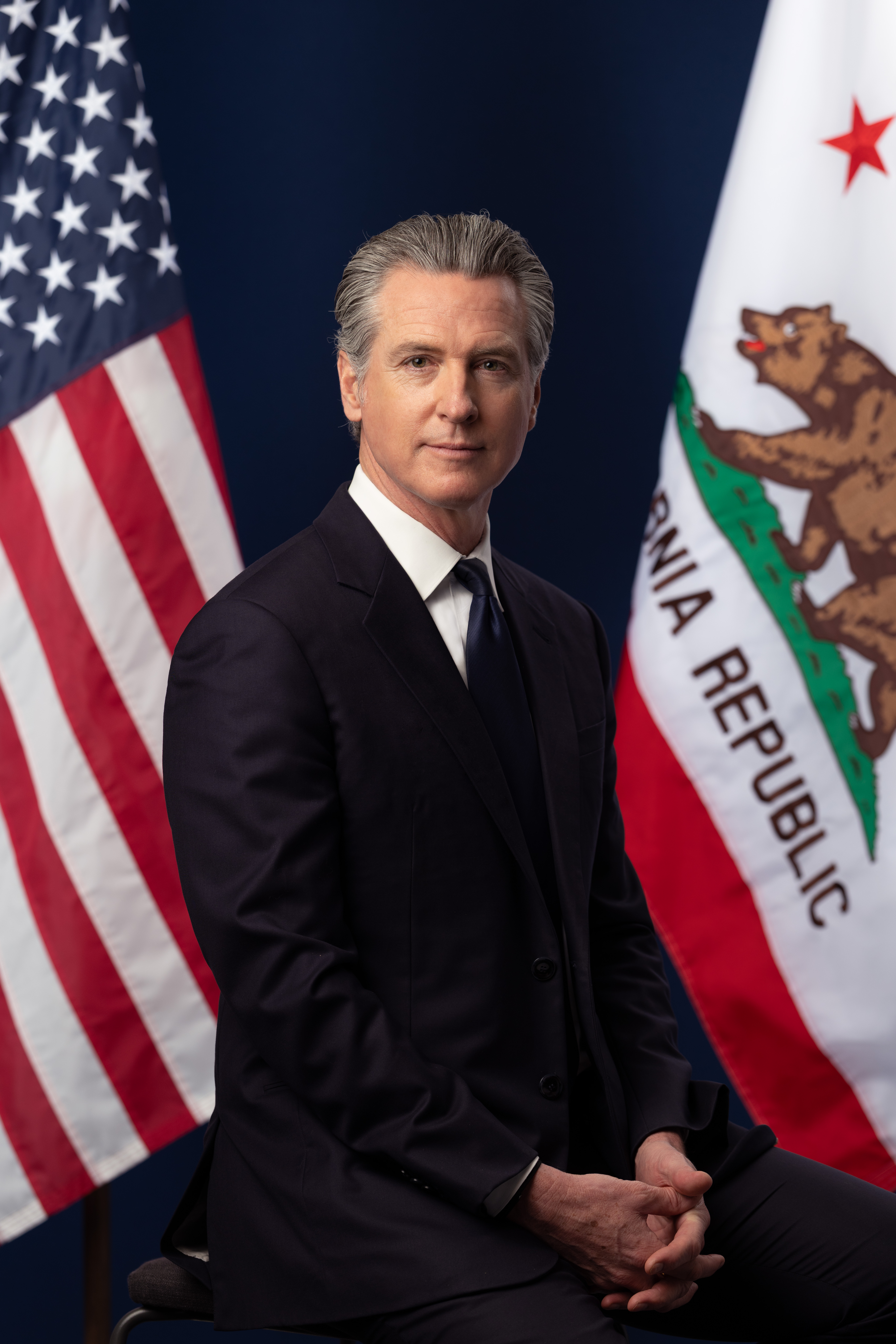
"By joining forces with our partner in Washington State, we will build a stronger, more durable carbon market that will drive investment, cut pollution, and power the clean economy of the future."
Gavin Newsom, Governor of California
Québec has been California's market partner since January 1, 2014. Washington would join what its governor's office calls the largest subnational carbon market in the world. Cap-and-Invest revenue also funds programs like California's $11 million direct air capture fund.
How Did Washington Finish Its Side of Linkage?
The Washington State Department of Ecology, which runs the state's Cap-and-Invest Program, adopted its linkage rules on September 23, 2026. The amendments take effect October 24, 2026.
The rules align Washington with California and Québec on compliance periods, price containment, registration, corporate associations and auctions. They also set procedures for announcing a linkage effective date.
Washington Gov. Bob Ferguson and Ecology Director Casey Sixkiller sign the June 2026 agreement to link Washington’s Cap-and-Invest Program with the California–Québec carbon market (TVW / Office of the Governor, June 2026).
The three governments signed a non-binding linkage agreement in Seattle on June 25, 2026. That agreement set expectations for cooperation, but it did not activate linkage on its own.
Québec still needs a formal rulemaking led by its Ministry of the Environment. It also needs National Assembly approval of the agreement and ratification by Order in Council.
Key Facts
- September 21, 2026: Governor Newsom made the required linkage findings, announced September 23.
- September 23, 2026: Washington adopted linkage rules, effective October 24, 2026.
- June 25, 2026: Washington, California and Québec signed a non-binding linkage agreement.
- 2027: Expected start of joint auctions and a shared allowance price.
- 80%: Share of California's greenhouse gas emissions from sources covered by Cap-and-Invest, which has generated $37 billion.
- November 1, 2027: Washington's first compliance period deadline.
- September 24, 2026: Canada began exploring an Article 6 carbon credit trading framework.
>> In Other News: Absolute Climate Opens Consultation On EAC Method For Gas Power With CCS
Ecology must give the market at least 90 days' notice before linkage takes effect. If linkage is live before November 1, 2027, eligible California and Québec allowances from vintage 2026 or earlier could cover Washington emissions from 2023 through 2026.
Why Does a Bigger Market Matter for Buyers and Developers?
A linked market gives covered companies a far larger pool of compliance instruments. The joint California-Québec market is almost six times the size of Washington's, based on 2023 through 2026 allowance budgets analyzed by Ecology in October 2023.
Larger markets tend to price more steadily because more buyers and sellers absorb swings. Ecology says that predictability helps companies commit capital to long-term emissions cuts.
Washington allowances have cleared at roughly double the joint market's level this year. Its June 2026 quarterly auction settled at $64.56 per allowance, according to Ecology's Auction #14 summary report.
| Market and Auction | Date | Current Settlement Price | Context |
|---|---|---|---|
| Washington Auction #13 | March 2026 | $65.26 | Settled at the 2026 reserve Tier 1 trigger price |
| California-Québec Joint Auction #47 | May 2026 | $28.81 | Regular quarterly auction, all current allowances sold |
| Washington Auction #14 | June 2026 | $64.56 | Regular quarterly auction, all current allowances sold |
| California-Québec Joint Auction #48 | August 2026 | $32.48 | Auction reserve price was $27.94 |
The August joint auction sold all 49,016,180 current allowances at $32.48, per the California and Québec summary results. That price sat $4.54 above the $27.94 reserve price.
Offset developers gain room too. During Washington's 2023 through 2026 compliance period, up to 50% of offset credits used can come from projects in a linked jurisdiction. That share drops to 25% in later periods.
Emissions impact is part of the case. Linking California and Washington could cut an additional 45 million metric tons of climate pollution through 2045. That estimate comes from Greenline Insights modeling cited by the Environmental Defense Fund in September 2026.
Financing tools are maturing alongside the markets. Carbon insurer Kita has expanded its underwriting capacity by 450%, as our carbon insurance coverage reported.
>> RELATED: Can California's Carbon Market Survive Without Federal Backbone?
Canada Explores Article 6 Trading with Carbon Removal in Focus
Environment and Climate Change Canada announced on September 24, 2026 that Ottawa is exploring a framework for trading internationally transferred mitigation outcomes, or ITMOs. Carbon removal technologies and nature-based solutions are named as activities that could attract new investment.
Minister Julie Dabrusin made the announcement in Ottawa. ITMOs let countries transfer verified emissions reductions and removals toward each other's climate targets.
Canada says traded outcomes must be real, additional, verified and permanent, with no double counting. No final framework, timetable or launch date has been announced. Ottawa will first engage provinces, territories, Indigenous organizations and other partners.

"This is about turning our natural advantages and homegrown climate innovation into investment, good jobs, and new export opportunities. A clear framework for international carbon credit transfers can help Canadian companies scale, attract capital, and bring more innovative technologies to market, strengthening our position as a leader in the global clean economy."
Julie Dabrusin, Minister of the Environment, Climate Change and Nature
The effort complements Canada's Spring Economic Update, which committed over $13 billion in international climate finance. Ottawa says that makes Canada one of the first countries to pledge climate finance beyond 2026.
Canada has become a base for removal developers, including Deep Sky's planned 500,000-tonne direct air capture facility in Manitoba. Our North American carbon removal year in review tracked that shift.
International buyers could give direct air capture developers another revenue channel. Durable removals already earn premium credit prices in voluntary markets.
Aviation is another possible demand source. Article 6 units can be authorized for international uses such as the CORSIA aviation scheme, which enters its mandatory phase in 2027. In Québec, Boeing's $10 million SAF partnership is also targeting first production in 2027.
How Do the Two Developments Compare?
The West Coast linkage and Canada's Article 6 work run on separate tracks. Canada's framework would not connect to the California-Washington-Québec market.
| Factor | California, Washington and Québec | Canada Article 6 Framework |
|---|---|---|
| Type | Existing compliance markets moving to direct linkage | Proposed framework for international ITMO transfers |
| Stage | Formal rulemaking underway, Washington rules adopted | Policy exploration and consultation |
| Timing | Expected to operate in 2027 | No implementation date announced |
| What Moves | Allowances usable across all three jurisdictions | Verified reductions and removals between countries |
Both tracks reward high-integrity accounting. Groups like the Carbon Removal Alliance have also pushed for compliance pathways for durable carbon removal.
The Road to the First Joint Auction
The next milestones sit with CARB's public rulemaking and Québec's regulatory and legislative steps. Once all three governments finish, Ecology's 90-day notice will set the start date.

Completed and pending steps toward a linked California, Washington and Québec carbon market expected in 2027.
Officials still target 2027 for joint auctions across California, Washington and Québec. Canada's ITMO framework will move on its own schedule, with carbon removal at its center.
Frequently Asked Questions
When will the California, Washington and Québec carbon market start?
Officials expect the linked market to begin operating in 2027. CARB must finish its rulemaking, Québec must complete its regulatory and legislative steps, and Ecology must give at least 90 days' notice.
Can Washington companies use California allowances today?
No. Cross-border trading and compliance use begin only after linkage is effective in all three jurisdictions.
Is Canada already trading ITMOs?
Not yet. Canada is exploring a framework and will consult provinces, territories and Indigenous organizations before deciding how ITMO trading could work.
More connected markets could mean more buyers, steadier prices and new doors for carbon removal developers across North America.
For ongoing coverage of carbon removal, BECCS, and corporate CDR procurement, subscribe to Decarbonfuse.com.
Subscribe to the newsletter
Daily decarbonization data and news delivered to your inbox
Follow the money flow of climate, technology, and energy investments to uncover new opportunities and jobs.
Latest issues
-
Colorado Joins the 7-State CCS Permit Fast Lane
Inside This Issue ⚖️ Colorado Takes Over Class VI Permits: What Changes for CCS? 🏭 Hebei Shoulang Facility Using LanzaTech Technology Achieves World’s First ISCC EU RCF Certification for Ethanol P...
-
The US Hasn't Made Heavy Water Since 1982
Inside This Issue ⚛️ Aternium Completes FEED Studies for US Hydrogen, Heavy Water Project 🐄 Google, McKinsey Strike Brazil Carbon Removal Deal With Silvopasture Project 🔧 Cummins Selects Stargate ...
-
Why Colorado’s Koloma Has Japan’s Largest Utility Hooked
Inside This Issue ⚡ JERA Invests in Koloma to Explore Natural Hydrogen as a Future Low-Carbon Energy 🔬 New CATF Tool Provides Framework for Self-Assessment and Strengthening of Biomass Carbon Remo...
Company Announcements
-
Citi Closes $72 Million Carbon Removal-Linked Note to Support Applied Carbon Biochar Project
HIGHLIGHTS Citi structured an innovative $72 million carbon removal-linked note to provide upfront capital for Applied Carbon's biochar project, marking a first-of-its-kind "outcome bond" for ver...
-
New platform opens access to the same rigorous project evaluations trusted by the world's leading carbon removal procurement programs Today, Relae (formerly Carbon Direct) launched The Diligence C...
-
Inside BLM's 650,000-Acre Bet on Wyoming Carbon Storage
The Bureau of Land Management has offered right-of-way grants covering about 649,438 acres of federal pore space in southwest Wyoming. The September 21, 2026 offers went to Moxa Carbon Storage LLC ...
-
NEW YORK, BUSINESS WIRE, SWITCH Maritime (Switch), a leading developer of zero-emission vessels, secured a Design Basis Agreement (DBA) with the United States Coast Guard (USCG) for the SWITCH-150,...