
2025 was the year carbon removal in North America proved it could deliver at scale, even as federal policy pulled back. The durable carbon dioxide removal (CDR) market officially crossed the 1 million tonne mark in actual deliveries, signaling the industry's transition from pilot projects to commercial reality. Here's what actually happened.
The Market Crossed Real Milestones
According to CDR.fyi data, the durable CDR market hit 1 million tonnes in deliveries distributed across 521 purchasers from 35 countries. Credits came from 117 suppliers operating in more than 28 nations. Biochar led deliveries with 1.6 million tonnes contracted in the first half of 2025 alone, while BECCS (bioenergy with carbon capture and storage) led deal volume.
Roughly 50% of H1 2025 buyers were first-timers, including ByteDance, the parent company of TikTok, which purchased over 100,000 tonnes of carbon credits through Rubicon Carbon. This diversification marks a critical shift for an industry long dominated by a handful of tech giants.
Microsoft still dominates with approximately 50 million tonnes in total commitments, but the buyer base is finally expanding beyond big tech. The company contracted an estimated $2 to $4 billion in long-term CDR agreements in the first four months of 2025.

The key facts and figures from the 2025 CDR market, showcasing a year of remarkable resilience and growth in carbon dioxide removal, from reaching 1 million tonnes of durable deliveries to securing over $2B in private DAC investment.
Microsoft's Buying Spree Set the Pace
Microsoft's 2025 deals read like a who's who of carbon removal innovation. The agreement with Rubicon Carbon for 18 million tonnes of afforestation, reforestation, and revegetation (ARR) credits stands as one of the largest single-buyer commitments ever recorded.
Microsoft also secured 7 million tonnes from Chestnut Carbon to restore 60,000 acres across Arkansas, Texas, and Louisiana with 35 million native trees. On the BECCS front, the company signed with Fidelis subsidiary AtmosClear for 6.75 million tonnes from a facility at the Port of Greater Baton Rouge.
>> RELATED: Turning Paper Waste into Climate Wins: Microsoft Backs Massive CO280 Carbon Capture Deal
The tech giant secured 4.9 million tonnes from Vaulted Deep's waste management technology and announced a 3.6 million tonne purchase from C2X's BECCS facility at Beaver Lake, Louisiana in December 2025.
CO280's pulp and paper partnerships expanded across the U.S. Gulf Coast. JPMorgan Chase signed a 450,000 tonne agreement with CO280 at under $200 per ton, proving that high-quality engineered CDR can reach competitive price points.
DAC Advanced Despite Federal Headwinds
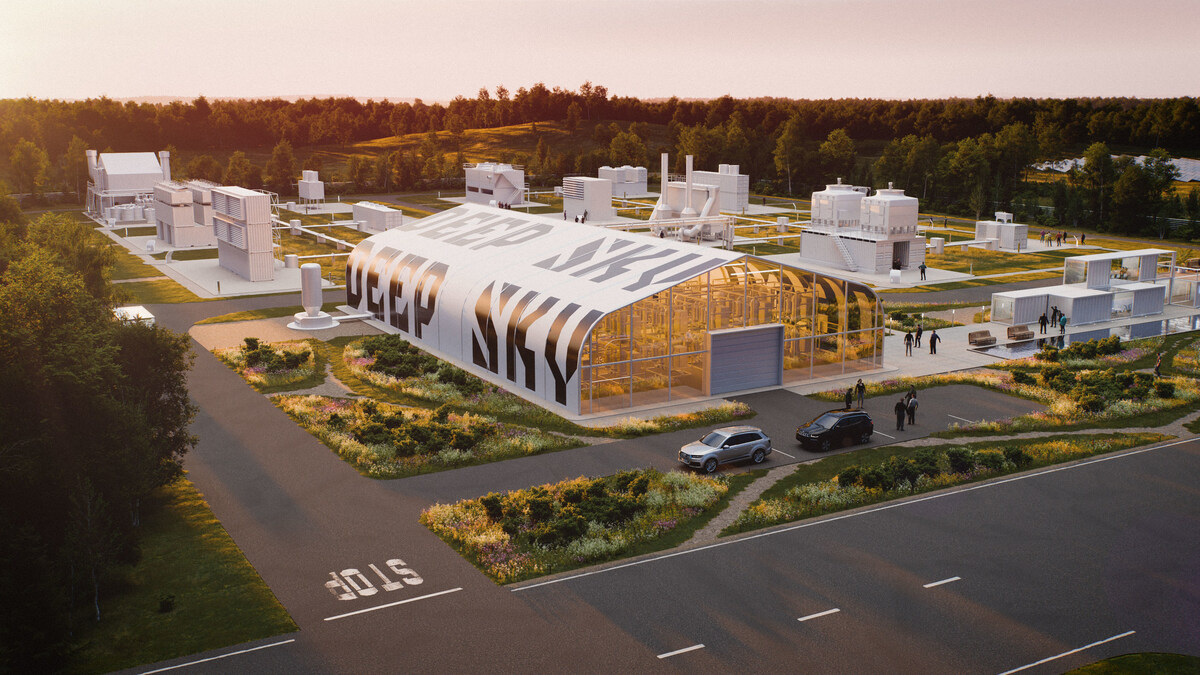
Direct air capture technology kept moving forward even as U.S. federal support retreated. In August 2025, Deep Sky launched its Alpha facility in Innisfail, Alberta, becoming the first direct air capture project in North America to sequester CO2 underground. The facility hosts up to 10 DAC technologies under one roof, including systems from Airhive, Mission Zero Technologies, Skyrenu, and GE Vernova.

"This is a defining moment, not just for Deep Sky, but for the global carbon removal industry."
Alex Petre, CEO of Deep Sky
Occidental Petroleum's STRATOS facility in Ector County, Texas moved toward commercial operations. The $1.3 billion project is designed to capture 500,000 tonnes annually, with two capture trains in wet commissioning by year's end.
CarbonCapture Inc. relocated Project Tamarack from Arizona to Deep Sky Alpha in Alberta after DOE funding was cancelled. Cost breakthroughs also made headlines. Airhive launched its 1,000-tonne system with costs below $500 per tonne, while DACLab emerged from stealth with systems at $500 per tonne and a path to $250 at scale. Private investment exceeded $2 billion despite federal funding cuts.
>> In Other News: Gevo North Dakota Awarded “A” Rating From BeZero Carbon, Affirming Its High-Quality Carbon Removal Credits
U.S. Federal Policy Got Messy
The DOE cancelled $7.56 billion in clean energy awards under the Trump administration, affecting 223 climate-related projects. Many DAC hub projects were paused, scaled back, or cancelled outright. Yet Project Cypress and the South Texas DAC Hub survived the cuts, and the 45Q tax credit remained intact despite the repeal attempt introduced in March.
"This past year tested the carbon removal sector in new ways. Shifts in federal policy created real uncertainty, even as research and real-world understanding continued to advance across land, ocean, and technology-based pathways."
Erin Burns, Executive Director of Carbon180
The private sector filled the gap while federal support retreated. DAC developers secured more than $2 billion in investment, and total offtake volume exceeded 2.5 million tons of CO2.

States Stepped Up (California Led)
While Washington retreated, California doubled down on carbon management. Governor Newsom signed legislation positioning the state as the nation's carbon removal leader.
SB 614 authorized CO2 pipeline construction, enabling transport of captured carbon to permanent geological storage. AB 1207 made CDR eligible as a compliance offset in the state's Cap-and-Invest system. SB 804 opened climate tech innovation funding to CDR projects.
The numbers tell the story: $85 million allocated for carbon tech innovation in the 2026-27 budget year, and $50 million dedicated to CDR projects through 2035. California's Cap-and-Invest program extends through 2045, giving developers two decades of policy certainty.
>> RELATED: California Resources Corporation Breaks Ground on California's First Carbon Capture and Storage Project
Canada Emerged as a Safe Harbor
Canada positioned itself as a refuge for carbon removal developers seeking policy stability. Deep Sky announced a 500,000-tonne DAC facility in Manitoba, one of the largest carbon removal projects planned anywhere. CarbonCapture moved operations north after U.S. policy shifts cancelled funding for its Arizona project.
The Canadian government invested more than $9.5 million in decarbonization projects including CDR initiatives. Canada's combination of renewable energy, favorable geology for CO2 storage, and supportive policy framework created an attractive alternative to the uncertain U.S. market.
What This Sets Up for 2026
The stage is set for continued momentum. STRATOS is expected to begin full commercial operations, becoming the world's largest DAC facility. More DAC facilities will come online as technologies proven at Deep Sky Alpha scale up across North America.
The SBTi Net-Zero Standard v.2 will formalize CDR in corporate sustainability strategies, potentially unlocking new buyers who've waited for clear guidance. Buyer diversification will be the key metric to watch. State-level action will likely continue filling federal gaps.
North America's CDR market proved it can scale in 2025. The real test in 2026 is whether momentum holds without consistent federal support.
Subscribe to the newsletter
Daily decarbonization data and news delivered to your inbox
Follow the money flow of climate, technology, and energy investments to uncover new opportunities and jobs.
Latest issues
-
Why Is Wyoming Giving 650,000 Acres to Carbon Storage?
Inside This Issue 🪨 Inside Blm's 650,000-Acre Bet on Wyoming Carbon Storage 🏭 California Advances Carbon Capture and Removal Regulations Under SB 905 ⚡ Why a Japanese Power Giant Is Betting on Den...
-
Colorado Joins the 7-State CCS Permit Fast Lane
Inside This Issue ⚖️ Colorado Takes Over Class VI Permits: What Changes for CCS? 🏭 Hebei Shoulang Facility Using LanzaTech Technology Achieves World’s First ISCC EU RCF Certification for Ethanol P...
-
The US Hasn't Made Heavy Water Since 1982
Inside This Issue ⚛️ Aternium Completes FEED Studies for US Hydrogen, Heavy Water Project 🐄 Google, McKinsey Strike Brazil Carbon Removal Deal With Silvopasture Project 🔧 Cummins Selects Stargate ...
Company Announcements
-
Citi Closes $72 Million Carbon Removal-Linked Note to Support Applied Carbon Biochar Project
HIGHLIGHTS Citi structured an innovative $72 million carbon removal-linked note to provide upfront capital for Applied Carbon's biochar project, marking a first-of-its-kind "outcome bond" for ver...
-
New platform opens access to the same rigorous project evaluations trusted by the world's leading carbon removal procurement programs Today, Relae (formerly Carbon Direct) launched The Diligence C...
-
Inside BLM's 650,000-Acre Bet on Wyoming Carbon Storage
The Bureau of Land Management has offered right-of-way grants covering about 649,438 acres of federal pore space in southwest Wyoming. The September 21, 2026 offers went to Moxa Carbon Storage LLC ...
-
NEW YORK, BUSINESS WIRE, SWITCH Maritime (Switch), a leading developer of zero-emission vessels, secured a Design Basis Agreement (DBA) with the United States Coast Guard (USCG) for the SWITCH-150,...