
Congress is weighing a bill that would force EPA to rule on state requests to permit carbon storage wells within a fixed timeline. The Primacy Certainty Act of 2025 sets a 180-day decision window, with automatic approval at day 210 for qualifying states. It arrives as 142 Class VI wells await EPA review.
The backlog figure comes from a Congressional Research Service (CRS) report, the nonpartisan research arm of Congress. CRS counted 142 individual Class VI wells across 44 projects pending EPA review as of September 2026. Only 13 Class VI wells currently operate under EPA-issued permits nationwide.
Key Facts
- 142 Class VI wells across 44 projects were pending EPA review as of September 2026 (CRS)
- Only 13 Class VI wells operate under EPA-issued permits nationwide (CRS, 2026)
- The Primacy Certainty Act of 2025 (H.R. 4880 and S. 2505) sets a 180-day window for EPA primacy decisions
- Qualifying states would receive automatic approval at day 210 if EPA does not act
- Seven states hold or have been granted Class VI primacy, with Colorado finalized on October 13, 2026
- EPA proposed approving Utah as the eighth primacy state on October 22, 2026
- 106 Class VI applications covering 387 wells were under review at the end of Q1 2026 (Enverus, June 2026)
>> In Other News: Capturing Carbon While Capturing Asbestos
What Is Class VI Primacy, and Why Does It Matter?
Class VI primacy lets a state agency, instead of EPA, permit and oversee wells that store CO2 permanently underground. Every commercial carbon capture and storage (CCS) project injecting into deep formations needs one of these permits.
The US Environmental Protection Agency (EPA) runs the Class VI program under the Safe Drinking Water Act. States can take it over if their rules meet or exceed federal standards.
Primacy matters because state regulators already know local geology and operators. North Dakota and Wyoming, the two earliest primacy states, had issued 17 Class VI permits combined by June 2025, according to engineering firm Trihydro. That speed is reshaping the US carbon storage map.

A CO2 injection well at the Cranfield test site in Mississippi, the type of deep well that requires a Class VI permit before commercial storage begins. Photo: U.S. Geological Survey, public domain.
How Big Is the Class VI Backlog?
EPA had 142 Class VI wells across 44 projects awaiting review in September 2026, according to CRS. That queue is more than ten times the 13 wells now operating under EPA permits.
Enverus, an energy data and analytics firm, tracked 106 applications covering 387 wells under review at the end of Q1 2026. EPA held 54 of those applications, covering 211 wells.
State regulators carried the rest. Louisiana was reviewing 30 applications and Texas 18, per the same Enverus data. Decarbonfuse covered those figures when CCS permits climbed to 106 earlier this year.
The Carbon Capture Coalition, a national group of more than 100 companies, unions, and environmental organizations, has pressed EPA on timing for years. Its executive director made the case when EPA proposed West Virginia's primacy in November 2024.

"EPA must move to swiftly and rigorously review and make determinations on these projects and primacy applications if these technologies are to fulfill their emissions reduction potential."
Jessie Stolark, Executive Director, Carbon Capture Coalition
Applications are still moving forward in states that rely on EPA. Kansas offers one example, where an EPA-issued permit for PureField opened a new CCS frontier in 2026.
>> RELATED: Texas Primacy Puts Gulf Coast CCS Projects in Fast Lane
What Does the Primacy Certainty Act Do?
The Primacy Certainty Act of 2025 puts firm deadlines on EPA's review of state primacy applications. It amends the Safe Drinking Water Act to set a step-by-step clock.
Rep. Dan Crenshaw (R-TX) introduced H.R. 4880 on August 5, 2025, with Reps. August Pfluger (R-TX) and Randy Weber (R-TX). Sen. Dan Sullivan (R-AK) introduced the Senate companion, S. 2505, on July 29, 2025.
Under the House bill text, the review would follow this sequence:
- Day 10: EPA must confirm whether an application is complete and flag any deficiencies.
- Day 180: If EPA has not decided, it must send the state a written explanation and an itemized list of deficiencies.
- Day 210: The application is considered approved if the state already holds primacy for another class of injection wells.
The bill also bars EPA from adding approval conditions that the statute does not explicitly require. For applications already pending, the 180-day clock would start on the date of enactment.
EPA Administrator Lee Zeldin announces the agency’s approval of Class VI primacy for West Virginia, allowing the state to permit and oversee wells used for permanent geologic storage of carbon dioxide.
Other provisions target coordination. EPA would assign a dedicated liaison to each applying state. The agency would also report to Congress within 90 days on staffing and funding needs, using existing Infrastructure Investment and Jobs Act funds.
Both bills remain in committee. H.R. 4880 sits with the House Energy and Commerce Committee, while S. 2505 sits with the Senate Environment and Public Works Committee.
Which States Hold Class VI Primacy Today?
Seven states now hold or have been granted Class VI primacy, and three of them won approval in 2025. Colorado became the seventh when EPA published its final rule on October 13, 2026.
Colorado's Energy and Carbon Management Commission (ECMC) takes over permitting on November 12, 2026. The state has already agreed with its neighbor to coordinate carbon storage wells with Wyoming on cross-border projects.
| State | Primacy Granted | Status Highlights |
|---|---|---|
| North Dakota | 2018 | 8 permits approved, all operational (June 2025) |
| Wyoming | 2020 | 9 permits issued (June 2025) |
| Louisiana | December 2023 | 30 applications under review (Q1 2026), focused on five priority projects |
| West Virginia | 2025 | Fourth state to gain primacy |
| Arizona | 2025 | Fifth state to gain primacy |
| Texas | November 2025 | 18 applications under review at the Railroad Commission (Q1 2026) |
| Colorado | October 2026 | ECMC assumes authority November 12, 2026 |
Louisiana paused new Class VI submissions under an October 2025 executive order to concentrate on priority sites. Projects on that list, such as the CapturePoint CENLA Hub, continue advancing.
Texas gained primacy through a final rule published November 14, 2025, effective December 15, 2025. Arizona and West Virginia joined earlier that year, as Decarbonfuse reported when three states took control of CCS permitting.
Which States Are Next in Line?
Utah is the next state on track, after EPA proposed approving its application on October 22, 2026. Public comments are open through December 7, 2026.
Utah applied on December 23, 2025. Its Division of Oil, Gas and Mining would issue permits once EPA finalizes the rule.
Other states are preparing. Indiana enacted a law in 2026 requiring the state to pursue Class VI primacy, according to Enverus. Wyoming showed early what state authority can deliver when it granted its first three Class VI permits in December 2023.

A CO2 injection well at the CO2CRC Otway National Research Facility in Australia, showing the compact surface footprint of a dedicated storage well. Photo: Peter D. Warwick, U.S. Geological Survey, public domain.
Why Is Permitting Speed Now the Key to CCS Growth?
The federal 45Q tax credit pays $85 per metric ton for CO2 stored in geologic formations and $180 per ton for direct air capture. Projects must begin construction before January 1, 2033, per the Carbon Capture Coalition's September 2025 45Q primer.
That deadline makes every month of review time valuable. A project cannot claim storage credits until CO2 enters a permitted well.
The industry is ready to scale. Enverus counted five active CCS projects injecting 5.2 million metric tons per year through Class VI wells at the end of Q1 2026. It forecasts more than 100 million metric tons per year by the end of 2027, depending on permit timing.
States are competing for that growth, a trend Decarbonfuse tracked as states battle for CCS leadership.
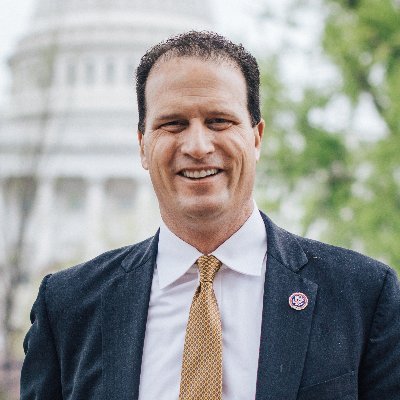
"This bill puts power back into the hands of state regulators who know their geology, and how to support it, best."
Rep. August Pfluger (R-TX), Co-Sponsor, Primacy Certainty Act of 2025
A bounded review window also helps financing. Lenders can model a primacy decision date instead of an open-ended federal review.
Frequently Asked Questions
What is a Class VI injection well?
A Class VI well injects CO2 deep underground for permanent geologic storage. It is regulated under EPA's Underground Injection Control program, and commercial CCS projects need a Class VI permit before injection begins.
Would the Primacy Certainty Act weaken environmental standards?
No. State programs must still meet federal Safe Drinking Water Act requirements to qualify. The bill text keeps EPA's authority to deny applications or revoke primacy, and it changes only the review timeline and process.
Which states hold Class VI primacy?
North Dakota, Wyoming, Louisiana, West Virginia, Arizona, Texas, and Colorado. EPA proposed adding Utah on October 22, 2026, with public comments open through December 7, 2026.
A Clock That Could Move the Queue
The Primacy Certainty Act adds no new program or spending. It sets a deadline, with a 180-day status check and automatic approval at day 210 for qualifying states.
With 142 wells waiting on EPA and Utah next in line, that clock could reach more states sooner. More state programs would also leave EPA more capacity for applicants in the rest of the country.
For ongoing coverage of carbon removal, BECCS, and corporate CDR procurement, subscribe to Decarbonfuse.com.
Subscribe to the newsletter
Daily decarbonization data and news delivered to your inbox
Follow the money flow of climate, technology, and energy investments to uncover new opportunities and jobs.
Latest issues
-
Why Meta Wants 200,000 Tons of Cement Credits
Inside This Issue 🤝 Fortera and Meta Sign Multi-Year Environmental Attribute Certificate (EAC) Purchase Agreement for Low Carbon Cement ✈️ Massachusetts Marks 1st Barge Delivery of SAF to Boston L...
-
The $450M Offtake Deal Behind Emvolon’s $22M Raise
Inside This Issue 🏗️ Emvolon Raises $22 Million Funding Round to Launch Its Modular, Waste-to-fuel Chemical Plants 🔋 Terraton Turns Kenyan Nut Shells into Carbon Credits ⚡ Ballard Launches HPU Agi...
-
113 CCS Projects: What's Driving the Surge?
Inside This Issue 🏭 Global CCS Hits 113 Projects as Americas Lead Capacity 💰 We're Moving $2M+ to Climate Solutions 💧 China Launches World's First Semi-submersible Offshore Wind-to-hydrogen Platfo...
Company Announcements
-
Definitive agreement advances delivery of the electrolyzer facility supplying renewable hydrogen for ultra-low-carbon methanol production in Sinaloa, Mexico MEXICO CITY--(BUSINESS WIRE)--Transitio...
-
Ozona, Marubeni Make Final Investment Decision on Texas Carbon Storage Project
Pawnee Project Will Capture and Permanently Store Carbon Dioxide in Bee County, With First Injection Targeted for Early 2027 SAN ANTONIO, Texas--BUSINESS WIRE--Ozona CCS LLC (“Ozona”) announced a ...
-
SAN JOSE, Calif.--(BUSINESS WIRE)--Fortera, a leading low-carbon cement manufacturer, has signed a multi-year deal with Meta to supply environmental attribute certificates (EACs) associated with ap...
-
Fortera and MLC Select Ste. Genevieve, Mo. for First Commercial CO₂-to-Cement Plant
Fortera to launch patented sustainable cement technology, producing 300,000 tons of ReAct® cement annually using carbon captured from MLC's lime production STE. GENEVIEVE, Mo., Oct. 22, 2026 /PRNe...