
Canada broke ground on its largest carbon storage project on September 9, 2026. Enhance Energy's Origins CCS Hub near Clive, Alberta, will permanently store up to 1.5 million tonnes of CO2 each year starting January 2027. The bigger story is the model. Many emitters, one shared storage system.
Key Facts
- Groundbreaking held September 9, 2026, near Clive, Alberta, 140 kilometres south of Edmonton
- Initial capacity: 1.5 million tonnes of CO2 per year, which Natural Resources Canada equates to removing over 500,000 cars from the road annually
- Operations expected to begin January 2027
- Long-term expansion target: up to 20 million tonnes of CO2 per year
- Enhance Energy's existing Clive project has stored more than 9 million tonnes of CO2 since 2020
- Alberta Carbon Trunk Line: 240 kilometres long, designed for up to 14.6 million tonnes of CO2 per year
- Initial CO2 sources: North West Redwater Sturgeon Refinery and Nutrien's Redwater fertilizer facility
>> In Other News: [x](x)
What Is the Origins CCS Hub, and Why Does It Matter?
Origins is a shared CO2 transportation and permanent storage hub. It will store up to 1.5 million tonnes of CO2 annually once operations begin in January 2027, according to Natural Resources Canada.
The hub does not capture emissions itself. Capture happens at each connected industrial facility. Enhance Energy, a Calgary-based carbon management company, receives the CO2 and injects it into deep geological formations near Clive.
Origins ties into Alberta's existing CO2 pipeline network. That network includes the Alberta Carbon Trunk Line, a 240-kilometre pipeline designed to move up to 14.6 million tonnes of CO2 per year.

Large-diameter pipe sections staged for pipeline construction. Shared CO2 transport lines let industrial emitters avoid building dedicated pipelines to their own storage sites.
The trunk line already carries CO2 from the North West Redwater Sturgeon Refinery and Nutrien's Redwater fertilizer plant. Origins adds permanent storage capacity for those volumes and for new customers.
Natural Resources Canada expects Origins to become the largest carbon capture and storage project in Canada. It also describes the hub as one of the largest CCS facilities in the world.
How Does a Shared Hub Lower the Cost of Industrial CCS?
A shared hub removes the need for every emitter to build its own pipeline, injection wells and storage site. That single change cuts the entry cost for industrial carbon capture.
Older CCS projects were vertically integrated. One company owned capture, transport and storage end to end. The capital burden pushed CCS out of reach for mid-sized plants.
Under the hub model, a facility invests in capture equipment alone. Enhance Energy handles pore space rights, injection wells, monitoring and long-term storage. Fixed infrastructure costs spread across multiple customers.
>> RELATED: Alberta's First CCS Hub Just Started Injecting CO2
Origins is built as an open-access hub. Petrochemical plants, refineries, cement producers, power generators and hydrogen facilities in Alberta's Industrial Heartland can all connect. Enhance Energy says the hub can also take volumes from carbon removal partners, a segment expanding alongside direct air capture projects in central Alberta.
What Does Enhance Energy Bring to the Origins Project?
Enhance Energy has permanently stored more than 9 million tonnes of CO2 at Clive since 2020, according to Natural Resources Canada. Origins builds on that same site and geology.
That earlier work generated more than C$800 million in carbon credit value. It also produced close to C$600 million in economic activity, the company reports, alongside more than C$1 billion in investment across Alberta's CCS value chain.
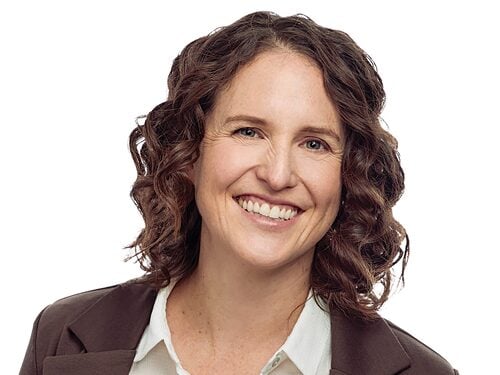
"Origins builds on Enhance's demonstrated expertise in the safe, permanent storage of carbon emissions. By providing foundational carbon management infrastructure, the Origins CCS hub will help industries reduce emissions while continuing to produce the energy and commodities that Canada and the world rely on."
Candice Paton, Vice President, Corporate Affairs, Enhance Energy
Enhance Energy is a founding partner of the Alberta Carbon Trunk Line project. Wolf Midstream owns the pipeline itself. Enhance operates the sequestration end of the system.
Origins targets deep formations in central Alberta's Leduc reservoir complex. Decades of oil and gas drilling data make that geology unusually well characterised, which shortens site validation compared with untested storage ground.
Enhance Energy’s operating Clive CCUS site in central Alberta, which has permanently stored industrial CO2 since 2020 and supplies the operational experience and geology used for the Origins hub. Source: Alberta Energy Centre, June 2025.
How Does Origins Compare With Alberta's Other Storage Hubs?
Origins opens at three times the licensed Phase 1 capacity of Alberta's first operating hub. Alberta began awarding carbon storage hub tenures in 2022 after receiving close to 50 expressions of interest.
The Meadowbrook Carbon Storage Hub, run by Bison Low Carbon Ventures, reached commercial injection first. Phase 1 is licensed for up to 500,000 tonnes of CO2 per year, with a long-term goal of at least 3 million tonnes.
The Atlas Carbon Storage Hub is a 50/50 venture between ATCO EnPower and Shell Canada. Its first phase targets operations in 2028, anchored by CO2 from Shell's Polaris capture project.
| Hub | Operator | Initial CO2 Capacity | Status, September 2026 |
|---|---|---|---|
| Origins CCS Hub | Enhance Energy | 1.5 million tonnes per year | Under construction, January 2027 start |
| Meadowbrook Hub | Bison Low Carbon Ventures | 500,000 tonnes per year, Phase 1 | Operational |
| Atlas Carbon Storage Hub | ATCO EnPower and Shell Canada | Not publicly disclosed | Sanctioned, Phase 1 target 2028 |
What Policy Support Sits Behind Canada's Hub Model?
Two frameworks underpin the investment. Canada's CCUS Investment Tax Credit covers 50% of eligible capture equipment and 37.5% of transportation and storage equipment for qualifying projects.
Those rates halve for expenditures from 2036 through 2040. In April 2026, the federal government extended the credit to enhanced oil recovery at half the standard rates, delivering on the Canada-Alberta Memorandum of Understanding signed in November 2025.
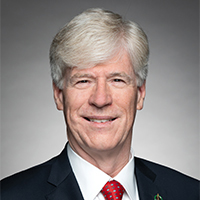
"Projects like the Origins CCS Hub are doing exactly that: strengthening Canada's energy sector, creating jobs and attracting investment, all while growing our way to net zero by 2050."
Tim Hodgson, Minister of Energy and Natural Resources, Canada
Alberta's open-access tenure system does the rest of the work. Approved operators can accept CO2 from many customers through one system. No single emitter needs to own the full chain, which is the structural shift running through Canada's carbon capture build-out.
)
PHLAIR's Dawn direct air capture facility in Alberta, rated at more than 20,000 tonnes of CO2 per year. Enhance Energy says Origins can store volumes from carbon removal partners as well as heavy industry. Photo: PHLAIR via Unsplash.
The Signals to Watch Before January 2027
Origins is roughly four months from its start date. Four developments will show whether the shared model delivers what it promises.
- Which emitters sign storage agreements next. The Sturgeon Refinery and Nutrien Redwater anchor the opening customer base. Cement producers, power generators and hydrogen plants are the logical second wave.
- Whether mid-sized facilities connect. Origins removes the storage barrier. Capture investment by plants previously priced out of CCS is the proof point.
- How fast capacity climbs past 1.5 million tonnes per year. The stated ceiling is 20 million tonnes per year, more than 13 times the opening rate.
- Whether non-oil-and-gas sectors take up capacity. The sector mix over the first two years will show how broadly shared storage actually reaches.
Alberta is not alone in testing this structure. Open-access storage hubs in the United States are pursuing similar designs, and international investors are already backing Alberta storage projects. A clean start at Clive in January 2027 would give the hub model its clearest proof yet, and it would land at a moment when first-phase storage operations in Alberta are already running. Readers tracking the sector can follow further carbon capture, utilization and storage coverage as agreements are announced.
Frequently Asked Questions
Does the Origins CCS Hub capture carbon dioxide?
No. Origins provides CO2 transportation and permanent geological storage. Each connected industrial facility installs and pays for its own capture equipment, then sends the CO2 to Origins for injection and permanent storage near Clive, Alberta.
How much CO2 will Origins store, and when does it open?
Operations are expected to begin in January 2027 at up to 1.5 million tonnes of CO2 per year. Natural Resources Canada equates that volume to removing over 500,000 cars from the road annually. Enhance Energy has said the hub can expand to as much as 20 million tonnes per year.
Who owns the Alberta Carbon Trunk Line that Origins connects to?
Wolf Midstream owns the 240-kilometre pipeline. Enhance Energy is a founding partner of the Alberta Carbon Trunk Line project and operates the storage reservoirs at the receiving end. The pipeline is designed to carry up to 14.6 million tonnes of CO2 per year.
For ongoing coverage of carbon removal, BECCS, and corporate CDR procurement, subscribe to Decarbonfuse.com.
Subscribe to the newsletter
Daily decarbonization data and news delivered to your inbox
Follow the money flow of climate, technology, and energy investments to uncover new opportunities and jobs.
Latest issues
-
Quebec Wood Waste Just Became Jet Fuel
Inside This Issue 🌲 ARC Bio Tests a Refinery Shortcut to Forest-Based SAF 💧 Scientists Just Found a New Way to Make Hydrogen from Water 🤝 How Channel Partnerships Are Helping More Organizations Ta...
-
How Vaulted Deep Turned Offtakes Into $35M Debt
Inside This Issue 🏦 How Carbon Removal Offtakes Are Starting to Unlock Commercial Debt 🌉 California Opens the Door to a Three-Way Carbon Market 🧪 New Material Developed at Oregon State Provides Bo...
-
Canada Wants Foreign Buyers for Its Carbon Removals
Inside This Issue 🍁 Canada Explores Article 6 Path to Global Carbon Buyers 🌲 ARC Bio Demonstrates Canadian Forest Residue Pathway to Sustainable Aviation Fuel 🌾 Business, Forestry and Agriculture ...
Company Announcements
-
MEXICO CITY--BUSINESS WIRE--In the framework of today's World Habitat Day, here is an invitation to reflect on building more sustainable communities, where Mexico is moving firmly toward the energy...
-
Vortex Energy Commissions Hydrogen and Helium Study at Robinsons River Salt Project
Desktop Study Will Use Existing Geological, Geophysical and Well Data to Assess Natural Hydrogen and Helium Potential VANCOUVER, British Columbia, Oct. 05, 2026 (GLOBE NEWSWIRE) -- Vortex Energy C...
-
How Channel Partnerships Are Helping More Organizations Take Action
Organizations of all sizes are looking for credible ways to address their carbon emissions. But to help high-integrity Carbon Dioxide Removal (CDR) solutions reach small-to-medium-sized organizatio...
-
Uniper signs capacity reservation agreement for future SAF supply from Syzygy Plasmonics' NovaSAF™ platform This agreement reflects growing market momentum in biogas to SAF technology and provides...