
GE Vernova, the Cambridge, Massachusetts-based power equipment maker, has validated its LM2500XPRESS gas turbine for fuel blends of up to 50% hydrogen. It also completed testing that validates 100% hydrogen capability on its LM6000VELOX. Both milestones came from a new dedicated hydrogen test facility in Greenville, South Carolina.
GE Vernova announced the results on November 10, 2026, during Energy and Transport Day at COP31 in Antalya, Türkiye. The two results sit at different stages. One is a blending validation on a commercial package. The other is a capability test on a turbine platform.
Key Facts
- LM2500XPRESS validated for up to 50% hydrogen by volume in a DLE configuration (November 2026)
- LM2500XPRESS reaches full power in five minutes or less
- LM6000VELOX completed testing validating 100% hydrogen capability in a Singular Annular Combustor (SAC) configuration
- More than 11 million operating hours on hydrogen and hydrogen blends across GE Vernova's gas turbine fleet
- More than 120 GE Vernova gas turbines have operated or still operate on hydrogen-containing fuels
- Testing took place at the Global Technology Center in Greenville, part of a more than $160 million site investment announced in 2025
>> In Other News: [x](x)
What Did GE Vernova Validate on the LM2500XPRESS?
GE Vernova validated its LM2500XPRESS package for fuel blends containing up to 50% hydrogen by volume in a Dry Low Emission (DLE) configuration. The package keeps its ability to reach full power in five minutes or less.
The LM2500XPRESS is a modular aeroderivative turbine, meaning its design comes from jet engine technology. GE Vernova's September 2025 product factsheet listed the package at up to 35% hydrogen capability. The new validation raises that documented blend ceiling to 50%.
The platform behind it has a deep track record. The LM2500 family counts more than 1,150 units sold and over 200 million operating hours, according to GE Vernova's November 2026 announcement. Those units serve industrial cogeneration, district heating, data centers, and grid support.
A validation on test hardware does not mean every installed LM2500 can switch fuels today. Existing units typically need system modifications to run on higher hydrogen blends.
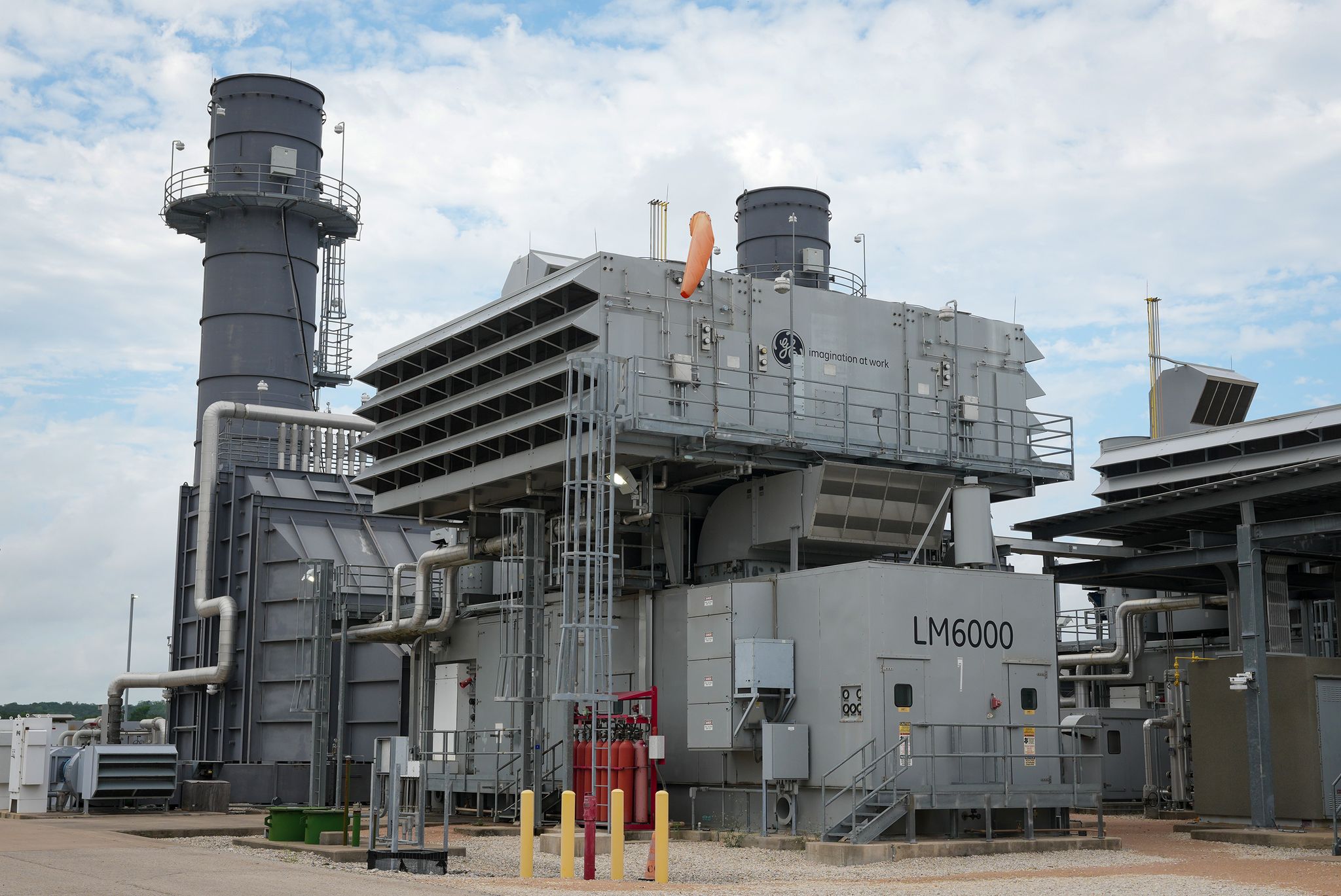
The LM2500XPRESS test stand at GE Vernova's Global Technology Center in Greenville, where the 50% hydrogen blend validation took place (Image credit: GE Vernova).
Can the LM6000VELOX Run on 100% Hydrogen?
GE Vernova completed testing that validates the LM6000VELOX's capability to operate on 100% hydrogen in a Singular Annular Combustor (SAC) configuration. The result is a technical capability milestone. It is not yet a commercial plant running on pure hydrogen.
The LM6000 platform has an installed and shipped base of nearly 1,350 units across approximately 60 countries, according to GE Vernova. The VELOX package arrives in factory-built modules designed to cut installation and commissioning time by up to 40%.
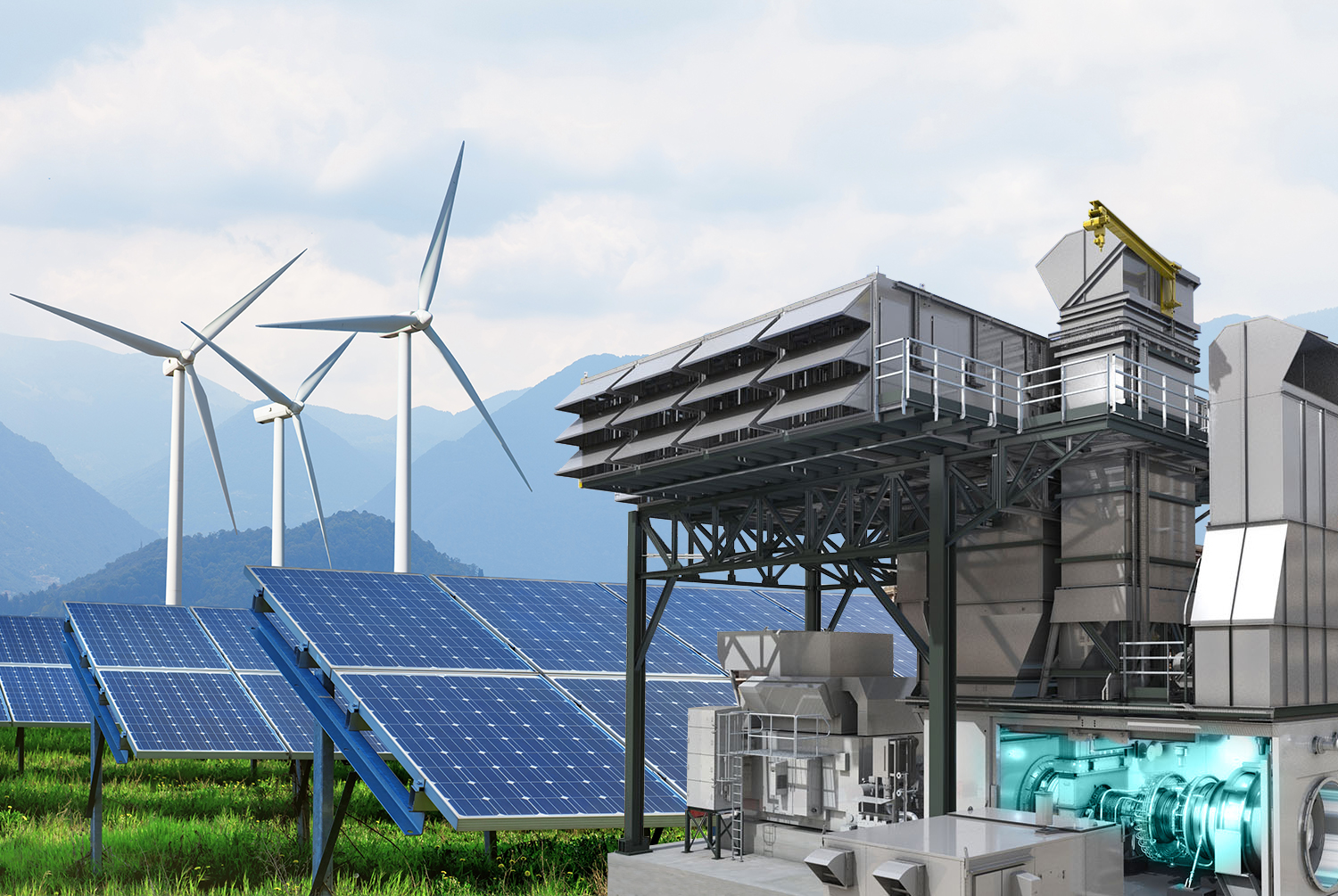
A GE Vernova rendering of the LM6000VELOX package, the aeroderivative turbine tested for 100% hydrogen capability in Greenville (Image credit: GE Vernova).
Hydrogen burns much faster than natural gas. GE Vernova says its flame speed is roughly eight times higher. That raises the risk of flashback inside the combustor. Managing that flame behavior is the central engineering challenge in 100% hydrogen combustion.

"GE Vernova has been investing over the years in R&D to advance the capabilities of its combustion systems to burn higher blends of hydrogen."
Eric Gray, then CEO of GE Vernova's Gas Power business (November 2024)
The LM6000VELOX was earlier selected for South Australia's planned 200 MW Whyalla hydrogen power plant. The state government later shelved that project and placed its four turbines up for sale. The Greenville test advances the turbine itself, independent of any single customer project.
Why Do Fast-Start Hydrogen Turbines Matter for the Grid?
Fast-start aeroderivative turbines fill gaps when demand spikes or wind and solar output drops. GE Vernova says these units help stabilize grids, meet peak demand, and respond to changing system conditions.
That flexibility matters to utilities, industrial sites, and data centers. Data center developers are already testing hydrogen for resilience. INNIO, an Austrian engine maker, ran a 3 MW backup power demonstration on 100% hydrogen in April 2026. In California, one startup operates an off-grid, hydrogen-powered data center in Mountain View.

"These milestones represent a crucial step in GE Vernova's commitment to accelerating the energy transition by providing hydrogen-ready solutions that allow customers to lower carbon emissions while maintaining the rapid-start reliability essential for grid stabilization."
Cecilia Giovanelli, CEO of GE Vernova's Gas Power Aeroderivative business
Utilities are planning around this kind of firm capacity. The Los Angeles Department of Water and Power is pursuing an $800 million hydrogen conversion at its Scattergood station. The utility already partners on a green hydrogen power plant in Utah.
GE Vernova's official video shows LM2500XPRESS hydrogen blend testing at its Greenville, South Carolina facility, where the November 2026 validation was completed.
How Much Hydrogen Experience Does GE Vernova's Fleet Have?
GE Vernova's gas turbine fleet has logged more than 11 million operating hours on hydrogen and hydrogen blends as of November 2026, the company says. That figure covers blends across the fleet, not 11 million hours on pure hydrogen.
The total is climbing. GE Vernova reported 8.5 million hours on hydrogen-containing fuels in January 2025. That means roughly 2.5 million hours were added in under two years.
The January 2025 milestone also covered a different turbine class. GE Vernova validated a 100% hydrogen Dry Low NOx (DLN) combustor for its B- and E-class industrial turbines. Testing showed NOx emissions below 25 ppm.
>> RELATED: Florida Just Made Hydrogen History With This First
The Greenville lab itself is new. GE Vernova announced more than $160 million for its Greenville site in January 2025, including new hydrogen fuel testing capability and more than 650 jobs. The new aeroderivative test facility is part of that investment.
How Do GE Vernova's Hydrogen Turbines Compare?
GE Vernova's hydrogen capability varies by turbine family and combustion system. The figures below describe different machines and configurations. They are not interchangeable performance claims.
| Turbine Family | Hydrogen Capability | Combustion System | Status |
|---|---|---|---|
| LM2500XPRESS (aeroderivative) | Up to 50% blend by volume | Dry Low Emission (DLE) | Validated, November 2026 |
| LM6000VELOX (aeroderivative) | 100% hydrogen | Singular Annular Combustor (SAC) | Capability test completed, November 2026 |
| 7HA and 9HA (heavy-duty) | Up to 50% blend by volume | DLN2.6e | Current capability, pathway to 100% |
| B- and E-class (industrial) | 100% hydrogen, NOx below 25 ppm | Dry Low NOx (DLN) prototype | Validated, January 2025 |
Blend percentages are measured by volume, not energy. Hydrogen carries roughly one-third the energy of natural gas per unit volume. A 50% blend therefore cuts carbon dioxide by far less than half.
What Needs to Happen Before Hydrogen Turbines Scale?
Hydrogen supply, storage, and project economics now set the pace for hydrogen-fired power. Turbine capability is moving ahead of fuel availability.
Real-world blending results show the size of the carbon benefit. Georgia Power and Mitsubishi Power ran a 50% hydrogen blend at Plant McDonough-Atkinson in June 2025. That test cut carbon dioxide emissions by about 22% compared with 100% natural gas, according to the companies.
The lifecycle benefit also depends on how the hydrogen is made. Hydrogen from renewable-powered electrolysis delivers far deeper cuts than hydrogen from unabated natural gas.
Integrated projects show how supply and combustion can sit on one site. Duke Energy Florida's DeBary system now produces, stores, and burns green hydrogen using a GE Vernova turbine upgrade. Supply chains are growing too, with new capacity like Hidrogenii's 15-ton-per-day liquefaction plant in Louisiana. Developers are also advancing green hydrogen projects across the United States.
Frequently Asked Questions
Is the LM6000VELOX commercially running on 100% hydrogen?
Not yet. GE Vernova completed testing in Greenville that validates the turbine's 100% hydrogen capability in a SAC configuration. Commercial operation on pure hydrogen will depend on customer projects with reliable hydrogen supply.
Does a 50% hydrogen blend cut carbon emissions by 50%?
No. Blends are measured by volume, and hydrogen holds less energy per volume than natural gas. A 50% blend test at Georgia Power's Plant McDonough-Atkinson cut CO2 by about 22%.
How many hours has GE Vernova's fleet run on hydrogen?
More than 11 million operating hours on hydrogen and hydrogen blends as of November 2026, across more than 120 turbines. The total includes hydrogen blends, not only pure hydrogen.
The Next Test Happens Outside the Lab
GE Vernova now has a 50% blend validation on the LM2500XPRESS and a 100% capability test on the LM6000VELOX. The Greenville facility gives the company a domestic site to keep pushing those limits. The next milestone will come when utilities, industrial operators, and data centers pair these turbines with steady supplies of low-carbon hydrogen.
For ongoing coverage of carbon removal, BECCS, and corporate CDR procurement, subscribe to Decarbonfuse.com.
Subscribe to the newsletter
Daily decarbonization data and news delivered to your inbox
Follow the money flow of climate, technology, and energy investments to uncover new opportunities and jobs.
Latest issues
-
Who Gets Canada’s C$10 Million Carbon Removal Buy?
Inside This Issue 🔩 Stegra and Meta Sign Agreement for Environmental Attribute Certificates to Advance Green Steel 🧱 Sublime Systems and Meta Sign Agreement to Scale U.S. Manufacturing of Next Gen...
-
Google’s $17B Wyoming Plan Has a CCS Catch
Inside This Issue 💡 Google’s $17B Wyoming Plan Pairs Fuel Cells With CCS 🍁 Canada Needs C$2.2 Billion and Stronger Policy to Close Its Carbon Removal Gap by 2030 🛢️ Occidental Signs Long-Term CO2 ...
-
The $915M Ethanol Deal Where Carbon Capture Sets the Price
Inside This Issue 🌽 The Andersons Bets $915M on Low-Carbon Ethanol Plants 🌐 Rad Web Hosting Announces Fossil-Free Internet by 2030 Manifesto, Commits 1% of Revenue to Carbon Removal 💶 EU Earmarks ...
Company Announcements
-
Interim findings from a feasibility study compare six alternative marine fuels and demonstrate that ethanol-biodiesel-diesel blends maintain engine efficiency while cutting greenhouse gas emissions...
-
Meta secures priority access to low-carbon Sublime Cement® for future data center construction under a multi-year agreement. For Meta, the agreement targets emissions from cement used to build dat...
-
MUSCAT, Oman, Nov. 13, 2026 /PRNewswire/ -- The Sultanate of Oman, represented by Hydrom, the national orchestrator of its green hydrogen strategy, has awarded two integrated green hydrogen project...
-
LCH2 Awarded Additional $1 Million to Advance Lewis County Clean Energy Campus
CENTRALIA, Wash., Nov. 12, 2026 /PRNewswire/ -- The Lewis County Hydrogen Alliance, Inc. (LCH2) has been awarded an additional $1 million from TransAlta Centralia Board Funding, LLC, acting through...