
The U.S. just got its first fully integrated green hydrogen system, and it's sitting in Central Florida. Duke Energy Florida unveiled its DeBary Hydrogen Production Storage System in Volusia County on January 7, 2026, marking a major milestone in the clean energy space.
This isn't just another hydrogen project announcement. It's the first demonstration project in the United States capable of producing, storing, and combusting up to 100% green hydrogen using a complete end-to-end system. That's production to power generation, all under one roof.
How the System Actually Works
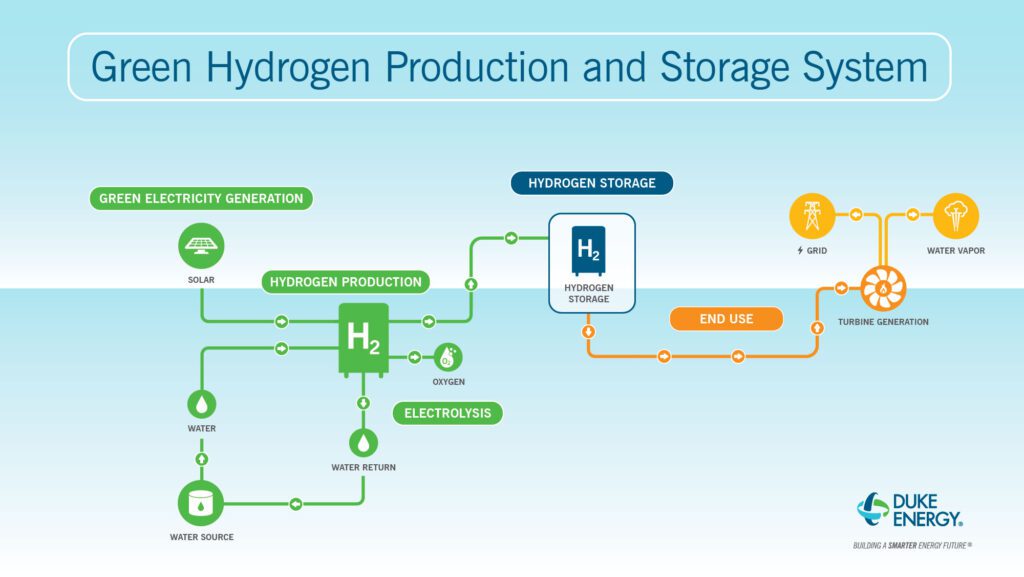
The DeBary system starts with Duke Energy Florida's existing solar site in the area. Solar energy powers two electrolyzer units that split water molecules into oxygen and hydrogen atoms. The oxygen gets released into the atmosphere, while the green hydrogen moves into reinforced containers for safe storage.
When energy demand peaks, the stored hydrogen feeds into a combustion turbine upgraded with GE Vernova technology. This turbine can run on a natural gas and hydrogen blend or 100% hydrogen, giving operators serious flexibility.
What makes this setup compelling is its on-demand reliability. Unlike solar or wind, which depend on weather conditions, stored hydrogen can fire up turbines at any time. This allows utilities to lean harder into intermittent renewables without sacrificing grid stability.
>> RELATED: 14 Green Hydrogen Projects Reshaping America's Energy Future

The key facts of the groundbreaking DeBary Hydrogen System, the first U.S. project to feature end-to-end green hydrogen capabilities. The graphic highlights its location in Volusia County, Florida, its reliance on the existing DeBary solar site for power, and the technology partnership with GE Vernova for turbine upgrades. It also illustrates the system's fuel flexibility with natural gas and hydrogen blends, and notes Duke Energy Florida's extensive service area of 2 million customers.
Why Diverse Generation Matters
Duke Energy Florida leadership sees this project as a blueprint for meeting rising energy demand while keeping clean energy at the forefront. The company owns 12,300 megawatts of energy capacity and serves residential, commercial, and industrial customers across the state.

"Diverse generation is strong, reliable generation. The DeBary hydrogen project underscores Duke Energy Florida's deep understanding of that notion and our commitment to making strategic infrastructure investments that will allow us to continue providing value for our customers while meeting their rapidly increasing demand for energy."
Melissa Seixas, Duke Energy Florida State President
>> In Other News: Milkywire Completes Pre-Purchases to Accelerate Next-Generation Carbon Removal
What This Means for the Industry
The timing couldn't be better. The U.S. hydrogen hub landscape has been navigating policy shifts and funding uncertainties. A working, fully integrated system in Florida proves that end-to-end green hydrogen generation is technically viable at commercial scale.
This project also shows how existing infrastructure can be upgraded rather than replaced. The DeBary site already had solar capacity and a combustion turbine in place, reducing both cost and construction timelines.
Three Reasons This Project Sets a New Standard
- Complete Integration: Production, storage, and combustion happen on a single site, eliminating transportation bottlenecks that plague other hydrogen projects.
- Fuel Flexibility: The upgraded turbine can run on varying hydrogen blends, allowing gradual transition without operational disruptions.
- Grid Support: On-demand hydrogen generation strengthens grid reliability, letting more intermittent renewables come online.

"The DeBary system allows for safe, reliable generation and storage of clean energy. Duke Energy Florida is proud of this successful innovation and the lasting impact it will have on our industry, our company and, most importantly, our customers."
Reggie Anderson, Duke Energy Florida Vice President of Regulated and Renewable Energy
The Bigger Picture for Clean Energy
Florida's new hydrogen system arrives as utilities across the country face pressure to decarbonize while meeting surging electricity demand. The U.S. Department of Energy has been pushing clean hydrogen as a cornerstone of the national energy strategy, and projects like DeBary provide real-world proof of concept.
With 12,300 megawatts of capacity serving 2 million customers, Duke Energy Florida has the scale to test innovations that smaller utilities simply can't attempt. If DeBary performs as expected, it could serve as a model for other major energy providers looking to add green hydrogen to their generation mix.
For customers, this translates to more stable energy costs and reduced reliance on fuel price volatility. The ability to store green hydrogen and deploy it during peak demand periods displaces traditional fuel costs while keeping the lights on during critical moments.
The DeBary project isn't just an engineering achievement. It's a signal that integrated hydrogen systems are ready for prime time, and Florida just became the proving ground for what could soon reshape the American energy landscape.
Subscribe to the newsletter
Daily decarbonization data and news delivered to your inbox
Follow the money flow of climate, technology, and energy investments to uncover new opportunities and jobs.
Latest issues
-
Why Colorado’s Koloma Has Japan’s Largest Utility Hooked
Inside This Issue ⚡ JERA Invests in Koloma to Explore Natural Hydrogen as a Future Low-Carbon Energy 🔬 New CATF Tool Provides Framework for Self-Assessment and Strengthening of Biomass Carbon Remo...
-
LNK Energies Targets $6.50 Hydrogen With No Federal Subsidies
Inside This Issue 🚛 MIT Startup Says It Can Turn Diesel Trucks Into Cheaper Hydrogen Haulers, See It at Disrupt 🏭 Baytown City Council Briefs: ExxonMobil Blue Hydrogen Agreement Approved 🌎 Colorad...
-
Why Gulf Coast CCS Teams Are Watching Liverpool Bay
Inside This Issue 💂 Eni’s Douglas Platform Sets the Offshore CCS Blueprint 🌲 Pacolet Milliken Expands Its Biomass Platform With the Acquisition of Georgia Renewable Power 🧪 Metacon Receives EU Fun...
Company Announcements
-
A new interactive tool from Clean Air Task Force (CATF) provides a practical framework for the self-assessment and strengthening of biomass carbon removal (BiCRS) protocols to help ensure that carb...
-
LanzaJet Secures Financing to Scale SAF Production and Supply Global Customers
CHICAGO, Oct. 15, 2026 (GLOBE NEWSWIRE) -- LanzaJet, Inc., a leading next-gen fuels technology company and fuels producer, today announced fully committed new financing of at least $20 million to s...
-
44.01 and Frontier Advance Permanent CO₂ Storage Through In-Situ Mineralization
44.01's in-situ mineralization (ISM) process turns CO₂ into solid rock underground in a few years, after which the risk of reversal is functionally zero. >> In Other News: JERA Invests in ...
-
JERA Invests in Koloma to Explore Natural Hydrogen as a Future Low-Carbon Energy
JERA Co., Inc. (JERA), through its corporate venture capital arm JERA Ventures, has invested in Koloma, Inc. (Koloma), a U.S.-based natural hydrogen exploration and development company. The invest...