
While most climate conversations focus on high-tech solutions like direct air capture and industrial carbon storage, a Texas-based company has been doing something different. Grassroots Carbon just hit a milestone that puts it ahead of every other carbon removal company in the country, and they did it by working with ranchers instead of building massive facilities.
The company announced it has delivered 1.9 million tons of verified carbon removals through its regenerative ranching program. That makes Grassroots Carbon the first U.S. company to reach this milestone using soil carbon sequestration on working grasslands. Even more impressive, over 1.5 million tons have already been retired by corporate buyers like Nestlé, Microsoft, Shopify, and Chevron.
The Numbers That Matter
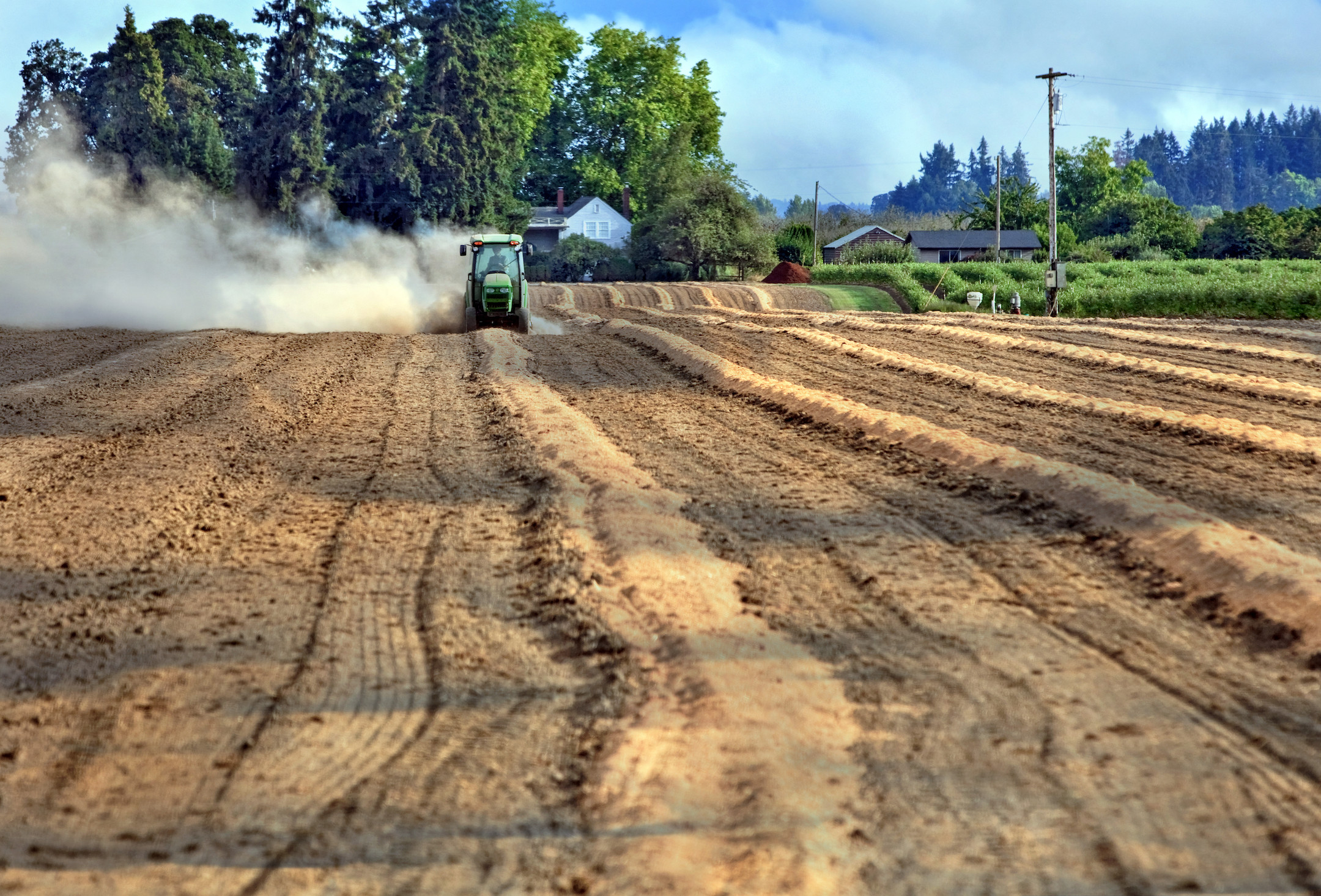
This approach stands apart from the $77.5 billion wave of industrial carbon capture projects sweeping the U.S. Instead of building expensive facilities, Grassroots Carbon partners with ranchers who implement regenerative practices on their land. The company handles the measurement, verification, and credit sales while ranchers focus on what they know best: caring for their land.

Grassroots Carbon has achieved a significant milestone in the carbon market, delivering over 1.9 million tons of carbon removals and paying $40 million directly to ranchers since 2022. The company, founded in 2021, now manages 2 million acres across 22 states.
>> RELATED: North America's Carbon Removal Year in Review: The Deals, Policies, and Milestones That Shaped 2025

"This industry-defining milestone marks a turning point for nature-based carbon solutions, proving that soil health, rancher prosperity, and measurable climate impact can grow from the same ground."
Brad Tipper, CEO of Grassroots Carbon
Why This Approach Works
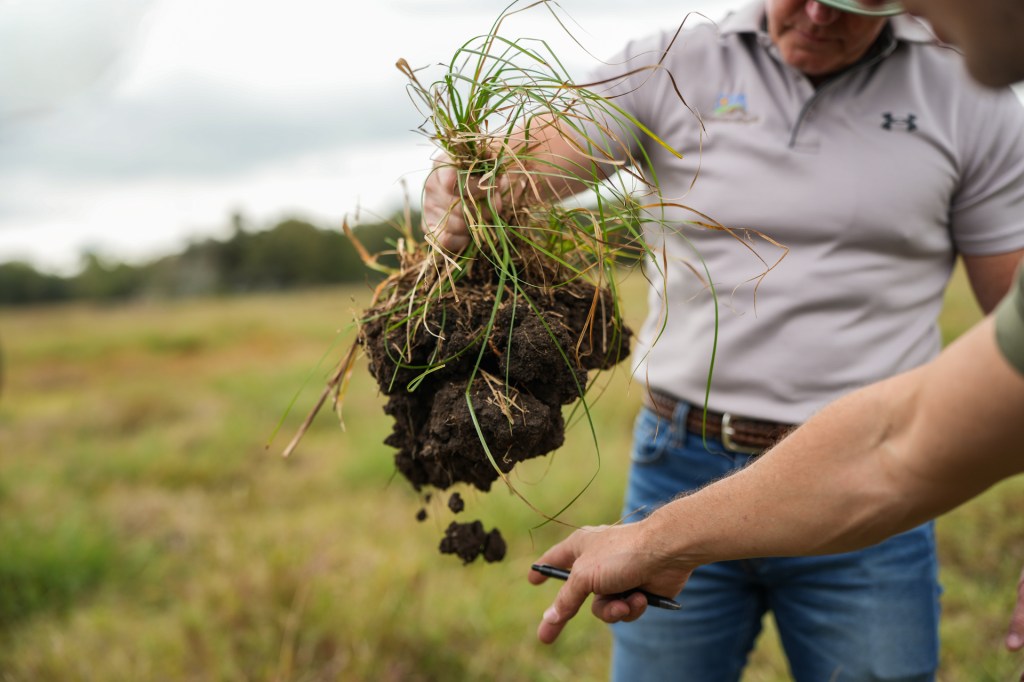
Healthy grasslands pull carbon dioxide from the atmosphere through photosynthesis, pushing it deep underground through extensive root systems. Unlike some biochar applications, this carbon can remain stored in soil for thousands of years. Grassroots Carbon uses a rigorous verification process:
1. EarthOptics handles field sampling with one-meter deep soil cores, significantly deeper than conventional approaches.
2. PatternAg performs third-party laboratory analysis of soil samples.
3. Comite Resources verifies project implementation and results.
4. The Applied Ecological Institute reviews and certifies each credit before issuance.
The company now manages the largest privately collected soil carbon dataset in the U.S., giving it an edge in understanding what actually works on the ground. Participating ranches have reported water infiltration rates up to 30 times higher than degraded land, showing how carbon storage benefits go beyond just climate.
Real Impact for Ranching Communities
The financial model matters as much as the environmental outcomes. Grassroots Carbon has paid $40 million directly to ranching partners since 2022 and provided another $10 million in advance payments so ranchers can participate without upfront costs. This addresses a real problem: a quarter of American farms were in debt in 2022, and many families have been forced to sell land just to survive.

"Grassroots Carbon assembles some of the brightest minds in regenerative agriculture to support ranchers like us on our journey to implement and scale these practices. Their partnership gives producers access to the science, tools, and financial incentives to restore grasslands in a way that's both profitable and regenerative."
Taylor Collins, Land Steward of Roam Ranch and Co-Founder of Force of Nature
The company collaborates with organizations including Audubon Conservation Ranching, Texas Agricultural Land Trust, and Colorado State University's Soil Carbon Solutions Center to ensure scientific rigor and transparency. With corporate buyers increasingly demanding high-quality removal credits, demand keeps growing.
The Bigger Picture for Carbon Removal
America's 655 million acres of grasslands represent one of the largest untapped carbon opportunities on the planet, with the potential to store up to 1 billion tons of CO2 annually. That is a massive number when you consider the durable carbon removal market just crossed 1 million tonnes in actual deliveries this year.
Unlike BECCS facilities or industrial carbon storage projects requiring massive capital investments, regenerative ranching scales through existing landowners who already know their soil. The infrastructure and expertise are already there. Grassroots Carbon built the bridge to measure, verify, and monetize the carbon benefits.
What Comes Next
The company's ambition is to scale regenerative ranching across all 655 million acres of American grasslands. That is not a small goal. But if the first four years are any indication, aligning climate action with the people who know the land best might be exactly what this industry needed all along.
Subscribe to the newsletter
Daily decarbonization data and news delivered to your inbox
Follow the money flow of climate, technology, and energy investments to uncover new opportunities and jobs.
Companies
Latest issues
-
Colorado Joins the 7-State CCS Permit Fast Lane
Inside This Issue ⚖️ Colorado Takes Over Class VI Permits: What Changes for CCS? 🏭 Hebei Shoulang Facility Using LanzaTech Technology Achieves World’s First ISCC EU RCF Certification for Ethanol P...
-
The US Hasn't Made Heavy Water Since 1982
Inside This Issue ⚛️ Aternium Completes FEED Studies for US Hydrogen, Heavy Water Project 🐄 Google, McKinsey Strike Brazil Carbon Removal Deal With Silvopasture Project 🔧 Cummins Selects Stargate ...
-
Why Colorado’s Koloma Has Japan’s Largest Utility Hooked
Inside This Issue ⚡ JERA Invests in Koloma to Explore Natural Hydrogen as a Future Low-Carbon Energy 🔬 New CATF Tool Provides Framework for Self-Assessment and Strengthening of Biomass Carbon Remo...
Company Announcements
-
Citi Closes $72 Million Carbon Removal-Linked Note to Support Applied Carbon Biochar Project
HIGHLIGHTS Citi structured an innovative $72 million carbon removal-linked note to provide upfront capital for Applied Carbon's biochar project, marking a first-of-its-kind "outcome bond" for ver...
-
New platform opens access to the same rigorous project evaluations trusted by the world's leading carbon removal procurement programs Today, Relae (formerly Carbon Direct) launched The Diligence C...
-
Inside BLM's 650,000-Acre Bet on Wyoming Carbon Storage
The Bureau of Land Management has offered right-of-way grants covering about 649,438 acres of federal pore space in southwest Wyoming. The September 21, 2026 offers went to Moxa Carbon Storage LLC ...
-
NEW YORK, BUSINESS WIRE, SWITCH Maritime (Switch), a leading developer of zero-emission vessels, secured a Design Basis Agreement (DBA) with the United States Coast Guard (USCG) for the SWITCH-150,...