
Graphyte, a permanent carbon removal company based in Pine Bluff, Arkansas, has signed its largest publicly known contract to date. JPMorganChase agreed to purchase 60,000 metric tonnes of durable carbon dioxide removal (CDR) credits over ten years. The deal connects large-scale carbon removal to wildfire prevention in the American West, combining climate action with real community impact.
Key Facts
- JPMorganChase committed to purchase 60,000 metric tonnes of durable CDR credits from Graphyte over 10 years (announced April 9, 2026)
- Credits will come from Project Loblolly in Pine Bluff, Arkansas (operational) and Project Ponderosa near Flagstaff, Arizona (in development)
- Project Loblolly delivered 15,000 CDR credits to customers in 2025, with 100% on-time delivery
- Project Loblolly has created 30 full-time jobs in Pine Bluff, Arkansas
- Graphyte aims to remove up to 5 million metric tonnes of CO2 per year by 2030
- The 2022 Tunnel Fire near Flagstaff, Arizona destroyed 30 residences and forced more than 760 home evacuations
- The U.S. emits approximately 5 billion metric tonnes of CO2 each year (EPA)
- Graphyte was founded in February 2023 and is backed by Breakthrough Energy Ventures, Prelude Ventures, and Carbon Direct Capital
What Is Graphyte's Carbon Casting Technology?
Graphyte uses a proprietary process called Carbon Casting to permanently store carbon from biomass waste. The method dries and compresses agricultural and forestry residues into dense carbon blocks. Each block is sealed with an impermeable polymer barrier and stored in monitored underground sites.

"Given its track record of 100% on-time credit deliveries, Graphyte can help organizations incorporate high-quality carbon removal into their strategy for addressing operational emissions. This agreement demonstrates the growing confidence and momentum behind CDR solutions that are not only scientifically robust, but also immediately deployable and economically viable."
Barclay Rogers, Founder and CEO, Graphyte
The process preserves nearly all the carbon captured in the biomass. It also uses very little energy compared to approaches like direct air capture. That combination of durability and low energy input keeps costs competitive and makes Carbon Casting one of the more scalable durable CDR pathways available today.
Carbon stored through Carbon Casting is designed to remain sequestered for over 1,000 years. That permanence is a key factor for institutional buyers addressing residual emissions they cannot eliminate through operational changes alone.

>> In Other News: Depleted Oil Fields Offer Hydrogen Storage Sites
How Does Project Ponderosa Reduce Wildfire Risk?
Project Ponderosa, Graphyte's planned Arizona facility near Flagstaff, will convert forest thinning residues into durable CDR credits. Forest thinning removes excess tree mass from overgrown forests. That process reduces the dry fuel load that feeds large, destructive wildfires.
The 2022 Tunnel Fire near Flagstaff illustrates the stakes clearly. That fire destroyed 30 residences and 24 outbuildings, forced more than 760 home evacuations, and burned through Coconino National Forest and Sunset Crater Volcano National Monument, according to the U.S. Forest Service. Project Ponderosa is planned just miles from that burn zone.
Without buyers, most forest thinning waste has limited commercial value. Forest managers typically burn or chip it on-site. Graphyte's model changes that. It gives foresters an economic reason to thin more land, producing high-quality carbon removal credits and reduced fire risk at the same time.
Project Ponderosa will also convert a former mine site into wildlife habitat, adding a third layer of environmental benefit beyond carbon removal.
>> RELATED: North America's Carbon Removal Year in Review: The Deals, Policies, and Milestones That Shaped 2025

"We are focused on supporting the development of high-quality, durable carbon removal solutions that can both scale over time and have potential benefits beyond carbon removal. Graphyte's approach of sequestering residual carbon-rich biomass represents an innovative pathway to address emissions while generating economic opportunities for communities."
Taylor Wright, Head of Operational Sustainability, JPMorganChase
Why Is JPMorganChase Investing in Carbon Removal?
JPMorganChase has been building a diversified carbon removal portfolio for several years. The bank joined Frontier, an advance market commitment to accelerate carbon removal, in April 2023 with a $75 million commitment. Previous bilateral agreements include deals with Vaulted Deep (bio-oil sequestration) and CO280 (carbon capture for paper and pulp mills). The Graphyte deal adds biomass-based CDR to that mix.
For JPMorganChase, this agreement addresses residual emissions that operational efficiency alone cannot solve. The 60,000-metric-tonne commitment spans ten years across two U.S. facilities.
Where Does Project Loblolly Fit In?
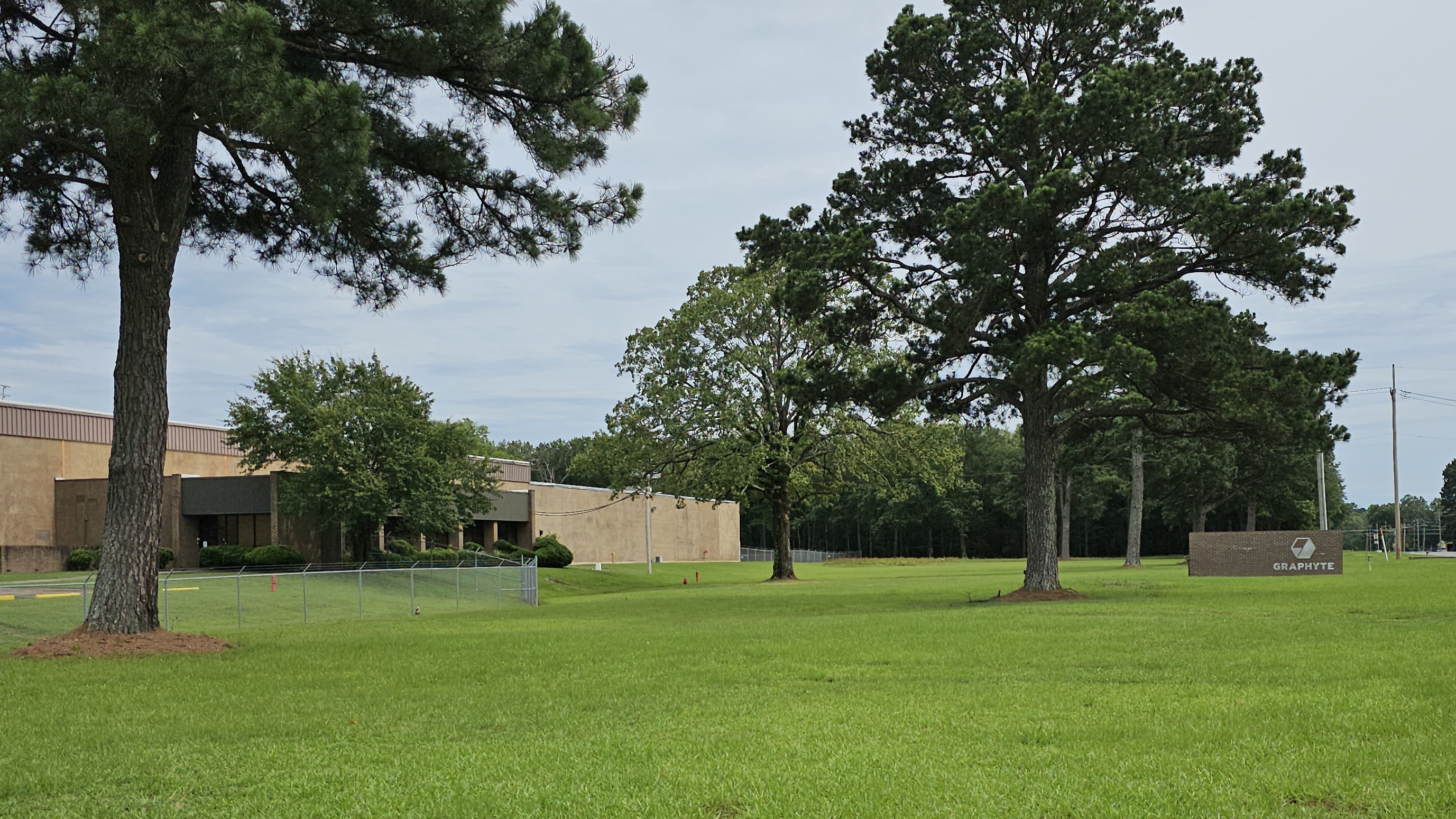
Project Loblolly in Pine Bluff, Arkansas is Graphyte's first operational facility. It delivered 15,000 CDR credits to customers in 2025, marking the company's first commercial-scale delivery and maintaining a 100% on-time record. The project has also created 30 full-time jobs in Pine Bluff and is preparing to convert a former gravel mine into a local park.
The facility sources agricultural and timber residues from local farmers and mill operators. That supply chain creates new income for rural communities near the project while keeping feedstock costs low. According to Graphyte's July 2024 Series A announcement, Project Loblolly was designed to reach a capacity of 50,000 metric tonnes of CO2 removed per year.
The JPMorganChase agreement will draw carbon removal credits from both Project Loblolly and Project Ponderosa as it comes online. Together, the two projects will generate all 60,000 metric tonnes committed under the ten-year deal.
| Project | Location | Status | Community Benefit | Feedstock |
|---|---|---|---|---|
| Project Loblolly | Pine Bluff, Arkansas | Operational | 30 full-time jobs, rural income for farmers, future community park | Agricultural and timber residues |
| Project Ponderosa | Flagstaff, Arizona | In development | Wildfire risk reduction, new jobs, wildlife habitat restoration | Forest thinning residues |
How Does This Deal Fit the Bigger CDR Picture?
The durable CDR market crossed a key milestone in 2025. According to CDR.fyi data reported in Decarbonfuse's year-in-review, the market hit 1 million metric tonnes in actual deliveries. Those deliveries were distributed across 521 purchasers from 35 countries, supplied by 117 providers operating in more than 28 nations.
Large institutions are committing to durable carbon removal at a growing rate. Boeing signed a multi-year agreement for at least 40,000 metric tonnes of CDR credits through Carbonfuture in 2025. Google contracted over $100 million in carbon removal credits in 2024, nearly three times its original $35 million target.
The JPMorganChase-Graphyte deal reflects that same shift. Buyers are moving beyond basic credits. They want verified, permanent removal that also creates jobs, restores land, and reduces local hazards.
>> RELATED: Cleantech Startup Graphyte Raises $30 Million to Scale Carbon Removal
What Does Graphyte's Growth Path Look Like?
Graphyte closed a $30 million Series A round in July 2024, co-led by Prelude Ventures and Carbon Direct Capital, with participation from Breakthrough Energy Ventures and Overture. The company outlined plans to launch four additional carbon removal facilities over 2025 and 2026. The goal is to reach removal capacity of more than 5 million metric tonnes of CO2 per year by 2030.
Graphyte aims to remove up to 5 million metric tonnes of CO2 per year by 2030. Reaching that target requires scaling well beyond the Arkansas and Arizona projects. Long-term contracts like the one JPMorganChase just signed provide the demand signal that makes that kind of capital investment viable.
The company has delivered all credits on time since beginning operations. That track record, combined with backing from top climate investors, positions Graphyte as one of the more credible players in the voluntary carbon market.
The Bottom Line: Carbon Removal That Does More Than Remove Carbon
The 60,000-metric-tonne deal between JPMorganChase and Graphyte is significant for what it proves. It shows that durable CDR can attract major institutional buyers even without federal policy support specifically designed for biomass-based removal methods.
Graphyte CEO Barclay Rogers noted in interviews that an existing tax credit for capturing carbon does not apply to Carbon Casting. The company continues to sign contracts and deliver credits without it. Private-sector demand is moving faster than policy.
Total CDR offtake volume exceeded 2.5 million metric tonnes in 2025, according to North America CDR year-in-review data. Deals like this one are the building blocks of that momentum. Each 60,000-metric-tonne commitment is a small fraction of what the climate requires. But it validates the technology, funds the next facility, and demonstrates that carbon removal with co-benefits is exactly what corporate buyers want.
Frequently Asked Questions
What is Carbon Casting and how does it work?
Carbon Casting is Graphyte's proprietary CDR process, founded in 2023. It dries and compresses biomass waste into dense carbon blocks, seals them with an impermeable polymer barrier, and stores them in monitored underground sites. The method is designed to sequester carbon for over 1,000 years while using significantly less energy than direct air capture.
How does the Graphyte-JPMorganChase deal support wildfire prevention?
Project Ponderosa in Flagstaff, Arizona will source biomass from forest thinning operations. Thinning removes excess vegetation that fuels wildfires. By creating a commercial market for that material, Graphyte gives forest managers a financial incentive to thin more land, directly reducing the fire risk near communities like Flagstaff.
How does this deal compare to other CDR contracts in the market?
The 60,000-metric-tonne contract is Graphyte's largest publicly announced purchase agreement. Boeing recently signed a multi-year deal for at least 40,000 metric tonnes of durable CDR credits. Google contracted more than $100 million in carbon removal credits in 2024 alone. JPMorganChase has made CDR commitments across multiple technologies since joining the Frontier advance market commitment coalition in April 2023.
Subscribe to the newsletter
Daily decarbonization data and news delivered to your inbox
Follow the money flow of climate, technology, and energy investments to uncover new opportunities and jobs.
Latest issues
-
Why Is Wyoming Giving 650,000 Acres to Carbon Storage?
Inside This Issue 🪨 Inside Blm's 650,000-Acre Bet on Wyoming Carbon Storage 🏭 California Advances Carbon Capture and Removal Regulations Under SB 905 ⚡ Why a Japanese Power Giant Is Betting on Den...
-
Colorado Joins the 7-State CCS Permit Fast Lane
Inside This Issue ⚖️ Colorado Takes Over Class VI Permits: What Changes for CCS? 🏭 Hebei Shoulang Facility Using LanzaTech Technology Achieves World’s First ISCC EU RCF Certification for Ethanol P...
-
The US Hasn't Made Heavy Water Since 1982
Inside This Issue ⚛️ Aternium Completes FEED Studies for US Hydrogen, Heavy Water Project 🐄 Google, McKinsey Strike Brazil Carbon Removal Deal With Silvopasture Project 🔧 Cummins Selects Stargate ...
Company Announcements
-
Citi Closes $72 Million Carbon Removal-Linked Note to Support Applied Carbon Biochar Project
HIGHLIGHTS Citi structured an innovative $72 million carbon removal-linked note to provide upfront capital for Applied Carbon's biochar project, marking a first-of-its-kind "outcome bond" for ver...
-
New platform opens access to the same rigorous project evaluations trusted by the world's leading carbon removal procurement programs Today, Relae (formerly Carbon Direct) launched The Diligence C...
-
Inside BLM's 650,000-Acre Bet on Wyoming Carbon Storage
The Bureau of Land Management has offered right-of-way grants covering about 649,438 acres of federal pore space in southwest Wyoming. The September 21, 2026 offers went to Moxa Carbon Storage LLC ...
-
NEW YORK, BUSINESS WIRE, SWITCH Maritime (Switch), a leading developer of zero-emission vessels, secured a Design Basis Agreement (DBA) with the United States Coast Guard (USCG) for the SWITCH-150,...