
Construction of the NEOM Green Hydrogen Company facility in Oxagon, Saudi Arabia is complete. The $8.4 billion project has entered commissioning, with energization underway across the integrated complex. Commercial operations are targeted for 2027. This isn't just a construction milestone. It's the start of the most closely watched real-world test of large-scale green hydrogen economics ever attempted.
Key Facts
- Total investment: $8.4 billion, including $6.1 billion in non-recourse debt from 23 institutions (NGHC, May 2023)
- Daily hydrogen production target: up to 600 tonnes of carbon-free hydrogen per day
- Annual green ammonia output: up to 1.2 million metric tonnes per year
- Renewable power capacity: approximately 4 GW combined solar (2.2 GW) and wind (1.6 GW from 257 turbines)
- Electrolyzer capacity: more than 2 GW alkaline electrolysis, supplied by thyssenkrupp nucera
- Projected CO2 avoidance: up to 5 million metric tonnes per year
- Offtake: Air Products holds an exclusive 30-year agreement for all ammonia output
- First commercial product: targeted for 2027
- Joint venture: ACWA Power, Air Products, and NEOM (equal thirds)
>> In Other News: Next Hydrogen Completes Engineering Design for 10 MW Fueling Station in Expanding British Columbia Market
What Does Commissioning Actually Mean Here?
ACWA Power CEO Samir Serhan confirmed the status during the company's August 6, 2026 earnings call, telling analysts construction was complete and commercial operations were set for 2027.

"Green hydrogen and renewable electricity exports represent the next chapter in the Kingdom's energy leadership, creating new opportunities for economic growth while contributing to global energy security and the energy transition."
Samir Serhan, CEO, ACWA Power (Arab News, July 7, 2026)
Commissioning isn't flipping a switch. For a complex this size, it's a multi-stage process that takes months. Engineers must verify that every interconnected system, renewable generation, electrolysis, hydrogen processing, nitrogen separation, and ammonia synthesis, can operate together reliably before commercial output begins.
The sequence runs from energization of electrical systems, through equipment checks, into electrolyzer startup and performance verification. Only after sustained stable operation does the plant begin ramping toward full production. NGHC reported that its renewable power assets, including the wind farm, solar installation, and transmission grid, reached approximately 95% completion in March 2026. The facility then moved into energization and commissioning of the hydrogen production equipment.
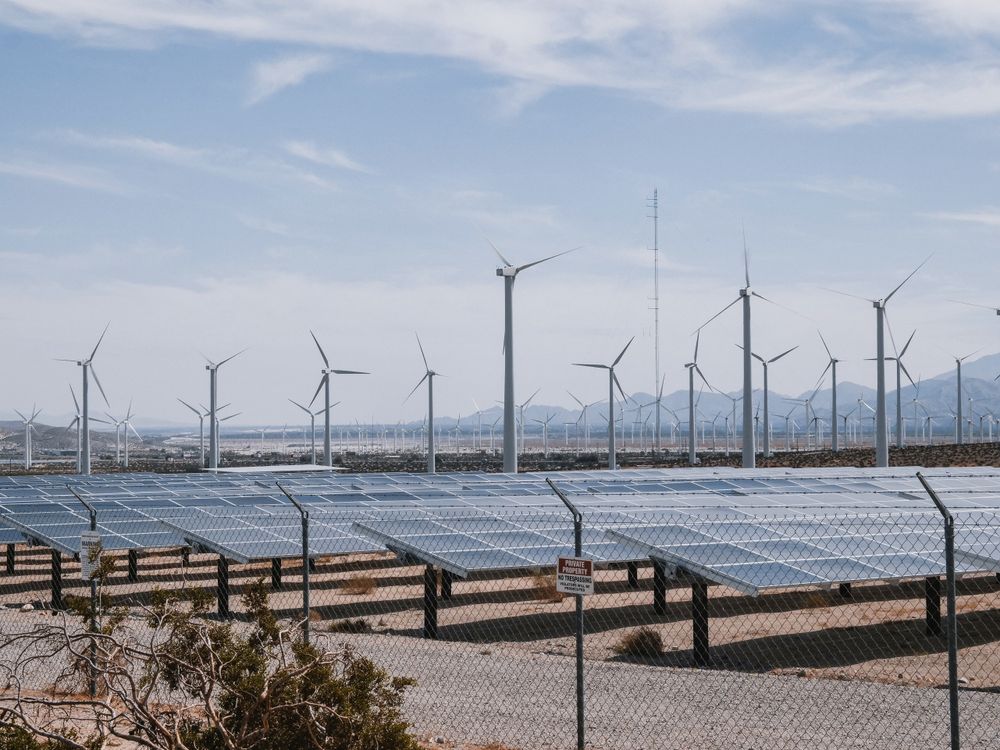
The NEOM project integrates approximately 4 GW of combined solar and wind generation to power its more-than-2-GW electrolyzer system, avoiding grid electricity entirely. Photo: Kindel Media / Pexels.
Why Did NEOM Progress When Other Projects Stalled?
NEOM reached commissioning because it locked in four things most cancelled projects couldn't: completed project financing, contracted long-term offtake, dedicated renewable generation, and a defined export route. In May 2023, NGHC achieved financial close on $8.4 billion in total investment, including $6.1 billion in non-recourse financing from 23 local, regional, and international banks. Air Products' exclusive 30-year offtake agreement for all 1.2 million metric tonnes per year of green ammonia removed the demand uncertainty that stopped other projects at the final investment decision stage.
The contrast is plain. Air Products itself cancelled its Louisiana Clean Energy Complex on June 30, 2026, citing expected financial returns that did not meet the company's return criteria. CF Industries cancelled its electrolyzer project in Donaldsonville, Louisiana, and pivoted to CCS-based pathways instead. Both lacked NEOM's combination of locked-in financing and contracted demand before construction began. Power economics also matter. Air Products CEO Eduardo Menezes noted that Saudi renewable electricity can be sourced at less than $0.02 per kilowatt-hour, among the lowest rates in the world, giving the project a structural cost advantage that grid-connected competitors cannot replicate.
Air Products' official overview of the NEOM Green Hydrogen Project, showing the completed infrastructure including 257 wind turbines, the Manhattan-sized solar farm, and the integrated ammonia production complex at Oxagon (Air Products official channel, June 2026).
>> RELATED: The $9B Deal That Almost Didn't Happen: Air Products, Yara, and the NEOM Ammonia Play
Where Does the Ammonia Go? The Air Products and Yara Deal Explained
Air Products isn't planning to sell all of NEOM's output as cracked hydrogen. On July 30, 2026, Air Products CEO Eduardo Menezes confirmed the company had finalized a marketing and distribution agreement with Yara International. Yara is the world's largest ammonia trader and shipper, moving more than 4 million metric tonnes annually through a fleet of 12 ammonia vessels and 18 import terminals worldwide.

"We are also pleased to have finalized our marketing and distribution agreement with Yara, creating the first fully integrated value chain for renewable ammonia by enabling product from the world's first large-scale green ammonia plant to be sold and delivered through Yara's existing global supply chain."
Eduardo Menezes, CEO, Air Products (Air Products press release, July 30, 2026)
Under the agreement, Yara commercializes, on a commission basis, the share of renewable ammonia that Air Products does not convert back into hydrogen for European customers. A separate arrangement with TotalEnergies covers those cracked-hydrogen volumes for Europe. This dual-track structure, direct ammonia sales plus cracked hydrogen, reduces Air Products' near-term need for ammonia cracking infrastructure. It also opens a faster commercial path from 2027 initial production while downstream cracking facilities are developed. Yara has been actively expanding its ammonia supply chain, including a $1.3 billion acquisition of the Gulf Coast Ammonia facility in Texas City in July 2026, reinforcing its position as a natural distribution partner for large-scale renewable ammonia.
| Commercial Layer | Handled By | Target Market |
|---|---|---|
| All ammonia offtake (30-year exclusive) | Air Products | All global markets |
| Ammonia cracking to green hydrogen | Air Products / TotalEnergies deal | European hydrogen buyers |
| Direct renewable ammonia distribution | Yara International (commission basis) | Global ammonia buyers via Yara fleet |
| Renewable power generation (approx. 4 GW) | Larsen & Toubro (EPC) / NGHC (owner) | On-site electrolysis only |
What Execution Risks Remain Before Commercial Output Begins?
At more than 2 GW of electrolyzer capacity using thyssenkrupp nucera's alkaline water electrolysis modules, NEOM has no comparable predecessor. No other facility has commissioned electrolyzers at this scale. Menezes was direct about the timeline: Air Products expects "a long commissioning process" and that "it will take some time for the facility to get to full production." The company anticipates no gain or loss from NEOM in its fiscal 2027 financial year, signaling that ramp-up toward full commercial output will extend well past first ammonia production.
The broader context matters. As of 2024, low-emission hydrogen, including both blue and green, represented less than 1% of global hydrogen production. Multiple green hydrogen projects globally have faced ramp-up delays after reaching financial close. NEOM has cleared more hurdles than most, but sustained commercial operation at scale remains the proof point the industry still needs. Blue hydrogen continued gaining momentum in 2025, reflecting persistent market appetite for alternatives while green hydrogen proves out at industrial volumes.

Commissioning at NEOM requires verifying that renewable generation, electrolysis, and ammonia synthesis systems all operate reliably together, a systems integration challenge at an unprecedented scale. Photo: Kindel Media / Pexels.
What Would Successful 2027 Operations Prove for the Industry?
If NEOM delivers reliable ammonia output at scale in 2027 and that ammonia moves through Yara's distribution network to paying customers, it answers the central question in green hydrogen: can electrolysis-based production compete commercially at industrial volumes? The project is designed to avoid up to 5 million metric tonnes of CO2 emissions per year. But the more important signal is economic. If Saudi Arabia's sub-$0.02-per-kilowatt-hour dedicated renewable power translates into competitive delivered ammonia prices, it creates a replicable model for future projects elsewhere.
Saudi Arabia's hydrogen ambitions extend well beyond NEOM. ACWA Power is already conducting FEED work for the Yanbu green hydrogen project, which would combine 5 GW each of solar and wind capacity with up to 4.4 GW of electrolyzers, roughly twice NEOM's scale, and produce approximately 2.5 million metric tonnes of green ammonia per year. The Air Products and Yara commercial partnership also signals genuine industry confidence that NEOM's volumes will materialize. When the world's largest hydrogen supplier and the world's largest ammonia shipper structure a long-term commercial relationship around a project's output, it reflects real conviction about demand.
Frequently Asked Questions
Why is NEOM entering commissioning while other hydrogen megaprojects are being cancelled?
NEOM secured four things most cancelled projects lacked: $6.1 billion in non-recourse financing from 23 institutions (closed May 2023), an exclusive 30-year offtake agreement with Air Products for all 1.2 million metric tonnes of annual ammonia output, dedicated on-site 4 GW renewable generation, and a global distribution route through Yara International. Projects that stalled, including Air Products' own Louisiana Clean Energy Complex, lacked this commercial foundation before construction was completed.
Will NEOM sell its ammonia directly or crack it back into hydrogen?
Both. Air Products will crack a portion into hydrogen for European customers, including under its deal with TotalEnergies. The remainder will be sold directly as renewable ammonia through Yara's global distribution network on a commission basis, as confirmed in Air Products' July 30, 2026 press release. This dual-track approach creates an immediate revenue path from 2027 initial production while downstream cracking infrastructure is developed.
What should the industry watch during commissioning and ramp-up?
The key indicators are electrolyzer performance at scale (more than 2 GW of alkaline electrolysis has never been commissioned before at a single facility), the timeline to first ammonia production, and the pace of ramp-up toward the 600-tonne-per-day target. Air Products has stated it expects "a long commissioning process" and no financial contribution from NEOM in fiscal 2027. Stable, high-utilization operation will be the clearest real-world signal yet of what large-scale green hydrogen economics actually deliver.
The Real Test Starts Now
Commissioning confirms that $8.4 billion and years of engineering produced a physical facility. It does not confirm that the facility can deliver renewable ammonia reliably, ramp on schedule, or reach customers at commercially workable prices. Those answers come from operating hours, not construction reports.
NEOM enters this phase with more commercial infrastructure in place than any green hydrogen project before it. The 30-year offtake, the finalized Yara distribution agreement, the $6.1 billion in non-recourse debt, and the low-cost dedicated renewable power are structural advantages. What happens between now and first commercial production in 2027, and then through the ramp-up toward 1.2 million metric tonnes per year of green ammonia, will tell the global hydrogen industry more about what's achievable at scale than any projection or feasibility study ever could.
For ongoing coverage of green hydrogen, renewable ammonia, and large-scale decarbonization projects, subscribe to Decarbonfuse.com.
Subscribe to the newsletter
Daily decarbonization data and news delivered to your inbox
Follow the money flow of climate, technology, and energy investments to uncover new opportunities and jobs.
Latest issues
-
113 CCS Projects: What's Driving the Surge?
Inside This Issue 🏭 Global CCS Hits 113 Projects as Americas Lead Capacity 💰 We're Moving $2M+ to Climate Solutions 💧 China Launches World's First Semi-submersible Offshore Wind-to-hydrogen Platfo...
-
Why Is Wyoming Giving 650,000 Acres to Carbon Storage?
Inside This Issue 🪨 Inside Blm's 650,000-Acre Bet on Wyoming Carbon Storage 🏭 California Advances Carbon Capture and Removal Regulations Under SB 905 ⚡ Why a Japanese Power Giant Is Betting on Den...
-
Colorado Joins the 7-State CCS Permit Fast Lane
Inside This Issue ⚖️ Colorado Takes Over Class VI Permits: What Changes for CCS? 🏭 Hebei Shoulang Facility Using LanzaTech Technology Achieves World’s First ISCC EU RCF Certification for Ethanol P...
Company Announcements
-
China Launches World's First Semi-Submersible Offshore Wind-to-Hydrogen Platform
The world's first semi-submersible offshore wind-to-hydrogen platform has floated in Jiangmen, south China's Guangdong Province, opening a new avenue for the development and utilization of clean ma...
-
We’re Moving $2M+ to Climate Solutions
New companies, new ways to back existing ones, and every purchase built to pull in more capital We’re adding new companies to our portfolio and getting creative with how we put more money behind e...
-
Citi Closes $72 Million Carbon Removal-Linked Note to Support Applied Carbon Biochar Project
HIGHLIGHTS Citi structured an innovative $72 million carbon removal-linked note to provide upfront capital for Applied Carbon's biochar project, marking a first-of-its-kind "outcome bond" for ver...
-
New platform opens access to the same rigorous project evaluations trusted by the world's leading carbon removal procurement programs Today, Relae (formerly Carbon Direct) launched The Diligence C...