
Occidental, the Houston-based energy company, has signed long-term agreements to buy about 2 million metric tons of captured CO2 a year. Two unnamed developers will fund and build new capture units at Delaware Basin gas processing plants. They will also build nearly 100 miles of new CO2 pipeline into the Permian network.
Occidental will use the CO2 in its enhanced oil recovery (EOR) operations in the Permian Basin. The bigger story is the infrastructure. A committed buyer anchors new capture and transport assets that are being designed to serve other CO2 sources later.
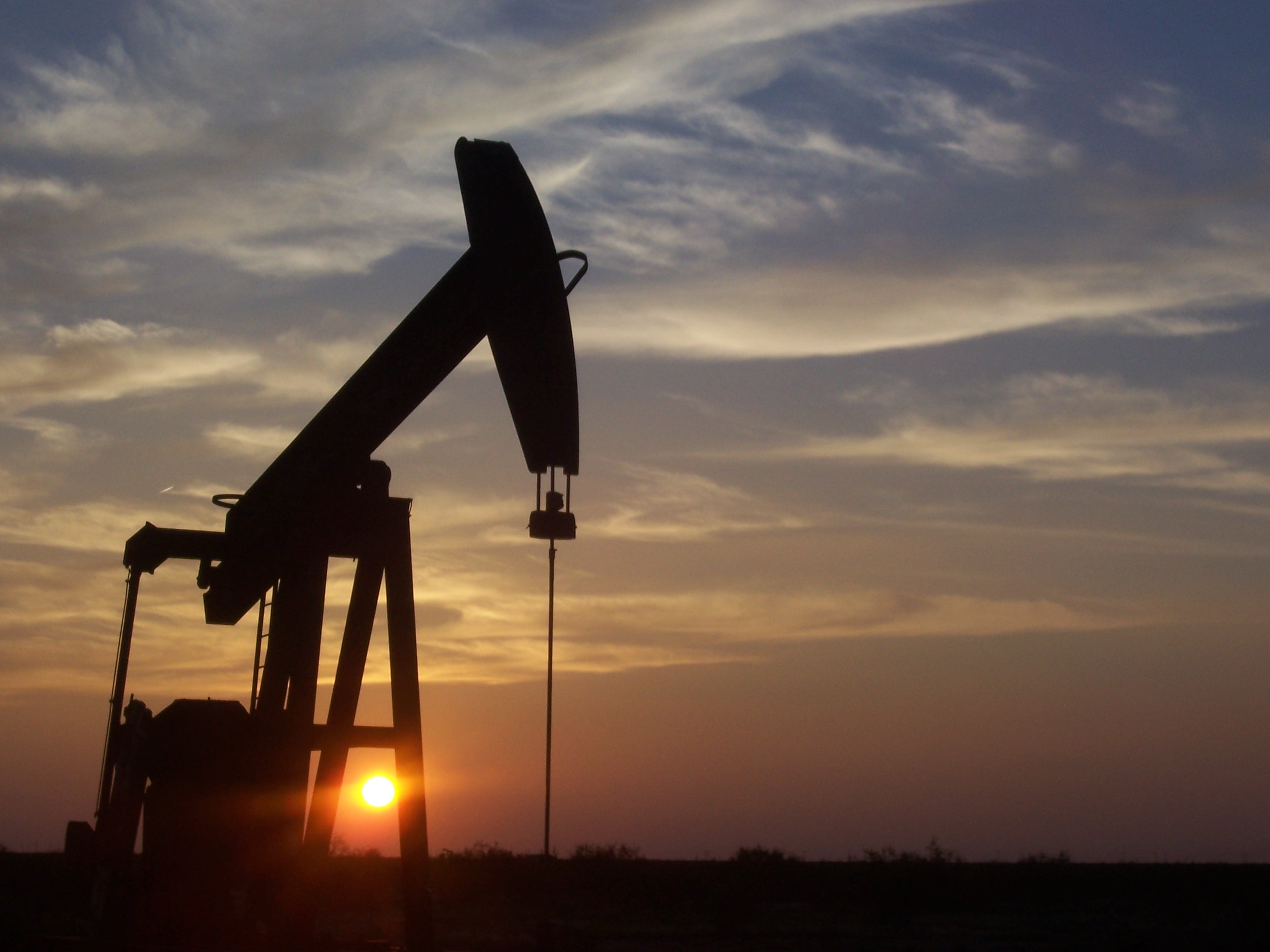
A pumpjack in West Texas, where Occidental's Permian Basin EOR fields will receive CO2 from the new Delaware Basin capture projects.
Photo: Eric Kounce, public domain, via Wikimedia Commons
What Did Occidental Sign in the Delaware Basin?
Occidental signed two separate long-term CO2 offtake agreements on November 9, 2026. The deals cover CO2 captured at existing and new third-party natural gas processing plants in the Delaware Basin.
The two projects are expected to capture and move about 2 million metric tons of CO2 per year combined, according to Occidental's November 2026 announcement. That volume could expand to as much as 4 million metric tons a year.
Key Facts
- Announced: November 9, 2026, by Occidental in Houston
- Supply: about 2 million metric tons of CO2 per year, expandable to 4 million
- Source: existing and new third-party natural gas processing plants in the Delaware Basin
- New infrastructure: nearly 100 miles of CO2 pipeline linking to the Permian CO2 network
- End use: Occidental's enhanced oil recovery operations in the Permian Basin
- Timing: first shipments anticipated in 2029, subject to final investment decisions
- Not disclosed: developer names and contract values
These are signed supply agreements, not financed or operating projects. Both projects still need final investment decisions. Occidental has not named the developers or disclosed contract values.
Who Builds and Pays for the Capture Infrastructure?
The two developers will fund and build the capture, transport and delivery assets. Occidental's role is the long-term buyer of the captured CO2.
That split matters for gas processors. Processing plants already remove CO2 from raw natural gas so it meets pipeline quality standards. A long-term buyer gives that separated stream a contracted customer and a delivery route.
Vishal Gupta, President and General Manager of EOR Ventures at Occidental, said reliable long-term CO2 supply supports the company's advanced recovery strategy. He also called federal 45Q incentives "an important support for these investments."

"The projects, once operational, will help diversify our CO₂ supply, improve access to cost-effective resources and create infrastructure that can connect additional carbon capture projects over time."
Vishal Gupta
Occidental is also pursuing offtake from more third-party sources of human-made CO2. Occidental's CO2 infrastructure includes access to 2,500 miles of CO2 pipeline, according to the company's EOR operations page. The same page lists up to 20 million metric tons of CO2 stored annually.
Readers following the company's wider carbon portfolio can see how Occidental and 1PointFive are reshaping U.S. carbon capture.
How Will Nearly 100 Miles of New Pipe Reach the Permian Network?
The developers plan nearly 100 miles of new CO2 pipeline across the Delaware Basin. The lines will connect to the existing CO2 network that already supplies Permian Basin fields.
The pipelines are being designed with extra capacity. More gas processing plants and other industrial CO2 sources can tie in later. Occidental said the new lines will also extend CO2 access across the Delaware Basin.

A conceptual overview of two Delaware Basin CO2 supply projects that will connect natural gas processing facilities to Occidental's existing Permian pipeline network and EOR operations. The projects target approximately 2 million metric tons of annual CO2 supply, with potential expansion to 4 million metric tons and initial shipments anticipated in 2029, subject to final investment decisions.
Shared pipe lowers the barrier for smaller emitters, since a single plant does not need to build its own line to market. Tallgrass showed the shared model working when its Trailblazer pipeline began moving ethanol-plant CO2 to storage in Wyoming.
Why Does the 45Q Tax Credit Matter for These Projects?
The federal 45Q credit now pays the same rate for CO2 used in EOR as for dedicated geologic storage. That parity came from the One Big Beautiful Bill Act, signed on July 4, 2025.
Point-source projects meeting prevailing wage and apprenticeship rules can earn $85 per metric ton, per the Carbon Capture Coalition's July 2025 summary. The EOR rate was previously $60.
The base rate without those labor rules is $17 per metric ton. Credit values are indexed for inflation starting in 2027.
Final 45Q values for these projects will depend on when they start construction and how they qualify. Our breakdown of 45Q's new chapter under the 2025 tax law covers parity, transferability and the new foreign-entity rules.

"U.S. policymakers continue their longstanding bipartisan support for CCS by sustaining and raising the 45Q tax credit in the One Big Beautiful Bill Act."
Jarad Daniels, CEO, Global CCS Institute
The Global CCS Institute counted 33 operational U.S. carbon capture projects, 19 under construction and more than 300 in development as of June 2025. The Delaware Basin pair would add to that development pipeline once they reach final investment decisions.
How Does This Compare to 1PointFive's Pelican Hub Deal?
Both deals involve about 2 million metric tons of CO2 a year and a 2029 start, but the business models run in opposite directions. In the Delaware Basin, Occidental buys CO2. At Pelican, Occidental subsidiary 1PointFive is paid to transport and store it.
The Pelican agreement is a 25-year deal with CF Industries and its joint venture partners JERA and Mitsui. It covers CO2 from the Blue Point low-carbon ammonia joint venture in Louisiana.
| Feature | Delaware Basin Offtake (Occidental) | Pelican Hub Agreement (1PointFive) |
|---|---|---|
| Customer | Occidental buys CO2 from two unnamed developers | CF Industries, JERA and Mitsui joint venture pays 1PointFive for transport and storage |
| CO2 Source | Existing and new natural gas processing plants, Delaware Basin | Blue Point low-carbon ammonia plant, Ascension Parish, Louisiana |
| Infrastructure | Developer-built capture plus nearly 100 miles of new pipeline into the Permian network | 1PointFive transport to the Pelican Sequestration Hub, covering more than 30,000 acres |
| End Use | Enhanced oil recovery in the Permian Basin | Dedicated geologic storage in a Class VI well |
| Volume | About 2 million metric tons per year, up to 4 million | About 2.3 million metric tons per year |
| Term | Long-term, length not disclosed | 25 years |
| Timing and Status | First shipments anticipated in 2029, subject to final investment decisions | Pelican Hub has reached FID, ammonia production expected in 2029 |
Together, the two deals show Occidental working both sides of the CO2 market. It buys captured CO2 where its oil fields need supply. It sells permanent carbon storage capacity where industrial emitters need a home for theirs.
What Has to Happen Before First CO2 Flows in 2029?
The next milestone is final investment decision on each Delaware Basin project. After that come permits, capture unit construction and pipeline build-out before first deliveries, which Occidental expects in 2029.
The Permian is also home to STRATOS, a direct air capture facility developed by Occidental subsidiary 1PointFive. The Ector County plant is designed to pull up to 500,000 metric tons of CO2 from the air each year. Our coverage tracks its Class VI storage permits and its latest Phase 1 commissioning update.

Aerial view of 1PointFive's STRATOS facility in Ector County, Texas, another Permian Basin capture project in Occidental's portfolio.
Image: 1PointFive Media Kit
Point-source capture at gas plants and direct air capture are different pathways. Gas plants capture CO2 already being separated from raw gas, while STRATOS pulls CO2 from ambient air. Tools like the DAC-LAT lifecycle analysis tool help compare how each pathway performs.
Official 1PointFive progress update (as of July 2025) on construction of STRATOS, the company’s first commercial-scale Direct Air Capture facility in Ector County, Texas, designed to capture up to 500,000 metric tons of CO₂ per year.
Occidental said the pipelines are designed to support future conventional and unconventional recovery opportunities. The projects also have room to grow from about 2 million to as much as 4 million metric tons a year.
Frequently Asked Questions
Who are the developers in Occidental's Delaware Basin CO2 deals?
Occidental has not named the two developers. It said they will fund and build the capture, transport and delivery infrastructure. Contract values were not disclosed.
Is this a carbon removal project?
No. The agreements cover CO2 captured from natural gas processing plants and delivered for enhanced oil recovery. It is point-source capture and transport, not atmospheric carbon removal.
Can other emitters use the new pipelines?
Yes, that is the plan. Occidental said the pipelines are being designed with extra capacity so more gas plants and other industrial CO2 sources can connect later.
The deal gives two developers a committed customer for about 2 million metric tons of CO2 a year. In return, the Delaware Basin gets new capture units and nearly 100 miles of pipe designed with room for future tie-ins. First shipments are anticipated in 2029.
For ongoing coverage of carbon removal, BECCS, and corporate CDR procurement, subscribe to Decarbonfuse.com.
Subscribe to the newsletter
Daily decarbonization data and news delivered to your inbox
Follow the money flow of climate, technology, and energy investments to uncover new opportunities and jobs.
Latest issues
-
Molten’s Oakland Plant Takes Aim at China’s Graphite
Inside This Issue 🔋 Molten Industries Commissions World’s First Plant to Produce Battery-Grade Graphite from Natural Gas 🪨 European Commission Presents Draft Rules for Certifying Enhanced Rock Wea...
-
Can GE Vernova’s Turbine Really Run 100% Hydrogen?
Inside This Issue ⚙️ GE Vernova’s Greenville Lab Moves Turbines Closer to 100% H2 🚗 Geely Holding Announces Evsa’s Global Launch at COP31 🚢 Ethanol Blends Run Successfully in Pilot Marine Engine T...
-
Who Gets Canada’s C$10 Million Carbon Removal Buy?
Inside This Issue 🔩 Stegra and Meta Sign Agreement for Environmental Attribute Certificates to Advance Green Steel 🧱 Sublime Systems and Meta Sign Agreement to Scale U.S. Manufacturing of Next Gen...
Company Announcements
-
Canada Invests to Drive Clean Energy, Create Jobs and Spur Innovation in the Atlantic
Français OTTAWA, ON, Nov. 18, 2026 /CNW/ -- Canada has the abundant energy and ambition it takes to master our destiny and become an energy superpower in a rapidly changing global economy. We are ...
-
Microsoft-backed Saskatchewan project developed by MLTC and Svante among only three BECCS projects selected MEADOW LAKE, Saskatchewan & BURNABY, British Columbia--BUSINESS WIRE--North Star, ...
-
Molten Industries Commissions World's First Plant to Produce Battery-Grade Graphite from Natural Gas
Building a domestic supply of critical materials, Molten’s Oakland demonstration plant is now operational, producing battery-grade graphite and clean hydrogen in an end-to-end, commercial-scale, mo...
-
PyroGenesis Selected for Waste-to-Hydrogen Project for India’s Largest Power Utility, NTPC
Syngas cleaning and hydrogen separation contract builds on the Company’s established India operations and its international growth strategy MONTREAL, Nov. 18, 2026 (GLOBE NEWSWIRE) -- PyroGenesis ...