
Construction crews are now in the ground in West Terre Haute, Indiana, marking a turning point for one of the Midwest's most ambitious low-carbon ammonia projects. Samsung E&A officially broke ground on January 7, 2026, kicking off what's expected to become a cornerstone of America's clean energy infrastructure.
The facility, developed by Wabash Valley Resources, will convert petroleum coke into low-carbon ammonia while capturing roughly 1.67 million tons of CO2 annually. That's equivalent to taking over 360,000 cars off the road every year.
>> RELATED: $400M Bet on Blue Ammonia: Industry Giants Push Carbon Capture in Louisiana
What Makes This Project Different
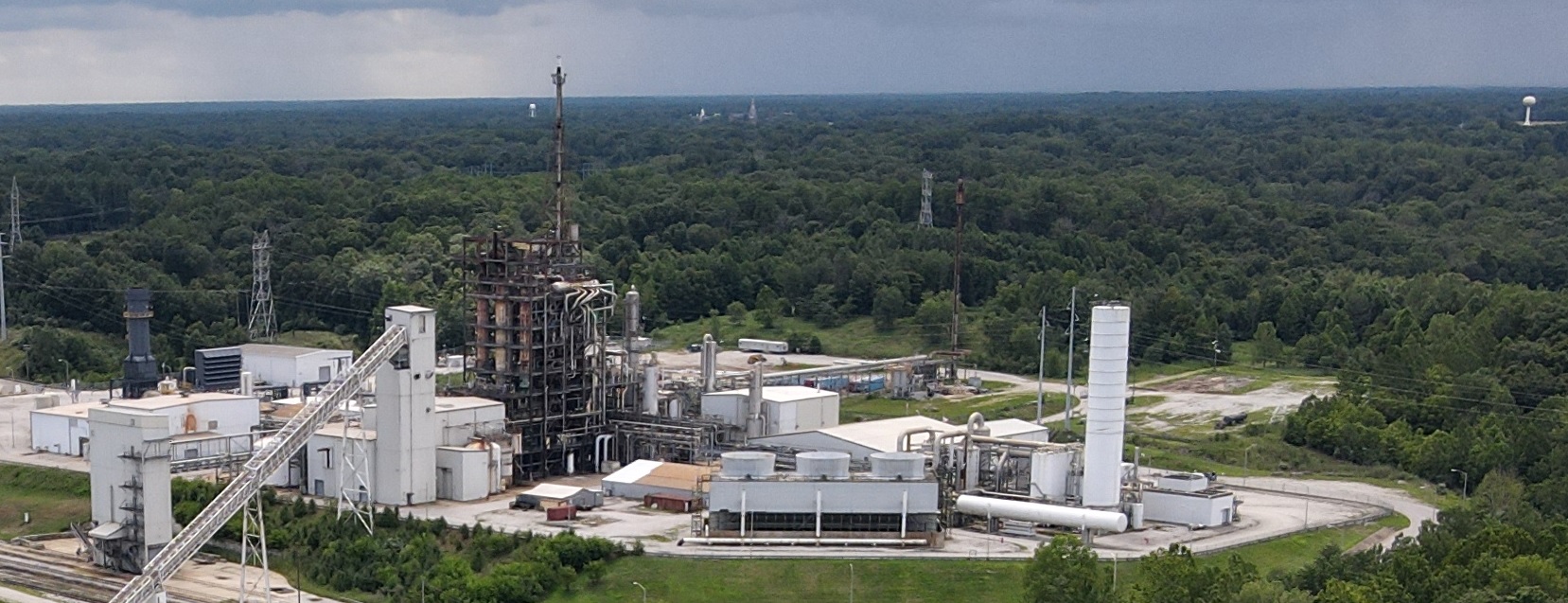
Unlike traditional ammonia production that relies heavily on natural gas reforming, the Wabash project takes a different path. It uses gasification technology to convert petroleum coke, a refinery byproduct, into synthesis gas. That syngas then becomes the feedstock for ammonia production.
The real innovation here is the integrated carbon capture system. Instead of releasing CO2 into the atmosphere, the facility will capture it and sequester it underground in deep geological formations.

A snapshot of the major low-carbon ammonia production facility project underway in West Terre Haute, Indiana, highlighting its significant investment and environmental goals.
Samsung E&A's Growing Clean Energy Footprint
This project isn't Samsung E&A's first foray into low-carbon ammonia. The South Korean engineering giant has been steadily building its portfolio in the decarbonization space, securing contracts across hydrogen production, sustainable fuels, and carbon capture.

"We are committed to delivering world-class engineering solutions that support the global transition to cleaner energy. Low-carbon ammonia represents a critical pathway for decarbonizing heavy industries."
Hong Namkoong, President and CEO, Samsung E&A
The company's expertise in complex energy projects makes it a natural fit for the Wabash facility. Managing the integration of gasification, ammonia synthesis, and carbon capture requires deep technical know-how and project management capabilities.
>> In Other News: Buckeye Gives Final Support to Rezone Nikola Property for Hydrogen Huba
Why Low-Carbon Ammonia Matters
Ammonia isn't just for fertilizers anymore. It's emerging as one of the most promising hydrogen carriers for long-distance energy transport. Countries like Japan and South Korea are already investing heavily in ammonia co-firing for power generation as they work to decarbonize their electricity grids.
The chemistry is straightforward. Ammonia can be cracked back into hydrogen at the destination. Unlike hydrogen, which requires extreme cooling, ammonia uses existing shipping infrastructure.
The U.S. is positioning itself as a major exporter in this space. Projects like Wabash Valley join a growing list of clean ammonia facilities coming online across the Gulf Coast and Midwest.

"Low-carbon ammonia is poised to become one of the most important energy carriers of the next decade. The economics are improving rapidly as carbon capture costs decline."
Hydrogen Council, Global Hydrogen Compass 2025 Report
The Policy Tailwind
Federal incentives are playing a big role. The 45Q tax credit offers up to $85 per ton for captured CO2 that's permanently sequestered. For a facility capturing 1.67 million tons annually, that translates to potential credits exceeding $140 million per year.
Indiana has also been working to attract carbon storage and clean energy investments. The state's central location and existing industrial infrastructure make it an attractive base for projects targeting both domestic and international markets.
Building Momentum in the Midwest
The Wabash project adds to a wave of carbon capture investments sweeping through the heartland. Unlike the Gulf Coast, which has dominated headlines with mega-scale blue hydrogen and ammonia announcements, the Midwest is carving out its own niche.
What sets this region apart is access to different feedstocks and geological storage. The Illinois Basin, which extends beneath Indiana, offers significant CO2 sequestration potential that developers are just beginning to tap.
Indiana's industrial legacy also plays a role. The state has refining and chemical manufacturing infrastructure that can supply feedstocks like petroleum coke. Instead of treating petcoke as a waste product, facilities like Wabash Valley convert it into something valuable while capturing the carbon that would otherwise be released.
What Comes Next
The construction phase is expected to create hundreds of jobs in the region, with operations adding permanent positions once production begins.
For the broader industry, this groundbreaking sends a clear signal. Low-carbon ammonia isn't just a concept on paper. It's happening now, with real capital flowing into projects that combine proven technology with carbon management solutions.
The question is no longer whether these facilities can be built. It's how fast supply can scale to meet growing global demand.
Subscribe to the newsletter
Daily decarbonization data and news delivered to your inbox
Follow the money flow of climate, technology, and energy investments to uncover new opportunities and jobs.
Latest issues
-
The US Hasn't Made Heavy Water Since 1982
Inside This Issue ⚛️ Aternium Completes FEED Studies for US Hydrogen, Heavy Water Project 🐄 Google, McKinsey Strike Brazil Carbon Removal Deal With Silvopasture Project 🔧 Cummins Selects Stargate ...
-
Why Colorado’s Koloma Has Japan’s Largest Utility Hooked
Inside This Issue ⚡ JERA Invests in Koloma to Explore Natural Hydrogen as a Future Low-Carbon Energy 🔬 New CATF Tool Provides Framework for Self-Assessment and Strengthening of Biomass Carbon Remo...
-
LNK Energies Targets $6.50 Hydrogen With No Federal Subsidies
Inside This Issue 🚛 MIT Startup Says It Can Turn Diesel Trucks Into Cheaper Hydrogen Haulers, See It at Disrupt 🏭 Baytown City Council Briefs: ExxonMobil Blue Hydrogen Agreement Approved 🌎 Colorad...
Company Announcements
-
Toyota Achieves Heavy-Duty Hydrogen Truck Milestones
GARDENA, Calif. and PLANO, Texas , Oct. 20, 2026 /PRNewswire/ -- Toyota Motor North America's Hydrogen Headquarters (H2HQ) division is making steady progress in fueling improvements for heavy-duty ...
-
The parties intend to design hydrogen power into the Hendry County development's master plan before horizontal construction begins and to scale it with each phase of the build-out DELRAY BEACH, Fl...
-
OSLO, Norway, Oct. 20, 2026 /PRNewswire/ -- Aker BP and Höegh Evi have been awarded EUR 223 million from the European Union Innovation Fund for the Atlas Project, a large-scale CCS network connecti...
-
XCF Global Announces Agreement to Acquire Paramount, California Renewable Fuel Production Facility
Mergers and Acquisitions Acquisition further expands XCF's alternative energy platform with the proposed addition of ~50 million annual gallons of sustainable aviation fuel, renewable diesel and r...