
Ozona CCS and Marubeni Corporation have reached a final investment decision on the Pawnee Carbon Sequestration Project in Bee County, Texas. The 50-50 joint venture will capture CO2 from a natural gas treating plant and store it deep underground. First injection is targeted for the first quarter of 2027.
Key Facts
- Ownership: 50-50 joint venture between Ozona CCS and Marubeni
- Location: Bee County, Texas, about 90 miles southeast of San Antonio
- CO2 source: StarTex Field Services natural gas treating facility
- Injection well: O'Neal Gas Unit No. 4, an existing well repurposed for injection into the Sligo Formation
- Potential capacity: about 400,000 metric tons of CO2 per year (Ozona CCS, October 2026)
- First injection target: first quarter of 2027
>> In Other News: [x](x)
What Did Ozona and Marubeni Approve in Bee County?
Ozona and Marubeni approved full investment in Pawnee, a carbon storage project about 90 miles southeast of San Antonio. Ozona announced the final investment decision on the Texas carbon storage project on October 27, 2026.
Ozona is a San Antonio carbon management company founded in 2021. Marubeni is a Tokyo-based global trading and investment group with existing upstream shale interests in Texas.
"Pawnee moves our strategy from development into construction and ultimately operations," said Rich Adams, CEO of Ozona. He added that the project could expand as more CO2 sources connect.
The partners first announced joint development in September 2024. At the time, they aimed for a 2025 investment decision and 2026 operations.
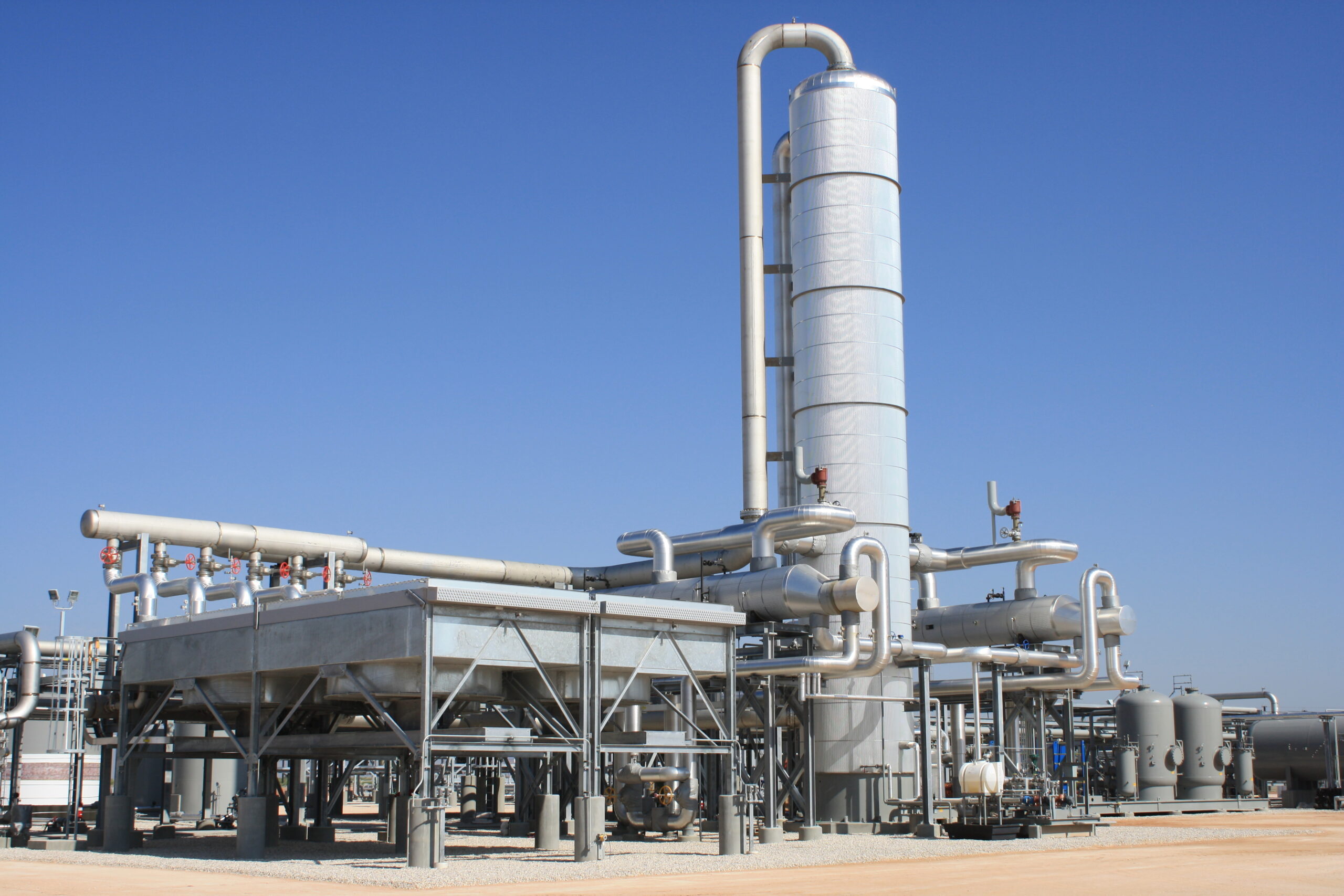
Natural gas treating plants like the one supplying Pawnee separate CO2 from produced gas before it is compressed for injection.
How Does the Pawnee Project Move CO2 From Plant to Rock?
Pawnee captures CO2 at StarTex's Pawnee Treating Facility and sends it to a nearby injection well. The treating plant sits about 2 miles south of Pawnee, Texas.
An amine unit strips CO2 from produced natural gas. The resulting stream is 98.2% CO2, according to Ozona's EPA monitoring plan. It's dehydrated, compressed and piped straight to O'Neal Gas Unit No. 4.
The well injects into the Sligo Formation at 15,874 to 16,056 feet. That's about 14,924 feet below the base of underground drinking water, per the same plan.
The Pearsall Formation acts as the upper seal. Ozona reports that its injection test into the Sligo was successful.

The planned Pawnee Carbon Sequestration Project in Bee County, Texas, will separate CO₂ from natural gas treatment and inject it through the repurposed O'Neal No. 4 well into the Sligo Formation at depths of 15,874 to 16,056 feet. The EPA monitoring plan identifies approximately 14,924 feet of rock between the injection interval and the base of underground drinking water.
Who Does What in the Ozona and Marubeni Partnership?
Ozona builds and operates the infrastructure, and Marubeni leads carbon credit marketing. Each partner owns 50% of the project.
Ozona brings subsurface, permitting and pipeline experience from the Permian Basin, Eagle Ford and Corpus Christi areas. Marubeni brings capital and global commercial reach.
Under the 2024 agreement, Marubeni also committed technical and financial help to secure pore space, permit wells and engineer facilities.
>> RELATED: California's First CO2 Goes Underground at Elk Hills
How Much CO2 Can Pawnee Store?
Ozona's FID release says O'Neal Gas Unit No. 4 and its storage area have potential capacity of about 400,000 metric tons of CO2 per year. That figure describes the site's room to grow, not its starting volume.
The opening phase is sized to StarTex. Ozona's EPA plan describes a Class II acid gas injection permit application for up to 1.5 million standard cubic feet per day. That equals roughly 27,500 metric tons of CO2 per year over about 12 years.
| Milestone or Metric | Detail |
|---|---|
| Class II permit application filed | September 2023, Railroad Commission of Texas |
| Joint venture announced | September 24, 2024 |
| Final investment decision | October 27, 2026 |
| First injection target | First quarter of 2027 |
| StarTex-linked injection under the Class II plan | About 27,500 metric tons of CO2 per year |
| Potential site capacity | About 400,000 metric tons of CO2 per year |
The gap between those two numbers is the growth story. Both partners are evaluating more Texas storage sites, and Ozona says Pawnee could expand as new CO2 sources connect.
How Does the 45Q Credit Support Pawnee?
The federal 45Q credit pays up to $85 per metric ton for CO2 stored in dedicated geologic formations. Projects earn that full rate when they meet prevailing wage and apprenticeship rules.
Projects that skip those labor rules earn $17 per ton. This structure dates to the 2022 Inflation Reduction Act. The credit runs for 12 years after capture equipment is placed in service.
The One Big Beautiful Bill Act, signed July 4, 2025, left the storage rate unchanged. It raised enhanced oil recovery and utilization to match it. Decarbonfuse covered those shifts in our 45Q explainer on the credit's new chapter.

"Deployment of CCS can strengthen America's energy future, create jobs, and help solidify its position as a leader in the global low-carbon economy."
Jarad Daniels, CEO, Global CCS Institute
The U.S. had 33 operational CCS projects and 19 under construction as of June 2025, according to the Global CCS Institute. More than 300 others were in development.
What Does Pawnee Signal for Commercial Storage in Texas?
Pawnee reached FID by pairing one steady gas-processing CO2 source with an existing well. Both partners are now evaluating more carbon storage opportunities in Texas.

"By expanding the number of states granted primacy over Class VI wells, EPA can reduce its backlog of applications and dramatically accelerate the necessary build-out of carbon management projects throughout the country."
Christian Flinn, Public Policy Manager, Carbon Capture Coalition
Pawnee uses a Class II acid gas well, a category the Railroad Commission of Texas already administers. Texas also took over Class VI permitting in December 2025, as covered in how Texas bypassed the EPA backlog.
That handoff moved stalled carbon projects into state review. Larger sites like Oxy's Brown Pelican storage project now follow the same state path.
Official Railroad Commission of Texas video explaining the state’s Class VI primacy for geologic CO₂ storage wells, the permitting framework that underpins commercial projects such as Pawnee.
At the time of that June 2025 statement, 60 projects had filed 175 Class VI well applications with the EPA, per the Carbon Capture Coalition. In 2023, Ozona also reported a Permian Basin lease position with an estimated 120 million metric tons of pore space capacity.
Gulf Coast storage keeps gaining partners and capital, from the Corpus Christi carbon storage hub to direct air capture at Occidental's STRATOS facility. Decarbonfuse's recent look at 113 CCS projects and the Americas' capacity lead tracks that momentum.
Frequently Asked Questions
When will the Pawnee project start injecting CO2?
Ozona and Marubeni are targeting first injection in the first quarter of 2027. Timing depends on regulatory approvals and construction progress.
Will Pawnee store 400,000 tons of CO2 a year from day one?
No. About 400,000 metric tons a year is the site's potential capacity. The StarTex-linked phase is sized at roughly 27,500 metric tons a year, with room to add more sources.
Who sells the carbon credits from Pawnee?
Marubeni leads marketing and commercialization of carbon credits. Ozona builds and operates the capture, compression and injection infrastructure.
Pawnee starts small and leaves room to grow. With a successful injection test, a repurposed well and a 2027 start target, it puts another commercial storage project on track in Texas.
For ongoing coverage of carbon removal, BECCS, and corporate CDR procurement, subscribe to Decarbonfuse.com.
Subscribe to the newsletter
Daily decarbonization data and news delivered to your inbox
Follow the money flow of climate, technology, and energy investments to uncover new opportunities and jobs.
Latest issues
-
400 Tons of Hydrogen Daily to Power Data Centers
Inside This Issue ⚡ HDF Energy Selects Topsoe for 250 MW Power Plant in Texas 🍁 Deep Conduit Signature Identified Near Lawson 4 Expands Commercial Potential of Canada’s First Subsurface Natural Hy...
-
Why Meta Wants 200,000 Tons of Cement Credits
Inside This Issue 🤝 Fortera and Meta Sign Multi-Year Environmental Attribute Certificate (EAC) Purchase Agreement for Low Carbon Cement ✈️ Massachusetts Marks 1st Barge Delivery of SAF to Boston L...
-
The $450M Offtake Deal Behind Emvolon’s $22M Raise
Inside This Issue 🏗️ Emvolon Raises $22 Million Funding Round to Launch Its Modular, Waste-to-fuel Chemical Plants 🔋 Terraton Turns Kenyan Nut Shells into Carbon Credits ⚡ Ballard Launches HPU Agi...
Company Announcements
-
Summary of Transaction: Minority shareholders of Tidewater Renewables will receive 0.88 common shares of Tidewater Midstream for each common share of Tidewater Renewables held Supported by holder...
-
HDF Energy Selects Topsoe for 250 MW Power Plant in Texas
HDF Energy's BaseBlue Power™ plant solution will use Topsoe's SynCOR™ technology to produce hydrogen from natural gas, capture CO ? and power fuel cells to deliver firm, low-carbon electricity to d...
-
Independent laboratory results advance first commercial waste-to-methanol module toward Portugal deployment November 02, 2026 08:00 ET | Source: HyOrc Corporation HOUSTON, Nov. 02, 2026 (GLOBE NE...
-
Confirmation of the Lawson Conduit and newly interpreted four-way structural closure near Lawson 4, combined with reprocessing of proprietary 3D seismic data through integration of rich new dataset...