
Canada is absorbing a structural wave of clean energy investment redirected from the United States. Policy rollbacks south of the border have pushed capital across hydrogen, CCS, DAC, and clean manufacturing into Canadian territory. More than $100 billion in potential investment is now tied to announced low-carbon hydrogen projects alone inside Canada's borders, and the shift is accelerating.
Key Facts
- Canada's energy sector attracted $89 billion in capital expenditures in 2024 (Canadian Centre for Energy Information, Energy Fact Book 2025-2026)
- 215 clean technology projects were active in Canada in 2024, representing $194.2 billion in potential investment, up 22.1% in capital value from 2023 (Natural Resources Canada, 2024)
- Over $100 billion in potential investment is tied to approximately 80 announced low-carbon hydrogen projects in Canada since 2020 (Natural Resources Canada, Hydrogen Strategy Progress Report)
- Canada offers an investment tax credit of 60% for direct air capture equipment, plus an additional 12% for Alberta-based projects
- The Canada Growth Fund provides $15 billion designed specifically to attract private capital into clean technologies and decarbonization projects
- U.S. clean energy project cancellations reached over $14 billion in 2025, with $4.5 billion cancelled in April 2025 alone as the One Big Beautiful Bill advanced through Congress (E2, 2025)
- Plug Power's 275 MW GenEco PEM electrolyzer contract for Quebec's Courant project, awarded April 2, 2026, is one of the largest electrolyzer contracts in the company's history
- MAX Power Mining confirmed Canada's first-ever subsurface natural hydrogen system in Saskatchewan in January 2026, with hydrogen concentrations reaching up to 286,000 ppm (28.6% H2)
What Is Pushing Clean Energy Capital North of the Border?
U.S. policy instability is the primary driver of capital redirection. The rollback of Inflation Reduction Act provisions, cancellation of DOE hydrogen hub funding, and regulatory uncertainty around the 45V hydrogen tax credit have combined to create a difficult environment for long-term infrastructure investment.
Through 2025, clean energy project cancellations in the U.S. totaled more than $14 billion, with $4.5 billion cancelled in April alone, according to nonprofit business group E2. Investors building 10 to 20-year infrastructure projects need stable policy ground. Canada is providing it.

"Canada was an obvious choice given the existence of good government programs and incentives that are there."
Adrian Corless, CEO, CarbonCapture Inc. and True North Carbon
The shift is visible in the data. Canada's energy sector attracted $89 billion in capital expenditures in 2024, according to the Canadian Centre for Energy Information's Energy Fact Book 2025-2026. At the same time, Canada's 215 active clean technology projects carried a total potential investment value of $194.2 billion, up 22.1% in capital value from the prior year despite an 18-project drop in count (Natural Resources Canada, 2024). Fewer projects, more capital per project: that is the hallmark of institutional-grade investment arriving at scale.
Canada's incentive stack is genuinely competitive. Federal investment tax credits cover 37.5% to 60% on CCS equipment, 15% to 40% on clean hydrogen production scaled to carbon intensity, and 15% on clean electricity. These credits are backed by the $15 billion Canada Growth Fund, structured specifically to attract private capital to decarbonization infrastructure. The November 2025 Memorandum of Understanding between Prime Minister Mark Carney and Alberta Premier Danielle Smith further removed long-standing federal-provincial friction that had chilled investor confidence for years.
Corless made that statement after physically moving CarbonCapture's pilot project from Arizona to Alberta's Deep Sky Alpha facility. The company cited DOE funding cancellations in the U.S. and Canada's 60% investment tax credit for DAC equipment as decisive factors. It is one of the clearest documented cases of capital moving north due to policy clarity, not speculation.
>> RELATED: Canada Opens World's First Surficial Mineralization Hub in Quebec

How Is Plug Power Deploying in Quebec?
Plug Power (NASDAQ: PLUG) was awarded the Front-End Engineering Design (FEED) contract on April 2, 2026, to supply a 275 MW GenEco PEM electrolyzer system for Hy2gen Canada Inc.'s Courant project in Baie-Comeau, Quebec. Plug described it as one of the largest electrolyzer project awards in the company's history.
The Courant facility is designed to become one of North America's largest low-carbon ammonium nitrate production plants. Hydrogen produced by Plug's electrolyzers will be converted into low-carbon ammonia using electricity from the Hydro-Quebec grid, then further processed into renewable ammonium nitrate for mining explosives across Quebec, Central Canada, and Eastern Canada.
Hydro-Quebec's hydroelectric grid produces among the lowest-emission electricity in North America. That power source is a structural competitive advantage few U.S. projects can replicate. Baie-Comeau also offers deep-water port access, providing critical logistics infrastructure for a project of this scale.

"Being selected as the electrolyzer supplier for Hy2gen's Courant project underscores Plug's ability to support large-scale hydrogen and hydrogen-derived products."
Jose Luis Crespo, President and CEO, Plug Power
Hy2gen's Courant project targets a hard-to-abate industrial sector. Mining operations across Canada currently depend on carbon-intensive imported ammonium nitrate for explosives. Replacing that supply with domestically produced, hydropower-backed green chemistry delivers a direct, measurable emissions reduction in a sector with few other near-term decarbonization pathways.
Plug Power noted that its gigafactory manufacturing scale was a key factor in winning the contract. Plug's scope includes advanced engineering, system design, electrolyzer integration, plant configuration, and performance optimization for the full 275 MW system.
What Did MAX Power Discover in Saskatchewan?
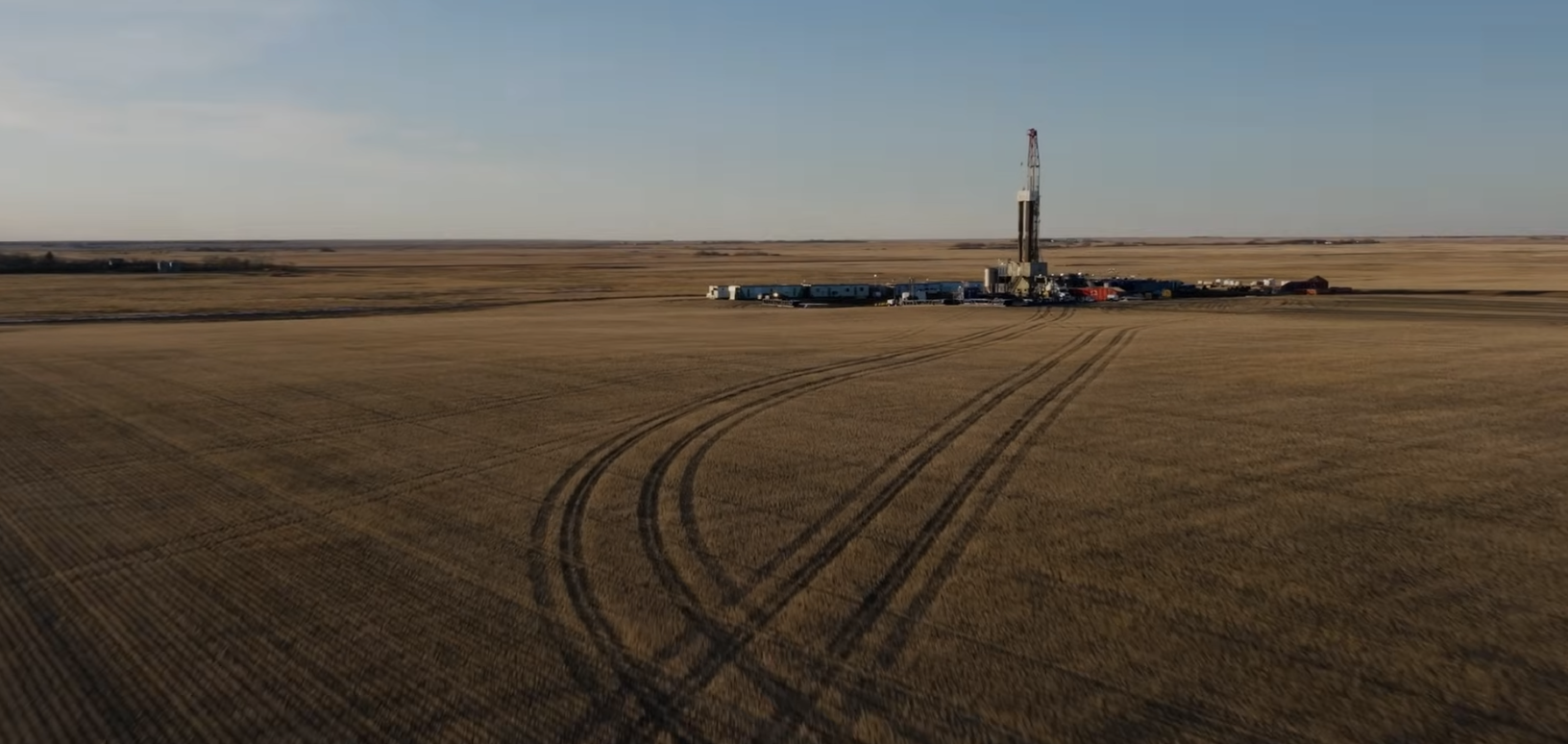
MAX Power Mining Corp. (CSE: MAXX; OTC: MAXXF) confirmed Canada's first-ever subsurface natural hydrogen system in January 2026 at its Lawson project near Central Butte, Saskatchewan. The discovery recorded hydrogen concentrations up to 286,000 parts per million, equivalent to 28.6% hydrogen, with free gas flow to surface and strong reservoir pressure following perforation.
The Lawson site sits on the 475-kilometer Genesis Trend, a geological belt extending across Saskatchewan into Montana and the Dakotas. MAX Power holds a 1.3-million-acre permitted land package along this corridor, the largest natural hydrogen land package in Canada. The Genesis Trend lies adjacent to the Regina-Moose Jaw Industrial Corridor, where existing hydrogen demand is strong.
Natural hydrogen, also called gold hydrogen, is geologically occurring hydrogen that requires no energy-intensive electrolysis or steam methane reforming to produce. If commercially viable at scale, it could carry a cost profile fundamentally different from both green and blue hydrogen.
In April 2026, MAX Power engaged GLJ Ltd., a premier Calgary-based energy consulting firm, to advance commercial evaluation of the Lawson system. The engagement followed 3D seismic results that materially expanded the interpreted scale of the project, identifying the potential for multiple producing wells within the 28-square-kilometer Lawson Complex.
Ran Narayanasamy, President and CEO of MAX Power, stated the company is now focused on defining scale, deliverability, and economic potential for potential commercial development. A second confirmatory well along the Saskatchewan-Montana border is fully funded as part of the multi-well drill program planned for 2026.
Saskatchewan has Canada's most advanced policy framework for natural hydrogen and is already the country's only commercial helium producer. The province's regulatory readiness positions it to move quickly as commercial evaluation advances across the Lawson Complex and the broader Genesis Trend.
| Project / Company | Location | Sector | Scale / Status (2026) |
|---|---|---|---|
| Courant Project (Plug Power / Hy2gen Canada) | Baie-Comeau, Quebec | Green Hydrogen / Green Ammonia | 275 MW electrolyzer; FEED stage awarded April 2026 |
| Lawson Natural Hydrogen (MAX Power Mining) | Central Butte, Saskatchewan | Natural Hydrogen | Canada's first confirmed discovery; commercial evaluation underway with GLJ Ltd. |
| Deep Sky Alpha (True North Carbon / CarbonCapture) | Innisfail, Alberta | Direct Air Capture | Operational since August 2025; 3,000 tonnes CO2/year; solar-powered |
| Air Products Net-Zero Hydrogen Complex | Edmonton, Alberta | Blue Hydrogen / CCS | $1.3 billion facility; designed to capture 95% of CO2; expected operations by 2027-2028 |
| Canada Hydrogen Project Pipeline (80 announced projects) | National | Low-Carbon Hydrogen | 5 million tonnes/year potential capacity; over $100 billion potential investment (NRCan) |
How Does DAC Fit Into Canada's Investment Story?
Alberta is now home to North America's first facility where CO2 captured directly from the atmosphere has been permanently stored underground. Deep Sky's Alpha facility near Innisfail, Alberta, began operations in August 2025. It captures 3,000 tonnes of CO2 per year using solar power and multiple direct air capture units sourced from developers worldwide, including UK-based Airhive, Mission Zero Technologies, and Quebec-based Skyrenu.
True North Carbon, the Canadian subsidiary of CarbonCapture Inc., operates the Tamarack DAC Project at Deep Sky Alpha. Tamarack achieved First Capture on October 22, 2025, and is Canada's largest single-technology DAC deployment, designed to remove up to 2,000 tonnes of CO2 per year using a modular, solar-powered approach.
That milestone was built directly on capital redirected from the U.S. CarbonCapture Inc. shipped its modular DAC units from Arizona to Alberta after its DOE-funded Louisiana project was cancelled. Canada's 60% investment tax credit for DAC equipment made the economics workable without U.S. federal support.
Canada also holds a structural regulatory advantage in the DAC sector. In 2025, Canada launched the world's first government-backed DAC offset protocol, mandating that captured CO2 be stored in geological formations for at least 100 years and prohibiting use for enhanced oil recovery. That framework gives institutional buyers and compliance markets the certainty needed to commit capital at scale.

What Makes Canada's Policy Framework Different from the U.S.?
Canada's carbon pricing system charges $95 per tonne of CO2 in 2025 and is legislated to rise. That creates ongoing revenue certainty for CCS operators and DAC developers, a signal the U.S. market currently cannot offer. A rising carbon price makes the economics of capture and storage progressively more attractive without requiring new direct federal grants each budget cycle.
Canada's 80 announced low-carbon hydrogen projects collectively represent over $100 billion in potential investment and 5 million tonnes per year of potential production capacity, according to Natural Resources Canada's Hydrogen Strategy Progress Report. Most of those projects combine electrolysis or natural gas reforming with CCS, giving Canada a diversified and proven hydrogen supply pathway across both green and blue production.
The Building Canada Act, known as Bill C-5, created the Major Projects Office in Calgary as a single federal point of contact for large projects. Designated "national interest projects" move through a streamlined federal approval process, directly reducing the permitting timelines that have historically deterred capital in Canada.
Alberta's Quest and Alberta Carbon Trunk Line projects have safely captured and stored a total of more than 17 million metric tonnes of CO2 since 2015, according to the Alberta government. That track record gives investors confidence in Canada's subsurface storage infrastructure that few other jurisdictions can match.
The Bigger Picture: A Multi-Sector Structural Shift
The $100 billion figure is not speculative. It reflects announced projects, signed contracts, and active engineering work across multiple sectors and provinces. The Plug Power-Hy2gen Quebec deal positions Canada as a destination for industrial-scale green hydrogen and green chemistry manufacturing. The MAX Power Saskatchewan discovery opens an entirely new asset class in natural hydrogen. The Deep Sky Alberta operations confirm that DAC capital has already moved.
These are not isolated wins. They form a pattern. Capital that was structured around U.S. policy assumptions is now being rebuilt around Canadian policy certainty. Canada's investment tax credits, carbon pricing infrastructure, geological storage capacity in Alberta, low-emission hydroelectric power in Quebec, and first-mover regulatory frameworks in both DAC and natural hydrogen reinforce each other across the full decarbonization value chain.
The global clean hydrogen sector has surpassed $110 billion in committed investment across more than 500 projects worldwide, according to the Hydrogen Council's September 2025 report. That global pipeline grew by $35 billion over the prior year, representing 50% year-over-year growth in committed investment since 2020. Canada's $100 billion in potential hydrogen investment alone positions it as a significant and growing share of that global total.
Canada is not simply absorbing investment displaced from the U.S. It is actively building the infrastructure, regulatory frameworks, and policy certainty that make it the most stable decarbonization investment destination in North America. Over $100 billion in potential clean energy investment, confirmed in announced projects across hydrogen, CCS, DAC, and natural hydrogen, shows that global capital has already recognized the shift.
Canada's Decarbonization Investment Advantage at a Glance
- CCS investment tax credit: 37.5% to 60% on eligible capture, transport, and storage equipment
- Clean hydrogen investment tax credit: 15% to 40%, scaled to carbon intensity of production
- DAC investment tax credit: 60% federally, plus 12% in Alberta
- Carbon price: $95 per tonne CO2 in 2025, legislated to rise annually, creating revenue certainty for CCS operators
- Canada Growth Fund: $15 billion to attract private capital specifically to clean technology projects
- Strategic Innovation Fund: Up to $8 billion available for decarbonization projects at large industrial emitters
- World's first government-backed DAC offset protocol: Launched 2025; mandates 100-year geological CO2 storage; prohibits enhanced oil recovery use
- Federal-Alberta MOU (November 2025): Removes investment-chilling policy friction; supports oil and gas, renewables, and clean technology together under one framework
- Building Canada Act (Bill C-5): Creates Major Projects Office in Calgary; streamlines federal permitting for designated national interest projects
Frequently Asked Questions
Why is Canada attracting more clean energy investment than the U.S. right now?
U.S. federal policy shifts, including IRA rollbacks and DOE funding cancellations, have introduced major uncertainty for long-term infrastructure investors. Canada offers stable investment tax credits, a rising carbon price that creates revenue certainty, and a clear federal-provincial policy framework established by the November 2025 Canada-Alberta MOU.
What is natural hydrogen and why does the Saskatchewan discovery matter?
Natural hydrogen is hydrogen that occurs in geological formations without requiring industrial production methods such as electrolysis or steam methane reforming. MAX Power Mining's Lawson discovery in Saskatchewan, confirmed in January 2026, is Canada's first confirmed subsurface natural hydrogen system and could represent an entirely new low-cost hydrogen production pathway if commercial development is confirmed.
How does Canada's DAC investment tax credit compare globally?
Canada's 60% federal investment tax credit for DAC equipment, with an additional 12% for Alberta-based projects, is among the most generous direct incentives for DAC deployment anywhere in the world. Combined with Canada's world-first government-backed DAC offset protocol, it has already driven at least one documented case of a U.S.-based company relocating its DAC project to Canada.
Subscribe to the newsletter
Daily decarbonization data and news delivered to your inbox
Follow the money flow of climate, technology, and energy investments to uncover new opportunities and jobs.
Latest issues
-
How ADM Is Turning 800,000 Nebraska Tons Into Carbon Credits
Inside This Issue 🌾 ADM's 800,000-Ton Nebraska Bet on Carbon Removal Credits 🏔️ BLM Reaches New Milestone for Southeast Wyoming Carbon Storage Project 🍁 Haffner Energy Receives a €3.2M Firm Order ...
-
California Just Cleared Washington's Path Into Cap-and-Invest
Inside This Issue 🌲 Governor Newsom Announces Key Step Forward in California Plan to Link Carbon Markets With Washington State 🍁 MAX Power's Lawson 4 Puts Western Canada on the Natural Hydrogen Ma...
-
Spiritus Lands 3 Million Tonnes of CO₂ Demand
Inside This Issue 🌬️ Spiritus Signs First Three Letters of Intent With U.S. Oil Producers for On-Site CO₂, Representing More Than 3 Million Tonnes of Annual Demand ✈️ Germany's Uniper Signs Offtak...
Company Announcements
-
J.P. Morgan Natural Capital, the natural capital investment unit of J.P. Morgan Asset Management, and the Office of the President of the Republic of Paraguay have announced a $200 million investmen...
-
Project expands Anaergia’s European commercial footprint and is expected to process more than 120,000 tonnes of agricultural waste annually and generate renewable electricity TREVIGLIO, Italy &...
-
Alder Validates Design for Commercial Scale-Up
Sep 29, 2026, 06:00 ET | Source: Alder Renewables 1,000-hour continuous industrial pilot demonstrates sustained operation and supports development of its first full-scale commercial project SAN A...
-
LoCI Controls Expands to Canada to Support Growth of Renewable Natural Gas (RNG) Sector
Company brings automated landfill gas technology and first Canadian hire to support operators maximizing RNG project performance and ROI LONDON, ON, Sept. 29, 2026 /PRNewswire/ -- LoCI Controls, I...