
Wyoming’s top energy agency is recommending a combined $11.7 million in taxpayer-funded grants to support carbon capture at power plants, to produce rare earth elements from Powder River Basin coal and to conduct a University of Wyoming analysis of developing petroleum from the Mowry formation.
Peabody Energy , the largest coal producer in the state and in the nation, would receive $6.25 million to “establish a new, secure domestic source of rare earth elements from unconventional deposits located within Peabody’s Powder River Basin coal operations in Wyoming,” according to the company.
Carbon GeoCapture would get $4.95 million to “filter” and “store” smokestack carbon dioxide emissions in “unmineable coal seams.” UW’s School of Energy Resources would receive $480,400 to help petroleum producer Continental Resources study strategies to tap the tricky-to-produce Mowry shale formation in the Powder River Basin.
>> In Other News: SoCalGas Petitions CPUC to Update Hydrogen Blending Demonstration Requirements Based on Global Safety History and Research
As implied in the name, the state’s Energy Matching Funds program requires the recipient and/or its partners to contribute non-state funds.
The three grant requests are not necessarily in competition with one another, and Gov. Mark Gordon makes the final decision.
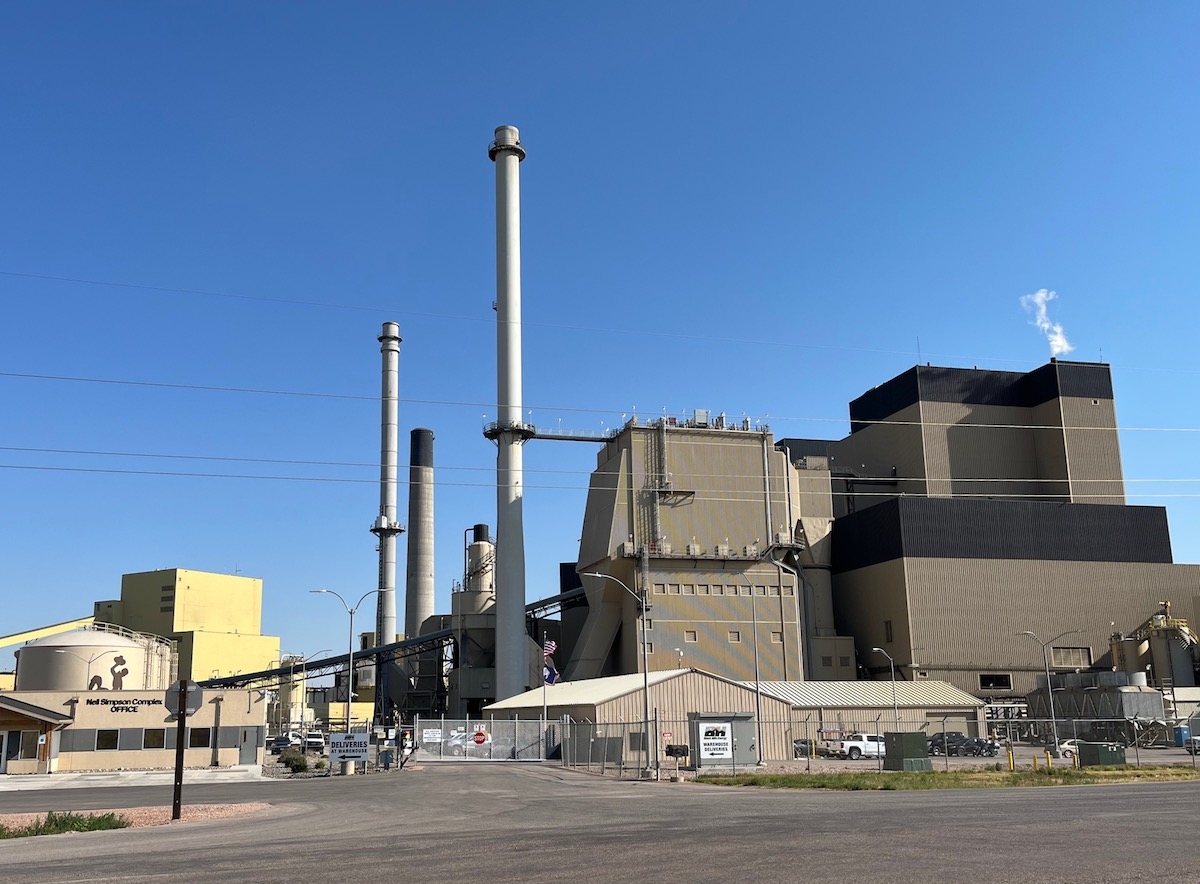
Smokestacks at the Wyodak coal-fired power plant complex near Gillette. (Dustin Bleizeffer/WyoFile)
The Wyoming Energy Authority is accepting public comment on the proposed grants through Monday. You can comment on the proposals by emailing the Energy Authority at [email protected].
Critical minerals from coal
Researchers have known for years that Wyoming’s bounty of coal contains rare earth, or critical, minerals, which are increasingly in demand as building blocks for everything from magnets to batteries, cell phones and other modern technologies.
Though initial coal targets were primarily slag and ash — toxic waste byproducts from coal-burning power plants — the focus has expanded to raw coal. And Wyoming is home to billions of tons of the stuff.
In addition to Ramaco Resources, which says it is reactivating the Brook Mine near Sheridan to process critical minerals from coal, Peabody Energy says it has both the coal reserves and existing infrastructure to set up a pilot processing facility.
The publicly traded, St. Louis-based company, with international assets and worth an estimated $4 billion, says it would use the $6.25 million grant to build a pilot processing facility at its Rawhide mine just north of Gillette. It would produce “market-ready mixed rare-earth concentrate,” according to a Peabody document submitted to the state. Once complete, the facility would support 55 new jobs.
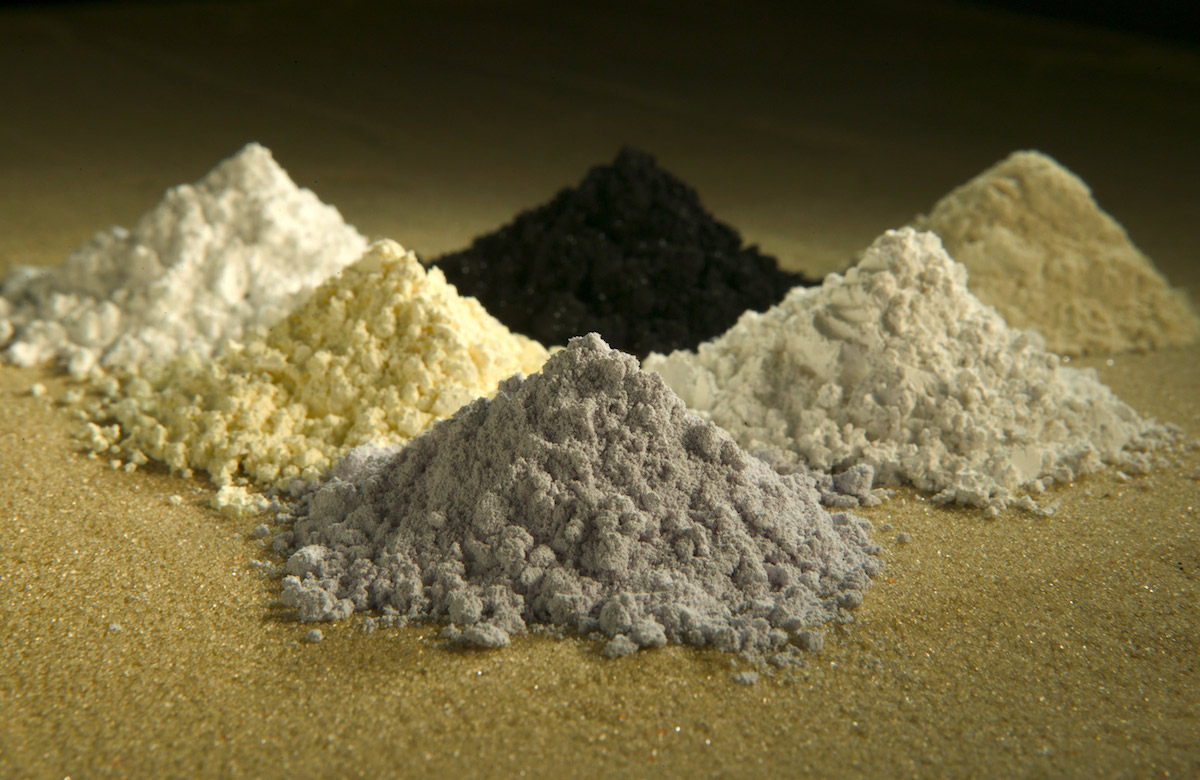
Rare earth minerals. (Peggy Greb/USDA)
Peabody indicated it is also pursuing private and federal funds for the project.
“By producing a domestically sourced intermediate product, the pilot validates a new revenue stream that provides substantial scalability, contributing royalties and taxes and attracting private capital,” Peabody said.
Peabody also owns and operates the North Antelope Rochelle and Caballo coal mines in northeastern Wyoming. Rawhide shipped 9 million tons of coal in 2024, according to federal data, while Caballo produced nearly 11 million tons and North Antelope scooped nearly 60 million tons. The company employs more than 1,400 coal miners in Wyoming.
Peabody reorganized after filing for bankruptcy and laying off 235 Wyoming miners in 2016.
Coal as a CO2 sink
Gordon has championed carbon capture at coal smokestacks as a strategy to stem Wyoming’s shrinking coal-fueled power plant market. But doing so has not proven economically viable, despite a state mandate that has tapped Wyoming ratepayers for millions of dollars to help utilities make the technological leap.
Carbon GeoCapture says it’s been working on a solution on the storage side of the equation.

John Pope, co-director of Carbon GeoCapture. (Dustin Bleizeffer/WyoFile)
Once captured at the coal or natural gas smokestack, the greenhouse gas can be injected into otherwise “unmineable” coal seams in the state. Doing so, according to the company, provides a more affordable storage method. Plus, the pumping action would squeeze out marketable methane gas that resides in the coal, “enabling for the first time cost-effective carbon management for power plants and providing a viable and sustainable path to meet the fast-growing power needs of data center, residential and industrial users,” the company said.
The process could produce 360 trillion cubic feet of natural gas from Wyoming coal, according to Carbon GeoCapture, a volume that represents potentially billions of dollars in payments to mineral owners and the state.
If Carbon GeoCapture is awarded the $4.95 million grant, Black Hills Energy , which operates coal-burning units in northeastern Wyoming, would match it with another $4.95 million to test the technology, according to the company’s project description.
Tapping the Mowry shale formation
Engineers at the University of Wyoming have worked alongside industry for years to figure out how to economically tap the massive Mowry formation, particularly in the Powder River Basin.
Though considered “one of the state’s most significant” oil and gas resources, Mowry shale is highly complex, presenting a financial risk for drillers, according to a description of the project.
If approved, the university’s School of Energy Resources would leverage the $480,000 grant with project partner Continental Resources to drill a deep well, analyze core samples, test well stimulation methods and create modeling scenarios at the university’s new Multidisciplinary Advanced Stimulation Laboratory. Doing so would help “de-risk” the Mowry formation and entice future extraction, the university said.
Subscribe to the newsletter
Daily decarbonization data and news delivered to your inbox
Follow the money flow of climate, technology, and energy investments to uncover new opportunities and jobs.
Latest issues
-
113 CCS Projects: What's Driving the Surge?
Inside This Issue 🏭 Global CCS Hits 113 Projects as Americas Lead Capacity 💰 We're Moving $2M+ to Climate Solutions 💧 China Launches World's First Semi-submersible Offshore Wind-to-hydrogen Platfo...
-
Why Is Wyoming Giving 650,000 Acres to Carbon Storage?
Inside This Issue 🪨 Inside Blm's 650,000-Acre Bet on Wyoming Carbon Storage 🏭 California Advances Carbon Capture and Removal Regulations Under SB 905 ⚡ Why a Japanese Power Giant Is Betting on Den...
-
Colorado Joins the 7-State CCS Permit Fast Lane
Inside This Issue ⚖️ Colorado Takes Over Class VI Permits: What Changes for CCS? 🏭 Hebei Shoulang Facility Using LanzaTech Technology Achieves World’s First ISCC EU RCF Certification for Ethanol P...
Company Announcements
-
China Launches World's First Semi-Submersible Offshore Wind-to-Hydrogen Platform
The world's first semi-submersible offshore wind-to-hydrogen platform has floated in Jiangmen, south China's Guangdong Province, opening a new avenue for the development and utilization of clean ma...
-
We’re Moving $2M+ to Climate Solutions
New companies, new ways to back existing ones, and every purchase built to pull in more capital We’re adding new companies to our portfolio and getting creative with how we put more money behind e...
-
Citi Closes $72 Million Carbon Removal-Linked Note to Support Applied Carbon Biochar Project
HIGHLIGHTS Citi structured an innovative $72 million carbon removal-linked note to provide upfront capital for Applied Carbon's biochar project, marking a first-of-its-kind "outcome bond" for ver...
-
New platform opens access to the same rigorous project evaluations trusted by the world's leading carbon removal procurement programs Today, Relae (formerly Carbon Direct) launched The Diligence C...