
TD Bank Group just committed to engineered carbon removal twice in one week. On June 4, 2026, Montreal-based Deep Sky and TD Bank Group announced a 10-year offtake agreement. Under the deal, TD will purchase more than 18,000 verified direct air capture carbon dioxide removal credits. Three days earlier, on June 1, 2026, Swiss company Climeworks signed its own separate 10-year CDR portfolio agreement with TD. That pattern is not coincidence. It signals that Canada's largest financial institutions are beginning to treat engineered carbon removal as a legitimate procurement category, not an experimental side project.
Key Facts
- Deep Sky and TD Bank Group signed a 10-year offtake agreement on June 4, 2026
- TD will purchase more than 18,000 verified DAC carbon dioxide removal credits from Deep Sky
- Deep Sky is backed by $130 million USD in funding, including Investissement Québec, OMERS Ventures, BDC Climate Fund, and Breakthrough Energy Catalyst
- Deep Sky Alpha in Innisfail, Alberta is the company's first operational facility, capturing 3,000 tonnes of CO₂ annually
- TD reduced its Scope 1 and 2 emissions by 29 percent against its 2019 baseline, from 162,849 tonnes to 116,197 tonnes, per TD's 2025 sustainability report
- TD is the sixth largest bank in North America by assets, with $2.1 trillion in assets as of January 31, 2026
- The Deep Sky deal came three days after TD signed a separate 10-year CDR portfolio agreement with Climeworks on June 1, 2026
- Deep Sky has announced a planned 500,000-tonne commercial removal facility in southwestern Manitoba
>> In Other News: American Airlines and Google Sign Record-Breaking Sustainable Aviation Fuel Agreement
What Did TD and Deep Sky Actually Agree To?
TD Bank Group will purchase more than 18,000 verified direct air capture carbon dioxide removal credits from Deep Sky over 10 years. Each credit represents one tonne of CO₂ captured directly from the atmosphere and permanently stored underground. Financial terms of the deal were not disclosed by either party.
"TD's approach has always been to reduce first and remove what remains with the highest-quality solutions available. Deep Sky gives us a Canadian path to do just that; their development of diversified DAC technologies aligns with TD's approach to support a broad set of innovative clean technologies in North America."
Nicole Vadori, Vice President Global Sustainability, TD Bank Group
The 18,000-plus credits address a portion of TD's direct operational emissions. In its 2025 sustainability report, TD disclosed that its combined Scope 1 and 2 emissions totalled 116,197 tonnes of CO₂, down from a 2019 baseline of 162,849 tonnes. That 29 percent reduction reflects years of operational improvements. The Deep Sky credits are intended to cover residual emissions that remain after those reductions are applied.
TD is the sixth largest bank in North America by assets, holding $2.1 trillion as of January 31, 2026. For a financial institution at that scale, purchasing 18,000 tonnes over a decade is not a volume play. It is a signal about what kinds of carbon removal tools a credible decarbonization program looks like.

What Makes Deep Sky Different From Other DAC Developers?
Deep Sky describes itself as the world's first tech-agnostic carbon removal project developer. Rather than building and commercializing its own proprietary DAC technology, the company hosts multiple direct air capture technologies under one roof. That structure lets it run real-world comparisons and scale whichever approaches perform best, without being locked into a single pathway.

"This represents two Canadian organizations doing something that matters for Canada. TD has built one of the most credible decarbonization programs in the financial services sector, and this agreement serves as a case study for enterprise carbon removal procurement. It shows that carbon removal infrastructure can be built at scale, right here in Canada."
Charlie Renzoni, Vice President of Carbon Markets, Deep Sky
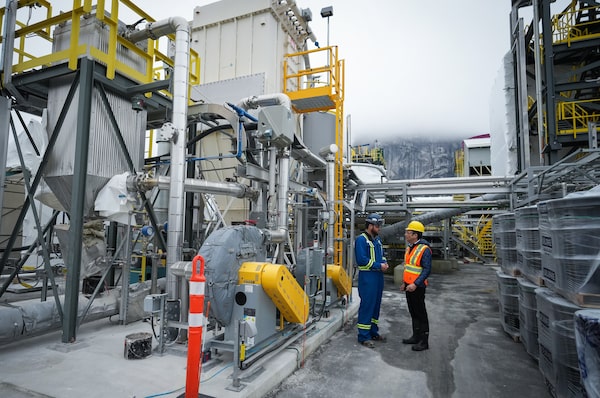
Deep Sky Alpha, the company's first operational facility, launched in August 2025 in Innisfail, Alberta. The facility runs up to 10 different DAC technologies simultaneously from multiple providers. It captures 3,000 tonnes of CO₂ annually and is designed to sequester that carbon permanently in deep geological formations. Deep Sky Alpha went from land lease to operational in under 12 months. That speed demonstrated that carbon removal infrastructure can be deployed rapidly using existing engineering and permitting frameworks.
Deep Sky is backed by $130 million USD in funding from investors including Investissement Québec, OMERS Ventures, BDC Climate Fund, Breakthrough Energy Catalyst, BMO, and National Bank of Canada. The company has also secured credit purchase agreements with Microsoft, Royal Bank of Canada, Lufthansa Group, and ENGIE ahead of the TD deal.
>> RELATED: History Made: Deep Sky Alpha Begins Operations with North America's First CO2 Storage via Direct Air Capture
Why Is Canada Becoming a Hub for Carbon Removal?
Canada's combination of geology, grid, and policy is drawing direct air capture developers in ways that other regions have not replicated. Three factors explain why CDR infrastructure keeps clustering there.
First, geology. The Western Canadian Sedimentary Basin, which spans British Columbia, Alberta, Saskatchewan, and Manitoba, holds a potential CO₂ storage capacity of 385 gigatonnes, according to legal analysis published by Norton Rose Fulbright. Alberta's subsurface already supports multiple commercial-scale carbon storage operations, and its oil and gas sector has decades of subsurface injection expertise that translates directly to CCS and DAC storage.
Second, the grid. Quebec's electricity supply is dominated by hydroelectric power, making it one of the lowest-carbon grids on the continent. DAC is energy-intensive, so access to low-carbon, low-cost electricity directly affects the carbon intensity and economics of the resulting credits. Deep Sky's planned projects in Quebec leverage this advantage. Manitoba, where Deep Sky has announced a 500,000-tonne commercial facility, offers similar clean grid characteristics.
Third, policy. In January 2025, Environment and Climate Change Canada released a preliminary draft federal offset protocol for direct air carbon dioxide capture and geological storage projects. If finalized, it would allow Canadian DAC developers to generate federal offset credits, creating a domestic compliance market pathway alongside voluntary buyers. The federal government has also committed to purchasing at least $10 million in carbon removal credits between 2024 and 2030 through a procurement program. Combined with investment tax credits available under Canadian federal policy, these measures give DAC developers more revenue certainty than most jurisdictions offer.
| Province | CDR Advantage | Deep Sky Activity |
|---|---|---|
| Alberta | 385 Gt CO₂ storage capacity in WCSB; existing CCS infrastructure; subsurface expertise | Deep Sky Alpha operational in Innisfail; 3,000 tonnes/year capture capacity |
| Quebec | Hydroelectric grid; ultramafic geology for mineralization storage | Mineralization projects at Thetford Mines and Bécancour; partnership with W8banaki Nation |
| Manitoba | Clean grid; geological storage access; space for large-scale infrastructure | Planned 500,000-tonne/year commercial removal facility (~$500M projected investment) |
How Does the Climeworks Deal Fit Into This Story?
The CDR procurement pattern at TD is worth understanding clearly. On June 1, 2026, TD signed a 10-year portfolio agreement with Climeworks Solutions. That deal covers a managed portfolio spanning enhanced rock weathering, biochar, and bioenergy with carbon capture and storage, with planned future DAC credits sourced from a Climeworks facility in development in Canada. Three days later, TD signed the Deep Sky agreement for more than 18,000 verified DAC-specific credits.
The two deals are different products from different companies. Climeworks is providing TD with a diversified CDR portfolio across multiple pathways and technologies. Deep Sky is providing TD with DAC-specific credits generated from Canadian facilities. That TD structured them as separate agreements, three days apart, suggests a deliberate procurement architecture rather than a one-off purchase.
TD's CDR commitment history makes the pattern clearer. In November 2023, TD Securities agreed to purchase 27,500 metric tonnes of DAC credits over four years from 1PointFive's STRATOS facility in Texas. That represented one of the largest purchases of DAC credits by a financial institution at that time. The June 2026 Deep Sky deal is the first in that series sourced entirely from Canadian infrastructure with a Canadian counterparty.
Deep Sky Alpha — May 2025 — Now Commissioning | Official Deep Sky video on the world’s first technology-agnostic carbon removal facility in Innisfail, Alberta, showcasing multiple DAC technologies for scalable direct air capture.
What Does This Signal for the Broader CDR Market?
The durable carbon removal market crossed 1 million tonnes in verified deliveries in 2025. According to CDR.fyi data reported by Decarbonfuse, those deliveries were distributed across more than 521 purchasers from 35 countries. Credits came from 117 suppliers operating in more than 28 nations. The Deep Sky and TD agreement adds a major Canadian financial institution to the growing list of institutional buyers making long-term removal commitments.
Financial institutions matter as a buyer category for a specific reason. Their commitments tend to be structured, long-term, and replicable. A bank that builds DAC procurement into its residual emissions strategy sets a model that peer institutions, corporate clients, and regulators can reference. TD's 2025 Scope 1 and 2 emissions totalled 116,197 tonnes. The 18,000-plus credits from Deep Sky cover a portion of that figure, with the expectation that Deep Sky's capacity scales as the company brings new facilities online.
Deep Sky has active or announced projects in Alberta, Quebec, and Manitoba. The planned Manitoba facility is targeting 500,000 tonnes per year of removal capacity, which would make it one of the largest carbon removal facilities in North America. Reaching that scale requires long-term offtake agreements signed now, before those facilities are built. The TD deal is exactly that kind of demand signal.
Frequently Asked Questions
What is Deep Sky and how does its tech-agnostic model work?
Deep Sky is a Montreal-based carbon removal project developer that hosts multiple direct air capture technologies under one roof rather than building its own proprietary system. This tech-agnostic approach allows the company to run real-world comparisons across competing DAC technologies simultaneously, accelerate the path to cost reduction, and sell verified removal credits to enterprise buyers without depending on the performance of any single technology pathway.
Why did TD Bank sign two separate carbon removal deals in one week?
The two agreements serve different purposes. The Climeworks deal, signed June 1, 2026, provides TD with a managed portfolio of CDR credits spanning multiple pathways including enhanced rock weathering, biochar, and BECCS. The Deep Sky deal, signed June 4, 2026, provides TD with more than 18,000 verified DAC-specific credits from Canadian facilities. Structuring them separately allows TD to diversify its CDR procurement across technologies and providers, which reduces delivery risk over a 10-year horizon.
Why is Canada attracting direct air capture investment?
Canada offers three structural advantages for DAC development: geological storage capacity, a clean electricity grid, and supportive policy frameworks. The Western Canadian Sedimentary Basin alone holds a potential CO₂ storage capacity of 385 gigatonnes. Quebec's hydroelectric grid provides low-carbon electricity for energy-intensive DAC operations. And federal policy, including investment tax credits, a $10 million CDR procurement commitment, and a draft federal offset protocol for DACCS projects, gives developers more revenue certainty than most other jurisdictions currently offer.
Canada Is Building the Infrastructure. The Demand Is Starting to Follow.
Two 10-year CDR commitments from the same major Canadian bank in the same week is the kind of market signal the carbon removal industry has been waiting for. Deep Sky's agreement with TD ties together Canadian capital, Canadian facilities, and a Canadian buyer in a single long-term contract.
The company's tech-agnostic model, its $130 million USD in institutional backing, and its operational facility in Innisfail give TD a credible domestic CDR pathway. The 18,000-plus credits in this deal represent Deep Sky's near-term capacity. The 500,000-tonne Manitoba facility represents what comes next.
As more buyers follow TD's lead, the economics of long-term DAC procurement improve across the entire supply chain. That is how a nascent infrastructure category becomes a standard procurement line item. Canada, it appears, intends to be where that transition happens first.
For ongoing coverage of carbon removal, DAC, and corporate CDR procurement, subscribe to Decarbonfuse.com.
Subscribe to the newsletter
Daily decarbonization data and news delivered to your inbox
Follow the money flow of climate, technology, and energy investments to uncover new opportunities and jobs.
Latest issues
-
Why Colorado’s Koloma Has Japan’s Largest Utility Hooked
Inside This Issue ⚡ JERA Invests in Koloma to Explore Natural Hydrogen as a Future Low-Carbon Energy 🔬 New CATF Tool Provides Framework for Self-Assessment and Strengthening of Biomass Carbon Remo...
-
LNK Energies Targets $6.50 Hydrogen With No Federal Subsidies
Inside This Issue 🚛 MIT Startup Says It Can Turn Diesel Trucks Into Cheaper Hydrogen Haulers, See It at Disrupt 🏭 Baytown City Council Briefs: ExxonMobil Blue Hydrogen Agreement Approved 🌎 Colorad...
-
Why Gulf Coast CCS Teams Are Watching Liverpool Bay
Inside This Issue 💂 Eni’s Douglas Platform Sets the Offshore CCS Blueprint 🌲 Pacolet Milliken Expands Its Biomass Platform With the Acquisition of Georgia Renewable Power 🧪 Metacon Receives EU Fun...
Company Announcements
-
A new interactive tool from Clean Air Task Force (CATF) provides a practical framework for the self-assessment and strengthening of biomass carbon removal (BiCRS) protocols to help ensure that carb...
-
LanzaJet Secures Financing to Scale SAF Production and Supply Global Customers
CHICAGO, Oct. 15, 2026 (GLOBE NEWSWIRE) -- LanzaJet, Inc., a leading next-gen fuels technology company and fuels producer, today announced fully committed new financing of at least $20 million to s...
-
44.01 and Frontier Advance Permanent CO₂ Storage Through In-Situ Mineralization
44.01's in-situ mineralization (ISM) process turns CO₂ into solid rock underground in a few years, after which the risk of reversal is functionally zero. >> In Other News: JERA Invests in ...
-
JERA Invests in Koloma to Explore Natural Hydrogen as a Future Low-Carbon Energy
JERA Co., Inc. (JERA), through its corporate venture capital arm JERA Ventures, has invested in Koloma, Inc. (Koloma), a U.S.-based natural hydrogen exploration and development company. The invest...