
Yara International has put a complete cross-border industrial carbon capture and storage chain into operation. Its Sluiskil plant in the Netherlands can capture and liquefy up to 800,000 metric tonnes of CO2 annually for shipment to Norway, where Northern Lights will permanently store it beneath the seabed.
The September 7 inauguration matters beyond the capture plant itself. DecarbonFuse has already covered the Sluiskil facility opening. The larger development is an operating commercial logistics chain that separates industrial CO2 capture from the location of geological storage.
Yara Sluiskil's CCS infrastructure prepares captured CO2 for temporary storage and maritime transport to Norway. Source: Yara International.
How Does The Cross-Border CO2 Chain Work?
Yara captures CO2 from ammonia production at Sluiskil, liquefies it and stores it temporarily in seven on-site tanks. Northern Lights vessels are scheduled to collect the liquid CO2 twice a week.
The ships carry the CO2 from the Netherlands to Northern Lights' receiving terminal at Øygarden on Norway's west coast. There it enters onshore storage before moving through a 120-kilometer pipeline to an offshore saline aquifer approximately 2,600 meters beneath the seabed.
Key Facts
- Yara Sluiskil can capture and liquefy up to 800,000 metric tonnes of CO2 annually.
- The project is expected to capture and store approximately 12 million tonnes over 15 years, subject to appropriate framework conditions.
- Seven tanks provide temporary liquid CO2 storage at Sluiskil.
- Northern Lights transports the CO2 to Øygarden before permanent storage about 2,600 meters below the seabed.
- Yara states that operations begin in 2026 and are planned to continue for at least 15 years.
The chain rests on the binding commercial agreement signed in 2023. Yara's expected 12 million tonnes over 15 years makes this a long-term commercial arrangement, not a short-duration demonstration.
>> In Other News: Skyrenu Delivers First Direct Air Capture CO2 Batch to Secant Fuel in Quebec

"This is an important day for Yara and for European industry. The carbon capture facility in Sluiskil proves that large-scale industrial decarbonization is possible today."
Svein Tore Holsether, President and CEO of Yara International
Shipping Changes The Geography Of Carbon Storage
Liquefied CO2 shipping gives industrial plants another route to storage when a dedicated pipeline is impractical. The International Energy Agency says shipping offers greater flexibility than pipelines and can be cost-effective for long-distance transport and smaller volumes.
Pipeline economics improve as volumes increase. Shipping requires liquefaction, intermediate storage and loading infrastructure, but vessels can connect dispersed coastal emitters with more distant storage sites. The European Commission's Joint Research Centre identifies shipping as particularly suited to longer distances, dispersed emitters and lower CO2 volumes.
That flexibility could widen access to CCS for cement, chemicals, refining and waste-to-energy facilities. Shared infrastructure can allow emitters to purchase transport and storage services instead of independently developing an entire storage system. DecarbonFuse has tracked the expanding fleet of purpose-built CO2 carriers supporting this model.

The Yara and Northern Lights chain links industrial CO2 capture in the Netherlands with permanent geological storage offshore Norway.
The ships themselves are becoming part of Europe's carbon-management infrastructure. A 2026 Northern Lights charter for a 12,000-cubic-meter CO2 carrier followed earlier vessel commitments as the network prepares for larger volumes.
>> RELATED: Europe's Carbon Capture Push Shifts From Ambition To Delivery At CCSA EU Conference 2026
Shared Infrastructure Is Moving Beyond One Emitter
Northern Lights is owned by Equinor, Shell and TotalEnergies. Its first phase provides 1.5 million tonnes per year of transport and storage capacity, while Phase 2 will raise capacity to at least 5 million tonnes annually from the second half of 2028.
The expansion includes additional onshore tanks, pumps, injection wells, a new jetty and additional ships. DecarbonFuse previously reported the partners' 7.5 billion Norwegian kroner Northern Lights expansion decision, which followed a 15-year agreement with Stockholm Exergi.
| Infrastructure | Model | Verified Scale |
|---|---|---|
| Northern Lights | Ships, receiving terminal, pipeline and offshore saline storage | 1.5 Mt/year Phase 1; at least 5 Mt/year after Phase 2 |
| Porthos | Shared Rotterdam pipeline to depleted offshore gas fields | About 2.5 Mt/year |
| Aramis | Open-access CO2 transport infrastructure linked to offshore storage | Up to 22 Mt/year transport capacity planned |
These projects use different transport configurations, but each separates individual capture projects from shared downstream infrastructure. DecarbonFuse's European carbon storage project overview documents the wider hub buildout, while the planned 2.8-million-tonne-per-year Klaipėda CO2 terminal could extend cross-border shipping infrastructure into the Baltic region.
Seven on-site tanks provide temporary storage for liquefied CO2 before collection by Northern Lights vessels. Source: Yara International.
Cross-Border Rules Enable The Physical Network
International CO2 transport requires legal arrangements as well as ships and terminals. Under the London Protocol, a 2009 amendment enables CO2 exports for sub-seabed geological storage, although that amendment has not formally entered into force.
A 2019 resolution allows participating countries to apply the amendment provisionally after making the required declaration. The Netherlands and Norway have both done so. Countries using the mechanism must also notify the International Maritime Organization of relevant agreements or arrangements covering permitting and responsibilities.
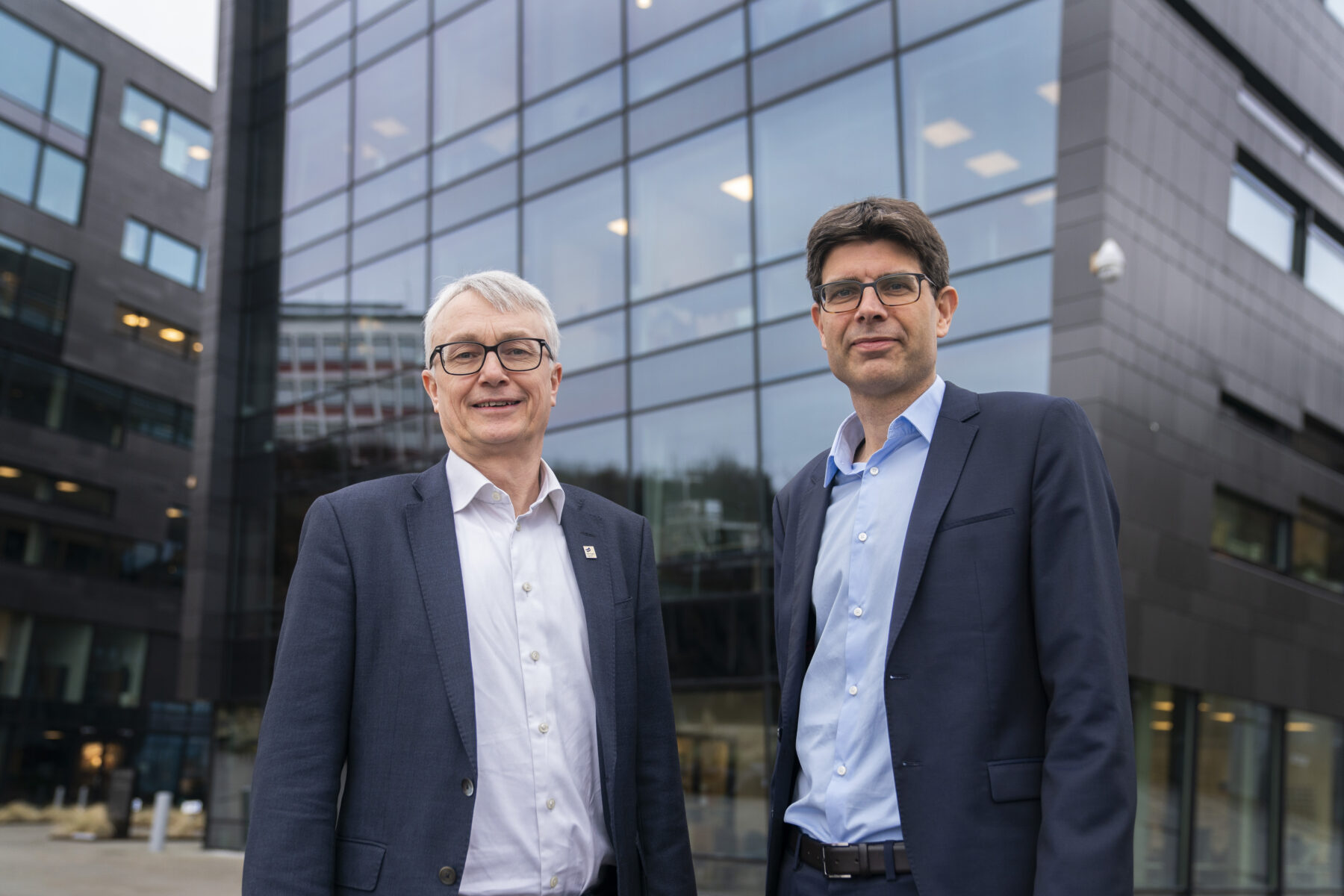
"Together, we are demonstrating that capture and cross-border CO2 transport and storage is a viable solution for European industry."
Tim Heijn, Managing Director of Northern Lights
The scale required is much larger than today's first commercial chains. The European Commission says the EU's Net-Zero Industry Act sets a target of at least 50 million tonnes of annual CO2 injection capacity by 2030. Commission modelling indicates around 280 million tonnes of CO2 may need to be captured annually by 2040.
Yara International video on the Sluiskil carbon capture project and CO2 shipment to Northern Lights for permanent storage offshore Norway.
What Has The Yara Chain Actually Proven?
Yara and Northern Lights have established an operating industrial-scale route connecting capture in one country with transport and permanent storage in another. That is different from proving that the same model can already accommodate dozens of emitters across Europe.
Scaling from Yara's maximum 800,000 tonnes per year will require more ships, terminal capacity, injection wells and long-term contracts. Storage development must expand too. DecarbonFuse has reported that the UK's second carbon storage licensing round attracted bids covering more than 2 million acres of North Sea seabed.
The next indicators are therefore concrete: additional Northern Lights customers entering service, Phase 2 reaching at least 5 million tonnes per year, more CO2 carriers arriving and competing European hubs securing contracts. If those pieces develop together, cross-border shipping could give industrial facilities without nearby storage geology a practical route into shared CCS infrastructure.
For ongoing coverage of carbon removal, BECCS, and corporate CDR procurement, subscribe to Decarbonfuse.com.
Subscribe to the newsletter
Daily decarbonization data and news delivered to your inbox
Follow the money flow of climate, technology, and energy investments to uncover new opportunities and jobs.
Latest issues
-
Who Bought Gevo’s $50M in 45Z Credits?
Inside This Issue ⛽ Gevo Sells $70M in 45Z Credits to a New Kind of Buyer 🌱 South Pole, Gaïago, and Gold Standard Issue European Soil Carbon Credits, Unlocking Verified Regenerative Agriculture Re...
-
Verra Landed CCP Approval. What Changes for DAC?
Inside This Issue ✅ Verra's CCS Credits Just Got the Integrity Seal Buyers Want 💰 South Korea Unveils $747 Billion Energy Transition Plan Through 2035 💧 Hydrogen and Carbon Capture and Storage in ...
-
Quebec Wood Waste Just Became Jet Fuel
Inside This Issue 🌲 ARC Bio Tests a Refinery Shortcut to Forest-Based SAF 💧 Scientists Just Found a New Way to Make Hydrogen from Water 🤝 How Channel Partnerships Are Helping More Organizations Ta...
Company Announcements
-
Mineral Europa: A Game Changer for Shipping
Antwerp, Oct. 09, 2026 (GLOBE NEWSWIRE) -- Antwerp, 9 October 2026 – CMB.TECH NV (“CMB.TECH” or the “Company”) (NYSE: CMBT, Euronext Brussels: CMBT and Euronext Oslo Børs: CMBTO) today announces th...
-
Download PDF (170.95 KB) Eni CCUS Holding, owned jointly by Eni and Global Infrastructure Partners ("GIP"), part of BlackRock, announces that Liverpool Bay CCS has completed the installation of th...
-
First-of-its-kind project in France and Belgium marks a major breakthrough for carbon credit buyers seeking high-integrity, high-impact regenerative agriculture removals in Europe; providing buyer...
-
Gevo and ClimeFi Complete Carbon Removal Transaction, Advancing Gevo's Growing Carbon Business
Transaction supports Gevo's path toward a carbon business exceeding $30 million in annual revenue from existing operations ENGLEWOOD, Colo., Oct. 08, 2026 (GLOBE NEWSWIRE) -- Gevo, Inc. (NASDAQ: G...