
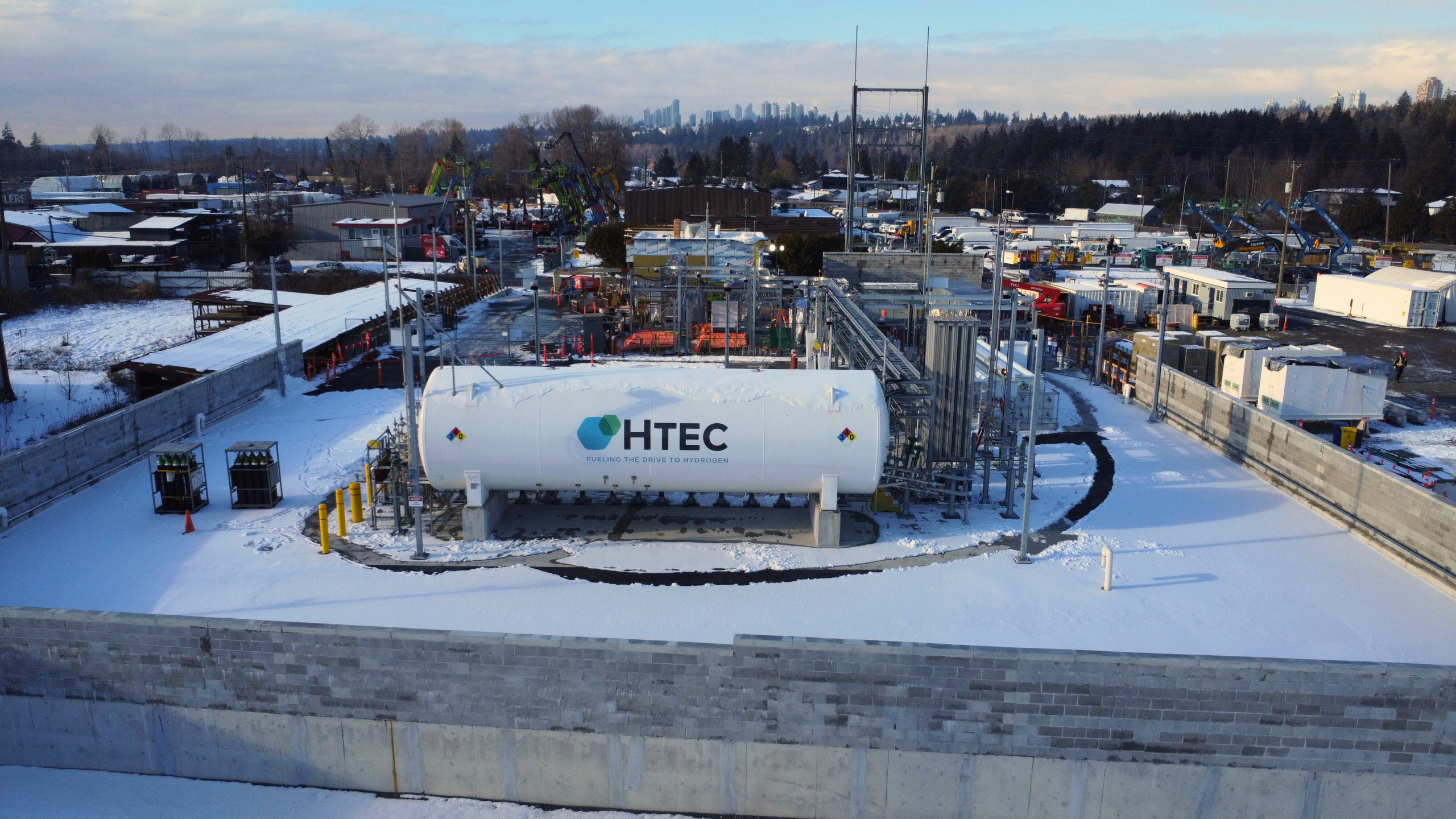
HTEC opened Canada's first commercial 700 bar heavy-duty hydrogen station on June 18, 2026, in Tsawwassen, British Columbia. The dual-pressure site fuels up to 400 kilograms of hydrogen daily and supports an initial fleet of 12 Class 7 and 8 trucks, giving fleet operators a real refueling option for daily freight routes instead of short demo loops.
The station sits on Tsawwassen First Nation industrial lands at the Chevron Commercial Cardlock in Delta, B.C. It marks the first time a Canadian facility has offered commercial-scale 700 bar dispensing for heavy-duty trucks, alongside the more common 350 bar option.
Key Facts
- Canada's first commercial 700 bar heavy-duty hydrogen station, opened June 18, 2026
- Dual dispensing at 350 bar and 700 bar, with a capacity of 400 kilograms per day
- Supports an initial deployment of 12 Class 7 and 8 fuel cell electric trucks
- Supplied by HTEC's Burnaby Clean Hydrogen Production Facility, rated at 1.8 tonnes per day
- Backed by financing from the Canada Infrastructure Bank, B.C.'s Innovative Clean Energy Fund, and B.C.'s Low Carbon Fuel Standard credits
>> In Other News: [x](x)
Why Does 700 Bar Matter for Hydrogen Trucking?
Higher pressure means trucks can carry more hydrogen fuel per stop, which extends range and cuts the number of refueling breaks on a route. That difference turns hydrogen trucking from a pilot exercise into something fleets can actually schedule around.
| Pressure Standard | Typical Use Case | Range Impact |
|---|---|---|
| 350 bar | Buses, some medium-duty trucks | Shorter range per fill |
| 700 bar | Class 7 and 8 heavy-duty trucks | Longer range, fewer stops |
Most existing Canadian stations dispense at 350 bar only. The Tsawwassen site is built to serve both standards under one roof.
Which Fleets Are Using the Station First?
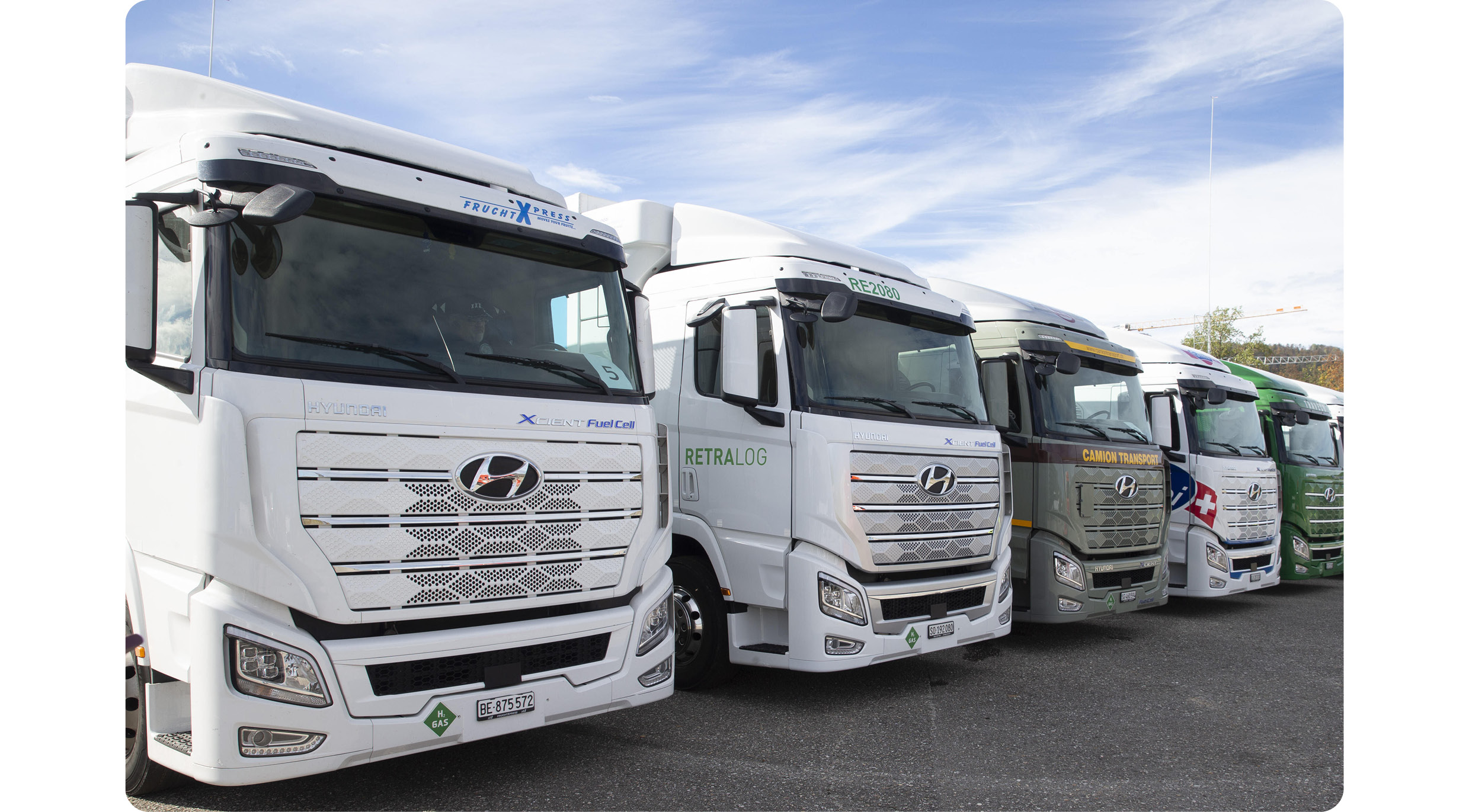
Harbour Link Container Services and Triple Eight Transport are the first operators leasing trucks tied to this station. Both companies will run Hyundai's XCIENT Fuel Cell trucks, with two units arriving through this initial rollout.
Harbour Link has been involved in hydrogen truck demonstrations at the Port of Vancouver for several years. Triple Eight Transport joins as a new participant in commercial hydrogen freight operations.
- 12 Class 7 and 8 fuel cell electric trucks deployed initially
- Funded through the B.C. Hydrogen Truck Pilot Project and the B.C. Hydrogen Ports Project
- Routes focused on drayage and regional freight near the Port of Vancouver

"This station is an important step in bringing hydrogen into heavy-duty transportation. It gives fleets the confidence to operate fuel cell trucks in day-to-day logistics."
Colin Armstrong, President and CEO, HTEC
How is the Station Funded and Who's Behind It?
The project draws on multiple government and financing sources. The Canada Infrastructure Bank provided financing as part of HTEC's broader H2 Gateway program, which aims to scale hydrogen production and refueling infrastructure across Western Canada.

"Congratulations HTEC on the continued progress of their H2 Gateway program. By supporting the deployment of HTEC's hydrogen production, distribution, and refuelling infrastructure, the CIB is accelerating a sustainable fuel solution which can reduce emissions in the transportation sector while creating new jobs within the supply chain."
Ehren Cory, CEO, Canada Infrastructure Bank
B.C.'s Ministry of Energy and Climate Solutions also backed the project through the province's Innovative Clean Energy Fund and Low Carbon Fuel Standard credits, the same B.C. hydrogen policy framework supporting other fueling projects across the province.
Tsawwassen First Nation hosts the station on its industrial lands and was involved in the project from the start. Local TFN artists contributed artwork displayed at the site.
>> RELATED: Canada Just Solved Hydrogen's Biggest Problem With $5K
Where Does the Hydrogen Supply Come From?
HTEC's Burnaby Clean Hydrogen Production Facility supplies the Tsawwassen station with low-carbon hydrogen. The Burnaby plant has a combined production and liquid hydrogen capacity of approximately 1.8 tonnes per day.
That output now feeds eight hydrogen refueling stations across HTEC's growing B.C. network, including the modular site that supported Hyundai's 2025 XCIENT truck pilot at the Port of Prince Rupert. Tsawwassen marks a step up in technical capability rather than just station count.
Adrian Dix, B.C.'s Minister of Energy and Climate Solutions, called hydrogen a key part of the province's clean energy mix and confirmed continued government support as deployment expands.
Real-world results from HTEC’s hydrogen fuel cell truck trial with Loblaw in British Columbia, featuring a Hyundai XCIENT truck refueling at an HTEC station and highlighting strong performance for decarbonizing heavy-duty fleet operations.
What Does This Mean for the Metro Vancouver Hydrogen Network?
Tsawwassen reinforces HTEC's Metro Vancouver Hydrogen Transportation Hub, a wider build-out connecting hydrogen trucking infrastructure across the port region. Other Canadian regions are testing different models, including Alberta's shared-truck pilot for carriers who want data before committing to a full fleet purchase. Tsawwassen's approach adds permanent capacity rather than rotating a single vehicle.
Tsawwassen First Nation Chief Laura Cassidy said the project reflects what is possible when economic development is done in a way that respects the land and the community's shared future.
HTEC also recognized contributions from Powertech Labs, a BC Hydro subsidiary that provided station equipment, and vehicle integration partners including Hyundai Motor Company, Unilia, and Elemental Trucks.
The Tsawwassen station gives Canada's hydrogen trucking sector something it didn't have before: a commercial site built for real freight schedules instead of test runs. With fleet operators already signed on and federal financing in place, the next test is how fast that confidence spreads to other corridors.
Frequently Asked Questions
What makes the Tsawwassen station different from other hydrogen stations in Canada?
It's the first commercial station in Canada to offer 700 bar dispensing for heavy-duty trucks, alongside the more common 350 bar standard. That combination lets it serve a wider range of vehicle types at one site.
How many trucks will use the station right away?
An initial deployment of 12 Class 7 and 8 fuel cell electric trucks, funded through B.C.'s Hydrogen Truck Pilot Project and Hydrogen Ports Project.
Where does the station's hydrogen come from?
HTEC's Burnaby Clean Hydrogen Production Facility, which has a combined production and liquid hydrogen capacity of about 1.8 tonnes per day.
For ongoing coverage of carbon removal, BECCS, and corporate CDR procurement, subscribe to Decarbonfuse.com.
Subscribe to the newsletter
Daily decarbonization data and news delivered to your inbox
Follow the money flow of climate, technology, and energy investments to uncover new opportunities and jobs.
Latest issues
-
Why Is Wyoming Giving 650,000 Acres to Carbon Storage?
Inside This Issue 🪨 Inside Blm's 650,000-Acre Bet on Wyoming Carbon Storage 🏭 California Advances Carbon Capture and Removal Regulations Under SB 905 ⚡ Why a Japanese Power Giant Is Betting on Den...
-
Colorado Joins the 7-State CCS Permit Fast Lane
Inside This Issue ⚖️ Colorado Takes Over Class VI Permits: What Changes for CCS? 🏭 Hebei Shoulang Facility Using LanzaTech Technology Achieves World’s First ISCC EU RCF Certification for Ethanol P...
-
The US Hasn't Made Heavy Water Since 1982
Inside This Issue ⚛️ Aternium Completes FEED Studies for US Hydrogen, Heavy Water Project 🐄 Google, McKinsey Strike Brazil Carbon Removal Deal With Silvopasture Project 🔧 Cummins Selects Stargate ...
Company Announcements
-
Citi Closes $72 Million Carbon Removal-Linked Note to Support Applied Carbon Biochar Project
HIGHLIGHTS Citi structured an innovative $72 million carbon removal-linked note to provide upfront capital for Applied Carbon's biochar project, marking a first-of-its-kind "outcome bond" for ver...
-
New platform opens access to the same rigorous project evaluations trusted by the world's leading carbon removal procurement programs Today, Relae (formerly Carbon Direct) launched The Diligence C...
-
Inside BLM's 650,000-Acre Bet on Wyoming Carbon Storage
The Bureau of Land Management has offered right-of-way grants covering about 649,438 acres of federal pore space in southwest Wyoming. The September 21, 2026 offers went to Moxa Carbon Storage LLC ...
-
NEW YORK, BUSINESS WIRE, SWITCH Maritime (Switch), a leading developer of zero-emission vessels, secured a Design Basis Agreement (DBA) with the United States Coast Guard (USCG) for the SWITCH-150,...