
A Kansas wheat ethanol producer just earned the first Class VI carbon sequestration permit in the state. PureField Ingredients of Russell, Kansas received final EPA approval on April 10, 2026. The permit authorizes permanent underground storage of up to 150,000 metric tons of CO2 per year. The move positions PureField among the lowest carbon intensity ethanol producers in the world.
Key Facts
- PureField received the first Class VI well permit in Kansas and across all four EPA Region 7 Heartland states (EPA Region 7, April 10, 2026)
- Authorized to inject up to 150,000 metric tons of CO2 per year, totaling 1.8 million metric tons over 12 years (EPA, 2026)
- CO2 is injected into the Arbuckle rock formation at a depth of 3,448 to 3,606 feet below ground (EPA, 2026)
- PureField's integrated model creates demand for approximately 20 million bushels of Kansas wheat and sorghum annually (PureField Ingredients, 2026)
- Imported wheat protein currently supplies about 70% of U.S. functional wheat protein demand (PureField Ingredients, 2026)
- Global CCUS capacity is projected to reach 735 million metric tons per annum by 2030 (GlobalData CCUS Market Outlook H1 2025)
>> In Other News: Hydrexia Inks Hydrogen Commercial Contract in Vietnam
What Did PureField Just Achieve?
PureField Ingredients secured the first-ever Class VI underground injection permit in Kansas on April 10, 2026. The permit was issued by EPA Region 7, which covers Kansas, Iowa, Missouri, and Nebraska. This makes PureField the first company to receive this type of carbon storage authorization across all four Heartland states.

"This is a defining moment for PureField to meet our commitment to serve Kansas farmers and our customers in the U.S. and around the world. By combining our advanced, wheat-based feedstock with carbon capture and permanent storage, we are creating a structurally advantaged platform that delivers some of the lowest carbon fuels in the world while simultaneously producing essential food ingredients."
Aaron Buettner, CEO, PureField Ingredients
The permit allows PureField to store up to 150,000 metric tons of CO2 each year. Over the 12-year injection period, that totals 1.8 million metric tons of permanently sequestered carbon dioxide (EPA Region 7, 2026).
The CO2 is injected into the Arbuckle rock formation, between 3,448 and 3,606 feet below the surface. PureField is required to monitor the well and the overlying area for the full 12-year injection period, and for 50 years after injection ends.
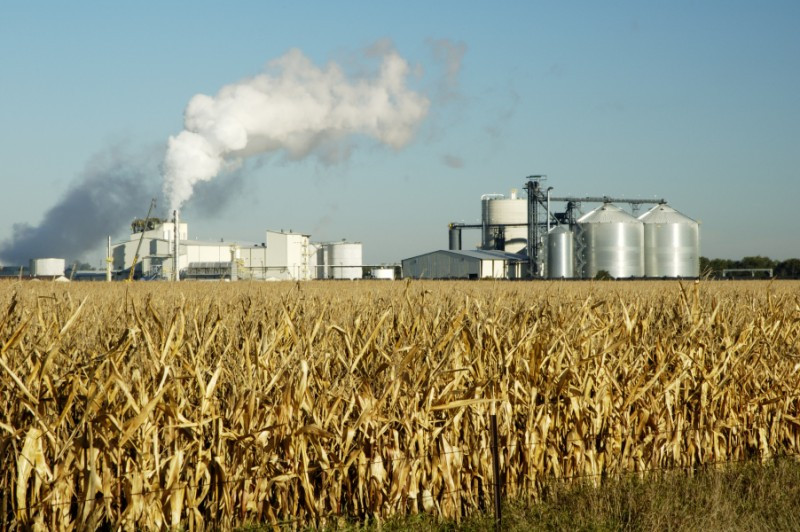
How Does PureField's Integrated Model Work?
PureField runs a "nothing wasted" production system. Every part of the wheat grain creates value, and the CO2 from fermentation becomes a storage asset instead of an atmospheric emission.
Here is how the model works in sequence:
- Kansas-grown wheat is processed into functional protein ingredients for food and pet food applications
- Residual wheat starch, a byproduct of the protein process, is converted into ethanol and animal feed
- CO2 generated during fermentation is captured and permanently stored in the Arbuckle rock formation
This structure gives PureField a built-in carbon advantage over conventional biofuels. Fermentation produces a near-pure CO2 stream. That keeps capture costs lower than retrofitting industrial or power generation facilities.
PureField is also America's largest manufacturer of vital wheat gluten. The company produces more than half of all wheat protein made in the United States (PureField Ingredients, 2026). The food ingredient business is not a side operation. It is the foundation of the entire platform.
The integrated model also creates demand for approximately 20 million bushels of Kansas wheat and sorghum each year (PureField Ingredients, 2026). That provides a stable, local demand channel for farmers in central Kansas.
>> RELATED: Conestoga Energy Ramps Up U.S. Carbon Storage Ambitions with Class VI Milestone
How Low Can PureField's Carbon Intensity Go?
PureField's pathway is designed to achieve net-zero or net-negative carbon intensity under applicable methodologies. That is not a standard industry claim. Most biofuel producers aim to reduce carbon intensity. PureField is building a system to eliminate or exceed it.
Two factors drive this outcome. First, wheat starch carries a lower carbon intensity than conventional corn. Third-party assessments suggest PureField's gluten production is approximately 15 to 25 percent below industry carbon benchmarks (Plant Protein Innovation Center, University of Minnesota). Second, adding carbon capture and sequestration on top of that feedstock advantage compounds the benefit further.
CARB has recognized PureField's ethanol as one of the lowest carbon intensity fuels in the country (California Air Resources Board, via PureField Ingredients). That creates direct access to California's Low Carbon Fuel Standard. Lower carbon intensity scores translate into higher-value credits in that program.
According to the IEA CCUS Projects Database, over 50 million metric tons of CO2 capture and storage capacity was operational globally as of early 2025. Projects at mature development stages now make up 60% of the overall CCUS pipeline (IEA, 2025).

Why Is the Class VI Permit a Milestone for Kansas?
Class VI wells are the regulatory gold standard for permanent CO2 storage in the U.S. They require comprehensive site characterization, seismic surveys, long-term monitoring plans, and compliance with EPA's Safe Drinking Water Act standards. Obtaining one is a rigorous, multi-year process.
PureField's permit is the first Class VI approval in Kansas and the first across all four EPA Region 7 states. That is a significant marker for the Heartland region, where CCUS projects are gaining momentum alongside existing ethanol and agricultural infrastructure.
Nationally, growth is accelerating. GlobalData's CCUS Market Outlook and Trends H1 2025 report projects global CCUS capacity to reach 735 million metric tons per annum by 2030. The United States alone is expected to account for 244.77 million metric tons across 266 projects (GlobalData, 2025).
Kansas now joins other Midwest states building carbon storage infrastructure around ethanol production. Conestoga Energy drilled its first Class VI CCS well in Garden City, Kansas in 2024 and has an application pending with the EPA. Tallgrass Energy's Trailblazer pipeline has been moving CO2 from 12 Nebraska ethanol plants to permanent storage in Wyoming since September 2025.

"This permit exemplifies EPA's support of domestic energy production and unleashing American energy dominance. We'll continue to advance projects that grow rural economies while fulfilling the agency's core mission of protecting human health and the environment."
Jim Macy, EPA Region 7 Administrator
How Does PureField Stack Up Against Similar CCS Biofuel Projects?
PureField is not alone in pairing ethanol with sequestration. But the wheat starch feedstock sets it apart. Most U.S. CCS-enabled biofuel projects use corn. Wheat starch carries a lower baseline carbon intensity, giving PureField a structural head start before CCS is even factored in.
| Company | Location | Feedstock | CO2 Storage Capacity | Status (April 2026) |
|---|---|---|---|---|
| PureField Ingredients | Russell, Kansas | Wheat starch | 150,000 metric tons/year | Class VI permit issued; commissioning underway |
| Conestoga Energy | Garden City, Kansas | Corn | 150,000+ metric tons/year (target) | Class VI well drilled; EPA permit application pending |
| Tallgrass / Trailblazer | Nebraska to Wyoming | Corn (12 ethanol plants) | Multi-plant CO2 pipeline network | Operational since September 2025 |
| Gevo / Red Trail Energy | Richardton, North Dakota | Corn | On-site CO2 sequestration | Acquired and operational |
What sets PureField apart is the food-fuel integration. Functional wheat protein is a high-value product with steady domestic demand. That revenue stream strengthens the platform's economics and reduces reliance on fuel markets alone.
>> RELATED: Leading the Charge: Top Companies Driving Global CCUS Expansion
What Does This Mean for the Midwest's Role in Decarbonization?
Kansas is not typically associated with climate technology leadership. This permit changes that. The Heartland is building one of the most cost-effective CCS corridors in North America, grounded in the established economics of agricultural production.
Ethanol fermentation produces a near-pure CO2 stream, keeping capture costs lower than most industrial applications. As of January 2025, the EIA counted more than 190 operating fuel ethanol producers across the United States (EIA, 2025). The large majority are located in the Midwest. Each plant is a potential CCS candidate using the model PureField just proved out.
PureField's permitted annual CO2 storage of 150,000 metric tons is equivalent to removing approximately 35,000 gasoline-powered vehicles from the road each year. That calculation uses the EPA's current factor of 4.29 metric tons CO2 per vehicle per year (EPA Greenhouse Gas Equivalencies Calculator, 2025). Over 12 years, 1.8 million metric tons represents durable, long-term geological storage.
Globally, announced CCUS projects could deliver around 430 million metric tons of capture capacity by 2030 (IEA, 2025). Storage capacity from those same projects is projected at 670 million metric tons. The United States leads this build-out with 244.77 million metric tons projected across 266 projects (GlobalData, 2025). PureField is now part of that count.
The company also stated plans to explore accepting third-party CO2 for storage, which could expand the Russell site into a regional carbon hub. That trajectory mirrors what Louisiana has built along the Gulf Coast, where shared CCS infrastructure is accelerating decarbonization across multiple industries simultaneously.
The Kansas Blueprint That Could Go National
PureField's permit is a proof of concept. A wheat-based food and fuel producer in rural Kansas can now match the carbon performance of any project globally. It did not need to overhaul its supply chain. It only needed to integrate what was already there.
The wheat protein business funds the infrastructure. The ethanol operation generates the CO2. The CCS system locks it away permanently. Each piece makes the others more viable. In Russell, Kansas, food production, fuel production, and carbon removal now operate as one system, and the EPA just confirmed it is ready to go.
Subscribe to the newsletter
Daily decarbonization data and news delivered to your inbox
Follow the money flow of climate, technology, and energy investments to uncover new opportunities and jobs.
Latest issues
-
Verra Landed CCP Approval. What Changes for DAC?
Inside This Issue ✅ Verra's CCS Credits Just Got the Integrity Seal Buyers Want 💰 South Korea Unveils $747 Billion Energy Transition Plan Through 2035 💧 Hydrogen and Carbon Capture and Storage in ...
-
Quebec Wood Waste Just Became Jet Fuel
Inside This Issue 🌲 ARC Bio Tests a Refinery Shortcut to Forest-Based SAF 💧 Scientists Just Found a New Way to Make Hydrogen from Water 🤝 How Channel Partnerships Are Helping More Organizations Ta...
-
How Vaulted Deep Turned Offtakes Into $35M Debt
Inside This Issue 🏦 How Carbon Removal Offtakes Are Starting to Unlock Commercial Debt 🌉 California Opens the Door to a Three-Way Carbon Market 🧪 New Material Developed at Oregon State Provides Bo...
Company Announcements
-
Ballard Secures 4.8MW Order From Siemens Mobility to Power Hydrogen Trains in Romania
24 FCrail™ fuel cell modules will power 12 Mireo Plus H trains, Romania’s first hydrogen fleet and the platform’s largest deployment to date. VANCOUVER, CANADA and MUNICH, GERMANY – Ballard Power ...
-
Company Update Approval Advances Strategic Growth of XCF's Diversified Alternative Energy Platform and Marks a Major Milestone as the Parties Work Toward Closing as Soon as Practicable HOUSTON, T...
-
On September 20, Yiwu County in Hami, Xinjiang, a centralized project bid opening and launch ceremony drew the attention of the entire hydrogen energy community, Dondel officially launched its Gree...
-
MEXICO CITY--BUSINESS WIRE--In the framework of today's World Habitat Day, here is an invitation to reflect on building more sustainable communities, where Mexico is moving firmly toward the energy...